When choosing stainless steel food storage containers, kitchen canisters, lunch boxes, or meal prep containers, you may come across two popular stainless steel grades: 304 and 316 stainless steel.
Both materials are known for their durability, corrosion resistance, and suitability for a wide range of kitchen applications. However, they are not identical, and the differences can become more important depending on how and where the product is used.
For consumers, brands, and kitchenware buyers, understanding these differences can make it easier to choose the right material for a specific product. For manufacturers and suppliers, material selection can also affect product durability, manufacturing costs, appearance, and the overall user experience.
In this guide, we’ll compare 304 vs 316 stainless steel for food storage, looking at corrosion resistance, food-related applications, cleaning, durability, cost, and everyday kitchen use.
What is 304 Stainless Steel?
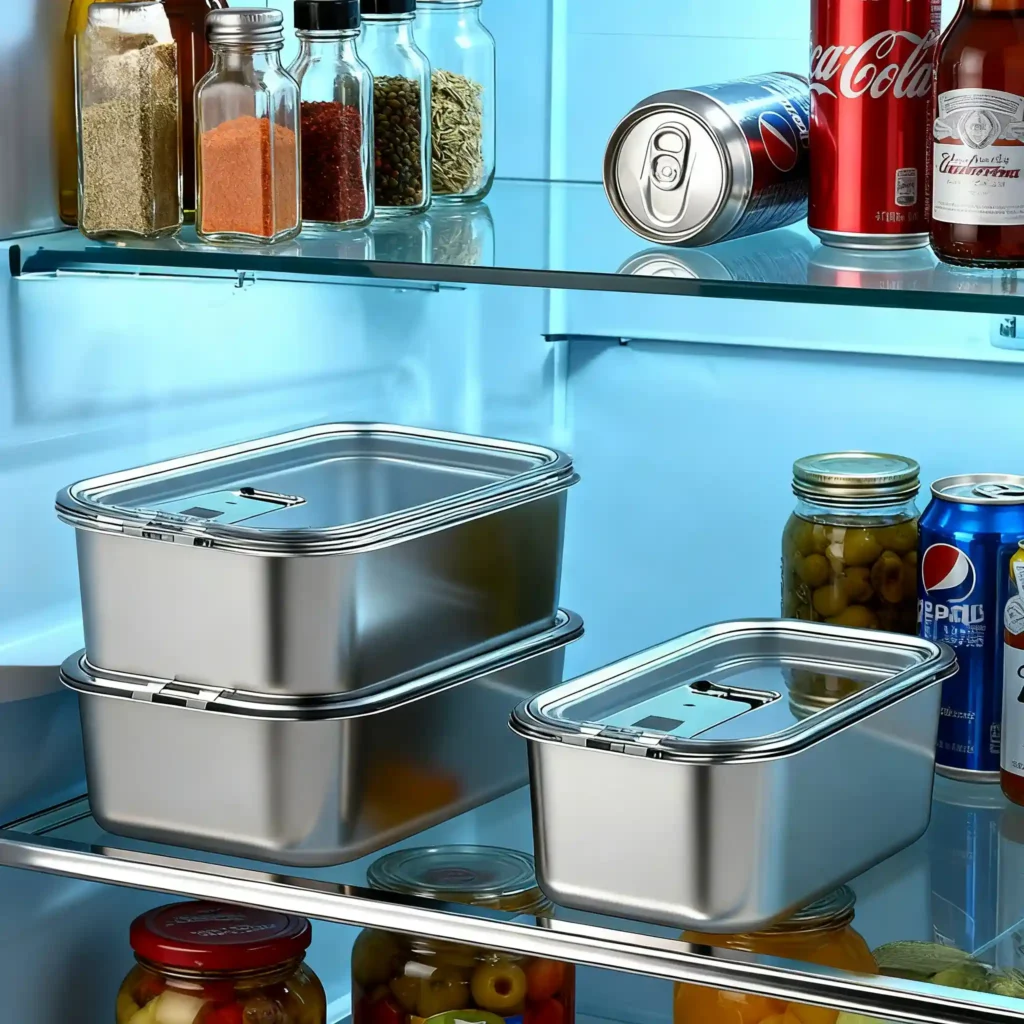
304 stainless steel is globally recognized as the industry standard for food-grade kitchenware. Frequently referred to as 18/8 stainless steel—due to its composition of approximately 18% chromium and 8% nickel—it provides an exceptional balance of mechanical strength and budget-friendly value.
One of the main reasons for its popularity is its balanced performance. 304 stainless steel offers good corrosion resistance, durability, formability, and weldability, making it suitable for products that need to withstand regular handling and repeated use.
For everyday kitchen storage, the material needs to be practical as well as durable. A storage container may be opened and closed many times a day, exposed to moisture, food residue, temperature changes, and frequent washing. 304 stainless steel can perform well under these everyday conditions when the product is properly designed and manufactured.
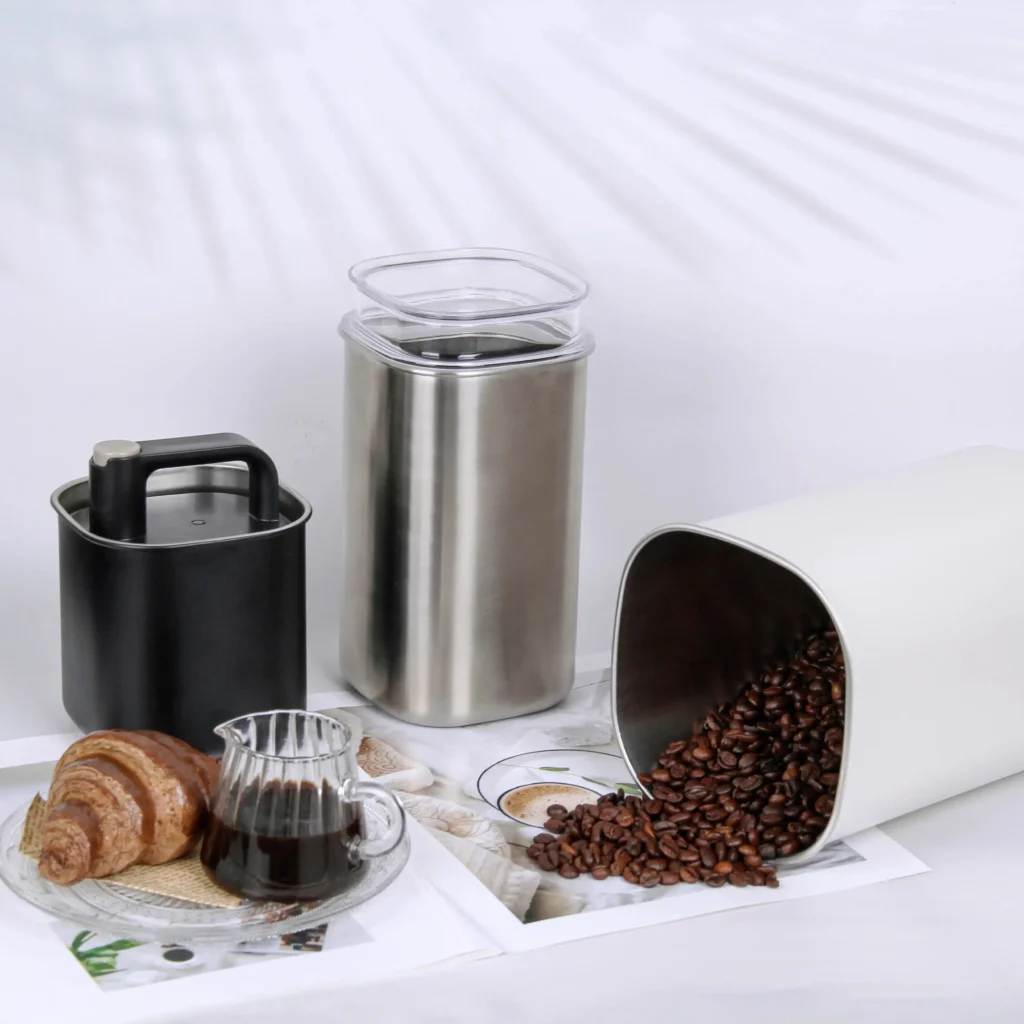
This combination of performance and cost makes 304 stainless steel a popular option for food storage containers, kitchen canisters, lunch boxes, meal prep containers, bowls, and other general pantry organization.
What is 316 Stainless Steel?
Often referred to as marine-grade or surgical-grade stainless steel, 316 steel takes performance to the next level. By incorporating molybdenum (typically 2% to 3%) into the alloy formula alongside a higher nickel content (often termed 18/10), manufacturers significantly enhance the material’s defense mechanisms against harsh chemical reactions, pitting corrosion, and extreme temperatures.
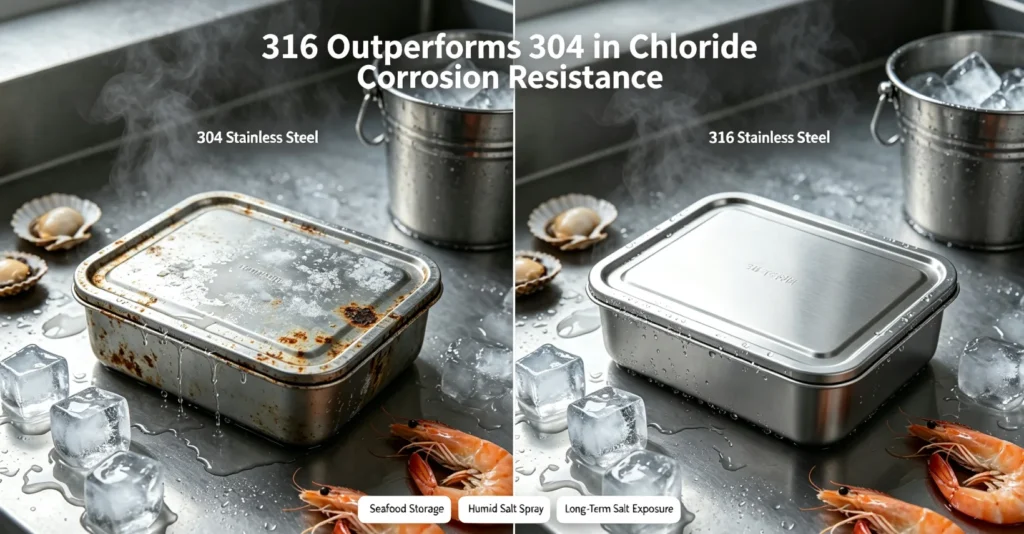
The addition of molybdenum improves the material’s resistance to certain types of corrosion, especially localized corrosion associated with chlorides. This gives 316 stainless steel an advantage in environments where salt, seawater, or other chloride-containing substances are present.
In the kitchen and food storage industry, this additional corrosion resistance can be useful for products exposed to demanding conditions. However, the higher corrosion resistance of 316 does not necessarily mean that it is the best choice for every kitchen storage product.
The right choice still depends on the food being stored, the cleaning method, the expected service environment, product positioning, and target price.
304 vs 316:
Which Is More Resistant to Rust?
Both 304 and 316 stainless steel offer good corrosion resistance, but 316 has an advantage when it comes to certain chloride-rich environments.
The molybdenum contained in 316 improves its resistance to localized corrosion such as pitting and crevice corrosion. This can be especially useful in environments involving salt water or higher chloride exposure.
For everyday home kitchens, however, the difference may not be significant enough to justify the additional material cost of 316 for every product.
Product design and manufacturing quality also matter. Poor surface finishing, contamination from other metals, improper welding, or unsuitable cleaning practices can affect the corrosion performance of stainless steel.
Therefore, selecting the right grade is important, but it should be considered together with the entire product manufacturing process.
Which Is Easier to Clean?
Both 304 and 316 stainless steel can provide smooth, durable surfaces that are relatively easy to clean when properly finished.
This is particularly important for food storage containers and kitchen canisters, because these products may come into contact with oils, sauces, spices, crumbs, moisture, and other food residues.
A well-finished stainless steel surface can make daily cleaning more convenient and help maintain the product’s appearance over time. For products designed for frequent use, easy cleaning can have a direct impact on customer satisfaction.
However, cleaning performance does not depend on the stainless steel grade alone. Lid structure, corners, seams, gaskets, surface finish, and the overall shape of the container can all affect how easy the product is to clean.
For kitchen storage products, good design and manufacturing quality can be just as important as choosing between 304 and 316 stainless steel.
Which Is Better for Stainless Steel Food Containers?
For most everyday food storage applications, 304 stainless steel is an excellent choice.
A typical household food container needs to be durable enough for repeated use, resistant to everyday kitchen moisture, easy to clean, and practical from a cost perspective.
304 stainless steel meets these requirements for many applications. It can also be manufactured in different shapes, sizes, and finishes, giving brands plenty of flexibility when developing product collections.
For example, 304 stainless steel is commonly suitable for food storage containers, stainless steel canisters, lunch boxes, meal prep containers, grain containers, coffee and tea canisters, spice containers, and kitchen organization products.
316 stainless steel can be considered when a product requires enhanced resistance to chloride-related corrosion. However, for mainstream household kitchen storage, 304 often provides a more balanced solution.
Which Is More Cost-Effective?
For most kitchen storage products, the total cost of the material is an important factor.
316 stainless steel is generally more expensive than 304 due to its alloy composition and the addition of molybdenum. If a product does not need the additional corrosion resistance, using 316 may increase the manufacturing cost without providing a meaningful benefit to the end user.
For mass-market kitchen storage products, 304 can therefore be an attractive option because it provides a strong combination of performance and cost.
However, cost should not be considered in isolation. A product’s expected lifespan, target customer, retail price, positioning, and required performance should all be included when evaluating the overall value.
For premium kitchenware, 316 may make sense when enhanced corrosion resistance is an important part of the product proposition.
Does 304 or 316 Stainless Steel Affect Product Design?
For kitchen storage brands, material selection is closely connected to product design and manufacturing.
The stainless steel grade can influence forming, welding, surface finishing, product weight, and manufacturing cost. These factors can ultimately affect the appearance and usability of the finished product.
For example, a kitchen canister may require a smooth brushed finish, a polished exterior, a rolled edge, or a specially designed opening. A lunch box may need formed corners, hinges, locking mechanisms, and a sealing system.
This means that choosing stainless steel is not simply about selecting a grade. Manufacturers also need to evaluate whether the material works well with the intended production process and product structure.
For brands developing custom kitchen storage products, working with an experienced manufacturer can help balance material performance, design, production feasibility, cost, and final product quality.
Why Choose Stainless Steel for Kitchen Storage?
Stainless steel has become a popular choice for modern kitchen storage products because it combines durability, practicality, and a clean appearance. Unlike materials that may be more easily affected by daily wear, stainless steel is designed to handle frequent use, washing, and exposure to moisture, making it suitable for food storage containers, kitchen canisters, lunch boxes, and meal prep containers.
Another advantage is its good corrosion resistance and easy-to-clean surface. For everyday kitchen use, containers may come into contact with food, oils, water, and different ingredients. A well-made stainless steel container is easy to maintain and can provide a practical solution for long-term kitchen organization.
Stainless steel also offers flexibility in product design. Different sizes, shapes, lids, and surface finishes can be developed for different storage needs, from pantry organization and dry food storage to lunch and meal preparation. For many everyday kitchen applications, 304 stainless steel provides a practical balance between performance, durability, and cost, making it a popular choice for kitchen storage products.
How to Choose the Right Stainless Steel Food Storage Container?
Choosing the right stainless steel food storage container depends on more than just the material. Start by considering the container’s intended use, capacity, and shape. Smaller containers can be suitable for spices, snacks, and sauces, while larger sizes are more practical for rice, grains, flour, pasta, and other pantry staples. The right shape can also make it easier to organize refrigerators, cabinets, and pantry spaces.
The lid and sealing system are also important factors. A well-designed lid should be easy to open and close while providing a secure fit for everyday use. For products used to store dry foods, snacks, coffee, or prepared meals, a reliable sealing system can help protect the contents from moisture and everyday kitchen conditions.
Finally, pay attention to details such as surface finish, edges, cleaning convenience, and overall construction. Brushed stainless steel can provide a modern, understated appearance, while polished finishes offer a brighter look. By considering material grade, capacity, lid design, sealing, and finish together, you can choose a stainless steel food storage container that better fits both everyday use and your kitchen organization needs.
Final Thoughts: Making the Right Investment for Your Kitchen.
The best stainless steel grade depends on the intended use of the product.
Choose 304 Stainless Steel If:
304 is often a practical choice for everyday kitchen products where good corrosion resistance, durability, easy cleaning, and cost-effectiveness are important.
It is particularly suitable for:
- Stainless steel food storage containers
- Kitchen canisters
- Lunch boxes
- Meal prep containers
- Cereal and grain storage
- Coffee and tea canisters
- Spice storage
- General kitchen organization
Consider 316 Stainless Steel If:
316 may be worth considering when enhanced resistance to chloride-related corrosion is an important requirement.
It may be suitable for:
- Products exposed to higher salt levels
- More demanding food-related environments
- Applications with higher chloride exposure
- Premium products where enhanced corrosion resistance is a selling point
Comprehensive Comparison Table: 304 vs 316
| Feature | 304 Stainless Steel (18/8) | 316 Stainless Steel (18/10) |
| Alloy Composition | 18% Chromium, 8% Nickel | 18% Chromium, 10% Nickel, 2-3% Molybdenum |
| Corrosion Resistance | Excellent for standard household foods and water | Superior resistance to chlorides, salts, and strong acids |
| Thermal & Impact Durability | High durability, warp-resistant | Extreme durability under aggressive conditions |
| Price Point | Cost-effective and widely accessible | Premium investment due to rare alloying elements |
| Primary Kitchen Use | Pantry storage canisters, coffee vaults, standard lunch boxes | Acidic/salty meal prepping, outdoor gear, heavy-duty utility |
Looking for Stainless Steel Kitchen Storage Solutions?
Choosing the right stainless steel is only the beginning of developing a successful kitchen storage product. Product design, sealing performance, surface finish, dimensions, manufacturing quality, packaging, and user experience all play an important role.
Whether you are developing stainless steel food storage containers, kitchen canisters, lunch boxes, meal prep containers, or other kitchen organization products, the right manufacturing partner can help you turn your product concept into a market-ready solution.
At Easylife, we work with brands, wholesalers, retailers, and other business customers to develop stainless steel kitchen storage products based on different product designs, sizes, finishes, packaging requirements, and market needs.
From initial product ideas to material selection, sampling, production, and final delivery, an experienced manufacturing team can help ensure consistency and quality throughout the process.
Looking for a reliable partner for your next stainless steel kitchen storage project? Contact us to discuss your product requirements.