When using an olive oil bottle, small design details can make a noticeable difference. Oil that drips down the bottle neck, a spout that is difficult to close, or a lid that does not feel securely positioned can turn a simple kitchen task into an inconvenient experience.
An olive oil pour spout is more than an accessory attached to a bottle. Its design affects pouring control, cleanliness, ease of use, and the overall quality consumers associate with the product. For kitchenware brands, retailers, and wholesale buyers, choosing the right spout can also create opportunities to differentiate a product range.
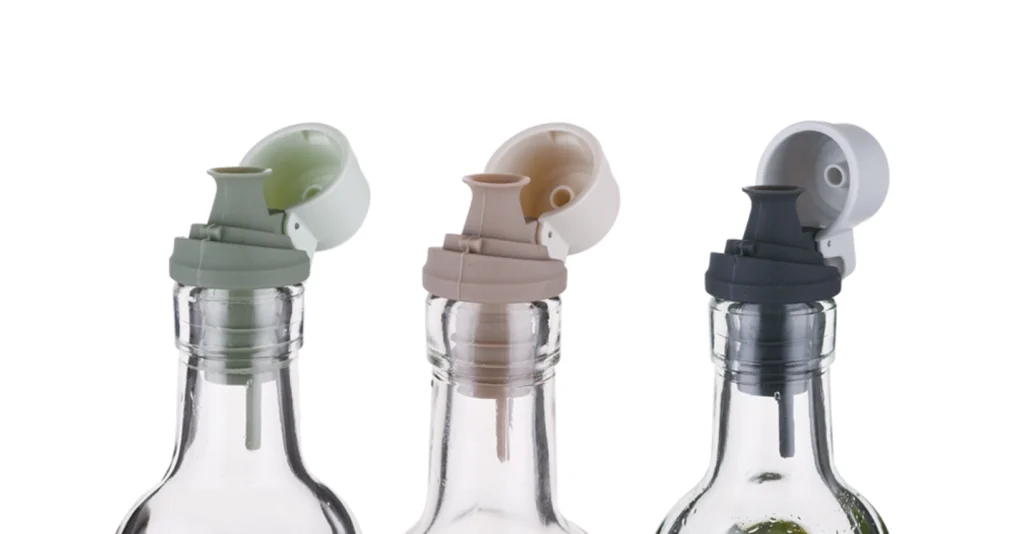
At EasyLife Housewares, we believe thoughtful product improvements can make everyday kitchenware more practical. Our featured silicone pour spout has been refined through multiple generations of development, with a focus on a non-drip design, distinctive click feedback when closing, and customizable color options. In this guide, we explore how these features improve the user experience and what B2B buyers should consider when sourcing olive oil pour spouts.
What Is an Olive Oil Pour Spout?
An olive oil pour spout is a component fitted to an oil bottle to help direct the liquid during pouring. Depending on the design, it may help control the flow, reduce mess around the bottle opening, and make it easier to dispense oil into a pan, bowl, or salad.
Pour spouts come in different materials and configurations, including silicone, stainless steel, and rigid plastic designs. Some use a simple open nozzle, while others incorporate a closing mechanism to cover the pouring opening between uses.
The right design depends on the intended application, bottle-neck dimensions, liquid flow characteristics, and the level of closure protection required.
For brands developing oil and vinegar bottles, the spout should not be treated as an isolated component. It needs to work with the bottle as a complete system. A well-designed bottle and spout combination can offer a more consistent pouring experience while supporting the product’s overall appearance and positioning.
4 Ways a Well-Designed Olive Oil Pour Spout Improves Performance
1. More Controlled Pouring for Everyday Use
Olive oil is used in many ways, from dressing salads and dipping bread to cooking vegetables and preparing sauces. In each application, users need a reasonable degree of control over how much oil leaves the bottle.
The opening size, nozzle shape, and internal structure of an olive oil pour spout all influence the flow. A suitable design helps direct the stream and makes it easier for users to dispense oil without pouring more than they intended.
For consumers, this means a more convenient cooking experience. For brands, it means the pouring function can become a meaningful product benefit rather than a minor technical detail.
When evaluating an oil bottle spout, buyers should test it with the intended liquid and bottle. Pouring speed and control can vary with the design, so the actual product should be assessed before final specifications are confirmed.
2. Non-Drip Design for a Cleaner Kitchen
One common frustration with oil bottles is the residue that collects around the spout after pouring. Oil can run down the outside of the nozzle or bottle neck, leaving a sticky surface that needs frequent cleaning.
A well-designed non-drip olive oil pour spout aims to reduce this problem by helping control the flow and minimize unwanted dripping after use.
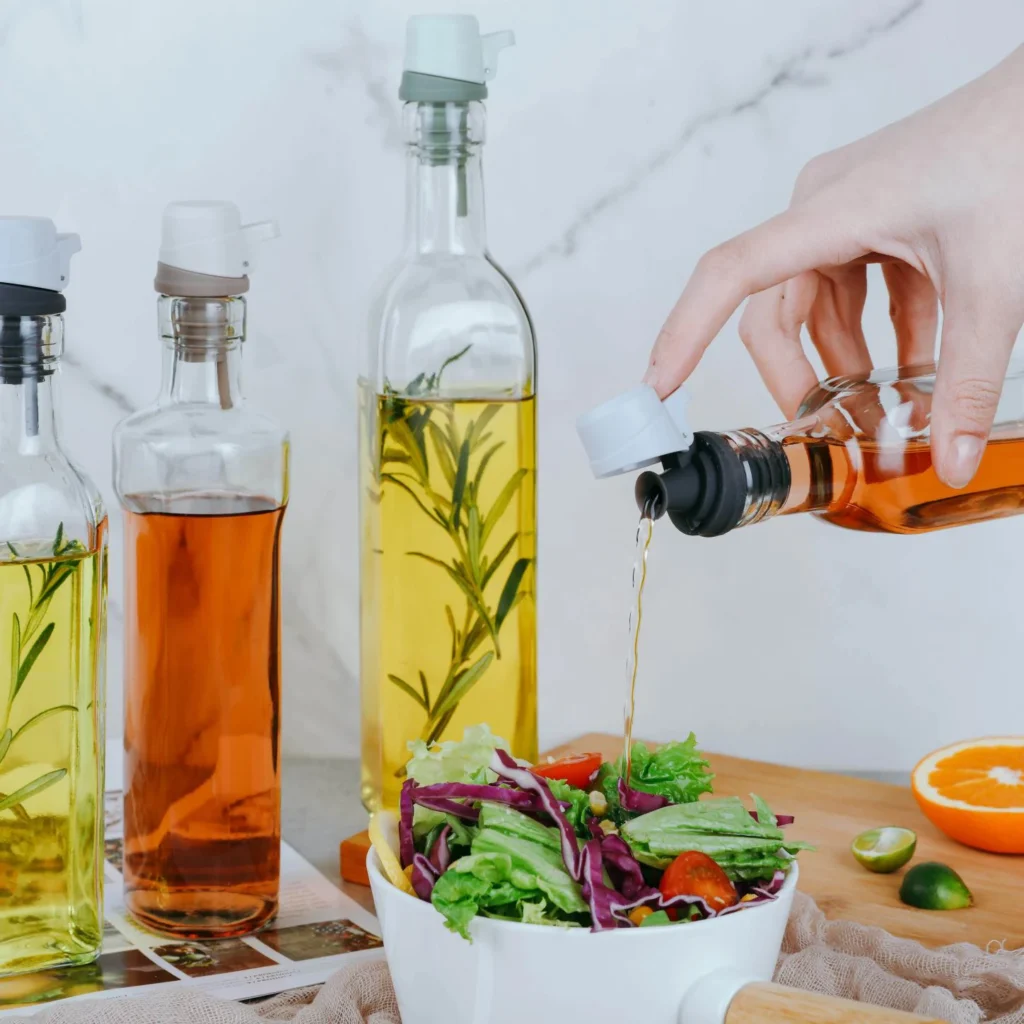
EasyLife’s featured pour spout incorporates a non-drip design to support a cleaner and more convenient user experience. By helping reduce oil residue around the bottle opening, it can make the bottle easier to handle and help keep kitchen counters and dining tables tidier.
Cleanliness also matters from a product-design perspective. Consumers often interact with an oil bottle several times a day, so a feature that reduces mess can improve the perceived quality of the entire product.
It is important to note that non-drip performance depends on the spout structure, the liquid, the bottle angle, and how the product is used. Buyers should evaluate performance under realistic conditions rather than assuming that any pouring spout will eliminate every drop.
3. A Distinctive Click for More Confident Closing
A pouring spout needs to perform well not only when dispensing oil but also when being closed between uses.
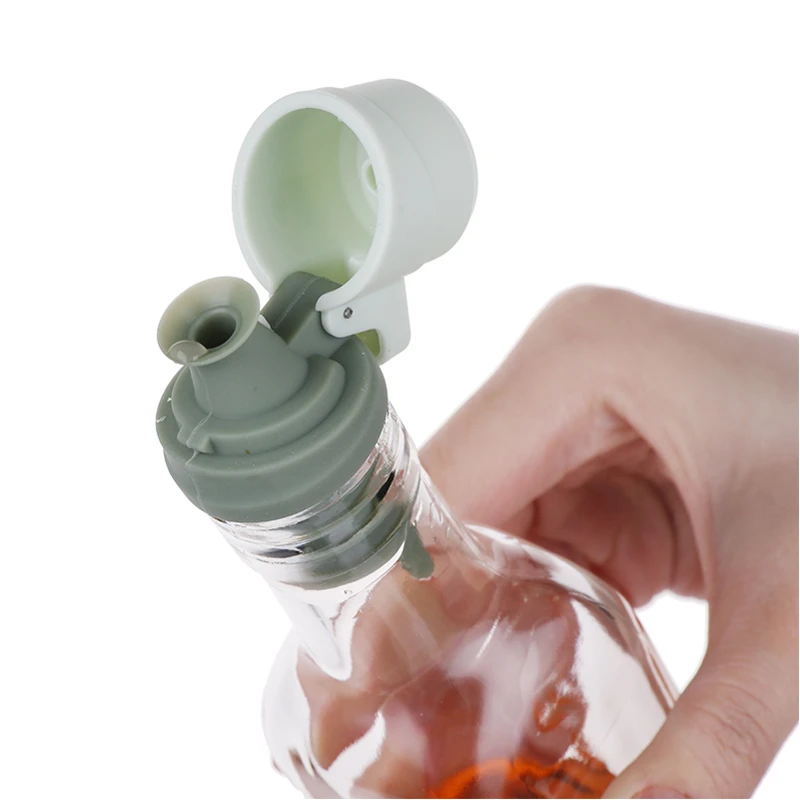
On EasyLife’s featured design, the closing mechanism produces a distinct “click” sound when the closing action is completed. This audible feedback gives users a clearer indication that the mechanism has reached its intended closed position, creating a more reassuring and satisfying interaction.
Although it is a small detail, this kind of feedback can make a product feel more deliberate and intuitive to use. Consumers do not have to rely solely on visual inspection to understand that the closing action has taken place.
For brands and product developers, this illustrates how functional details can help distinguish one oil dispenser from another. Many bottles may look similar on a shelf, but the experience of opening, pouring, and closing can influence how consumers perceive their quality.
The click sound itself does not automatically prove that a bottle is airtight or leak-proof. Actual closure and sealing performance depend on the product’s construction and testing. Nevertheless, clear closing feedback can be a valuable usability feature when combined with a properly designed closing mechanism.
4. A Refined Design Developed Through Multiple Generations
Good product design often comes from identifying small problems and improving them over time. A pouring spout may appear simple, but its fit, opening, closing action, and interaction with the bottle can all affect everyday performance.
EasyLife’s featured olive oil pour spout has undergone multiple generations of product improvement. This ongoing refinement reflects an emphasis on practical details, including the pouring experience, the closing mechanism, and the non-drip function.
Rather than focusing only on the appearance of the component, product development should consider how it behaves during repeated everyday use. Is the spout convenient to operate? Does the closing action feel clear? Does the design help minimize residue? Does the component fit the intended bottle correctly?
These are the kinds of questions that matter when developing a product for the market.
For B2B buyers, a supplier’s willingness to refine product details can be valuable when building a differentiated kitchenware range. A carefully developed spout can contribute to the overall user experience without requiring the entire bottle design to be radically different.
Why Silicone Is a Useful Material for Olive Oil Pour Spouts
Silicone is used in many kitchenware components because it can offer flexibility and support a variety of shapes and configurations. In an olive oil pour spout, these properties may be useful for designing components that fit particular bottle openings or incorporate specific functional features.
However, the performance of a spout depends on more than the material alone. Its shape, dimensions, construction, and compatibility with the bottle are equally important.
When sourcing silicone olive oil pour spouts, buyers should consider three main factors.
Material suitability: Confirm that the selected silicone material is appropriate for the intended food-contact application and target market. Request relevant documentation from the supplier where required.
Fit and function: The spout should be compatible with the bottle opening and operate as intended. Buyers should assess installation, retention, opening and closing, and pouring behavior on the actual bottle.
Care and durability: Cleaning instructions and repeated-use performance should be confirmed for the finished product. Buyers should not assume that every silicone component has the same heat resistance, cleaning compatibility, or service life.
A successful design combines appropriate material selection with careful engineering and product-specific testing.
Custom Colors: Helping Brands Create a Distinctive Product Range
Functionality is essential, but appearance also matters in the kitchenware market. Oil and vinegar bottles are often displayed on countertops or dining tables, making their design part of the overall kitchen environment.
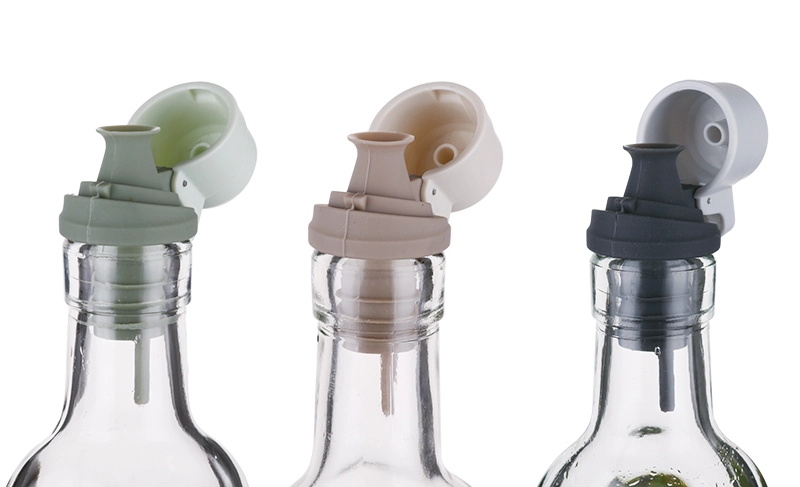
EasyLife’s featured olive oil pour spout supports custom color options, giving B2B buyers more flexibility when developing products for different brands and markets.
For example, a brand may prefer a neutral color to complement a minimalist glass bottle, a darker shade for a premium-looking product, or a coordinated color scheme across a collection of oil and vinegar dispensers. The appropriate choice depends on the brand identity, bottle design, and target customer.
Color customization can also help retailers create coordinated sets or distinguish different products within the same range.
Beyond color, buyers can discuss other customization requirements, such as logo application and packaging, according to the selected product and project specifications. Availability, minimum order quantities, and development requirements should be confirmed with the supplier.
For private-label brands, these options provide a way to combine practical functionality with a product appearance that is more consistent with the wider collection.
How to Choose the Right Olive Oil Pour Spout for Your Product
For importers, wholesalers, retailers, and product developers, selecting an olive oil pour spout requires more than comparing photographs or prices. The component needs to fit the bottle, perform consistently, and meet the requirements of the intended market.
Start with bottle compatibility. Confirm the bottle-neck dimensions and the spout’s fitting structure. A component that does not fit correctly may affect stability, usability, or closure performance.
Next, consider the intended pouring behavior. Think about whether the bottle will be used mainly for cooking, salad dressing, tabletop serving, or another application. The desired flow rate and level of control will help guide the design.
Evaluate the closing mechanism and non-drip performance using product samples. Test how the spout opens and closes, whether the click feedback is clear, and how much residue remains after normal pouring. Repeated-use testing can help reveal issues that may not be obvious during a brief inspection.
Finally, review material documentation, customization, and packaging requirements. Confirm the suitability of food-contact materials for the destination market, and discuss color options, logo application, minimum order quantities, and packaging specifications before placing an order.
Testing the complete bottle-and-spout combination is the most reliable way to assess whether a product meets your requirements.
Developing Custom Olive Oil Pour Spouts with EasyLife Housewares
For kitchenware brands, a well-designed olive oil pour spout can offer more than a functional improvement. It can become a recognizable feature that contributes to the product’s overall user experience.
EasyLife Housewares works with B2B buyers on kitchen storage and oil dispenser products, including opportunities to discuss product customization and OEM/ODM projects.
Our featured pour spout combines several practical design considerations: a non-drip function, audible click feedback when closing, a design refined through multiple generations, and customizable color options. These features give buyers specific points to consider when developing or expanding an oil and vinegar bottle collection.
Whether you are sourcing an existing design or exploring a customized solution, it helps to share your preferred bottle style, target market, desired spout features, color requirements, and packaging needs at the beginning of the project.
Looking for an olive oil pour spout for your next product range? Tell us what you need, and let’s discuss the options for your market.
FAQ About Olive Oil Pour Spouts
What is an olive oil pour spout used for?
An olive oil pour spout directs oil as it leaves the bottle and can help users control the flow. Depending on its design, it may also help reduce dripping and provide a closing mechanism for use between pours.
Do non-drip olive oil pour spouts prevent all dripping?
Not necessarily. A non-drip design aims to reduce unwanted dripping and residue, but performance depends on the spout structure, liquid characteristics, bottle angle, and usage conditions. Buyers should evaluate the actual product before making performance claims.
What does the click sound mean when closing a pour spout?
An audible click provides feedback that the closing action has reached its intended position. It can make the closing experience feel clearer and more reassuring, but the sound alone does not establish that the bottle is airtight or leak-proof.
Can silicone olive oil pour spouts be customized in different colors?
Some designs support color customization. Options depend on the product, available materials, production requirements, and order quantity. Buyers should confirm available colors and specifications with the supplier.
Can the same pour spout be used for olive oil and vinegar?
That depends on the design, material suitability, bottle compatibility, and intended application. Buyers should verify that the selected spout performs appropriately with each liquid rather than assuming that one configuration suits every product.
What should B2B buyers check before ordering olive oil pour spouts?
Buyers should review bottle compatibility, pouring control, closing feedback, non-drip performance, material documentation, repeated-use performance, customization options, packaging, and minimum order quantity. Sample testing is recommended before finalizing specifications.
Conclusion
A well-designed olive oil pour spout can improve the everyday experience of using an oil bottle through controlled pouring, reduced dripping, and convenient closing. Details such as audible click feedback and customizable colors can also help brands develop products with a more distinctive identity.
For B2B buyers, the key is to evaluate the complete bottle-and-spout design, verify performance through testing, and select customization options that fit the target market.
At EasyLife Housewares, we continue to refine practical product details to help brands explore more functional and differentiated kitchenware solutions. If you are looking for an olive oil pour spout or planning a customized oil and vinegar bottle project, contact our team to discuss your requirements and potential OEM/ODM options.