In the competitive world of food container wholesale, the terms “airtight” and “leakproof” are often used as synonyms. However, for a meal-prep business or a school lunch retailer, confusing these two can lead to messy bags, ruined reputations, and high return rates.
As a manufacturer, we know that the “perfect” bento box is defined by its seal. It becomes especially important to thoroughly understand the difference between airtight bento boxes and leakproof bento boxes. Here is why understanding the technical difference is vital for your inventory and your customers.
Defining the Standards for Bento Storage
What is an Airtight Bento Box?
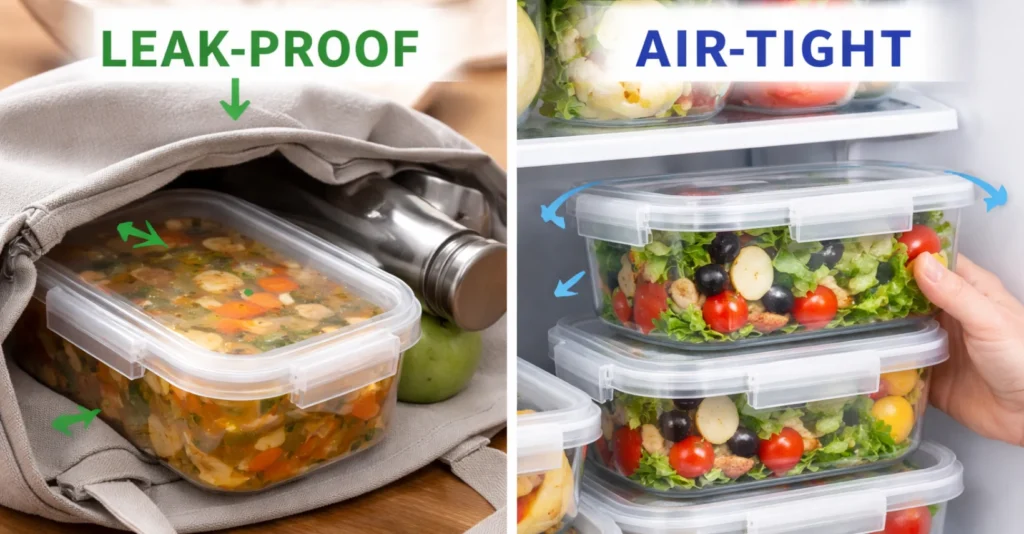
An airtight seal focuses on blocking the exchange of gases (oxygen and water vapor).
- The Goal: To prevent oxidation and keep food from getting stale.
- Best For: Dry snacks, crackers, and cut fruits that brown quickly.
- Wholesale Note: Ideal for customers focused on long-term “pantry” style freshness.
What is a Leakproof Bento Box?
A leakproof seal is engineered to contain liquids (oils, dressings, and sauces) even when the box is shaken or turned sideways in a backpack.
- The Goal: Total containment of fluids to prevent cross-contamination between compartments.
- Best For: Salads with dressing, yogurt, pasta with sauce, and dips like hummus.
- Wholesale Note: This is the #1 requirement for the “on-the-go” and school lunch markets.
Engineering the Modern Bento Seal
At the manufacturing level, the difference lies in the closure mechanism and gasket material.
Integrated Silicone Seals: High-quality leakproof bento boxes, like those in our Wholesale Silicone Bento Box line, use a precision-molded silicone ring that lines each individual compartment. This prevents the “flavor bleed” common in cheaper, non-sealed dividers.
Multi-Point Locking: For a bento to be truly leakproof under pressure, it often requires a mechanical lock. Four-sided snap locks apply the constant downward force needed to keep a liquid-tight seal against the gasket.
How to Tell the Difference: The Professional “Stress Test”
If you are vetting a new supplier or training your quality control team, use these two industry-standard tests to verify performance:
The “Squeeze & Hiss” Test (Airtight)
Close an empty container and press firmly on the center of the lid.
- Pass: The lid resists your pressure, or you feel a slight “bounce” because the air inside is trapped.
- Fail: You hear a faint “hissing” sound. This means air is escaping, and moisture will eventually get in.
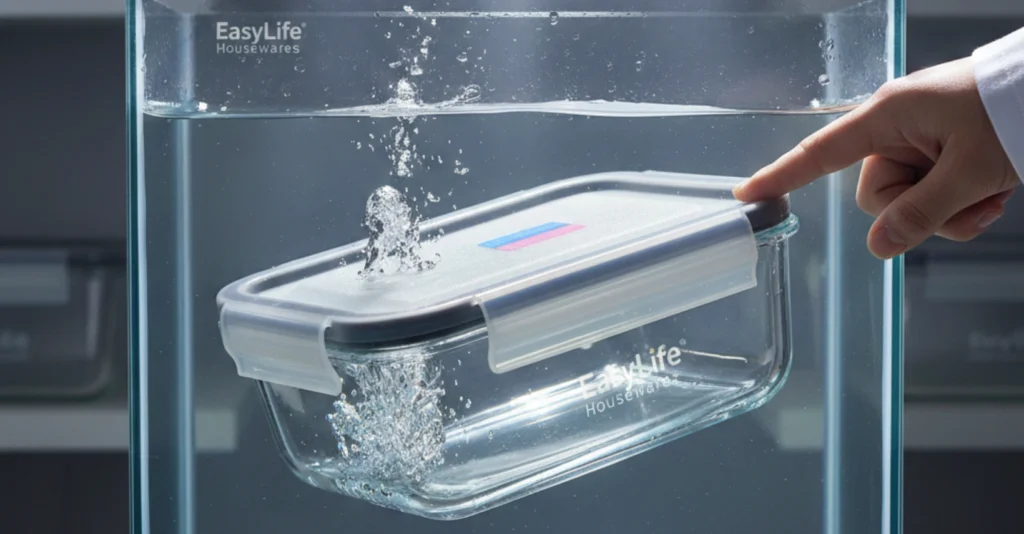
The “Inversion & Shake” Test (Leakproof)
Fill the container 75% with water and secure the lid.
- Pass: Invert the container and shake it vigorously for 30 seconds. Wrap a dry paper towel around the seal; it should remain bone-dry.
- Fail: Any moisture on the rim or “weeping” from the corners indicates a failure to handle hydrostatic pressure.
Technical Specifications: Material Matters
When choosing inventory for your warehouse, the materials used in the seal are just as important as the plastic or glass itself, learn more about the differences between TPE, silicone, and rubber.
| Material | Best Use | Durability |
| Silicone (VMQ) | High-end Airtight/Leakproof | Excellent. Withstands extreme heat/cold without losing elasticity. |
| TPE (Thermoplastic) | Entry-level Airtight | Good. Integrated directly into the lid (overmolded), so it won’t fall out. |
| Rubber | Economy Storage | Fair. Can become brittle over time, leading to seal failure. |
Why It Matters for Your Wholesale Business
For a kitchenware wholesaler, the distinction between airtight and leakproof isn’t just a technicality—it’s a risk management strategy and a sales driver. When you sell a bento box, you aren’t just selling a plastic or steel container; you are selling the promise that a customer’s lunch won’t ruin their $1,000 laptop or that their expensive organic ingredients won’t spoil prematurely.
1. Reducing the “Return Rate” Epidemic
In e-commerce and retail, the #1 reason for negative reviews on food storage is “It leaked in my bag.”
- The Confusion: Most consumers assume any container with a lid is leakproof.
- The Solution: By clearly labeling your inventory as “Airtight for Freshness” vs. “Leakproof for Transport,” you manage expectations.
- Business Impact: Accurate labeling leads to fewer “defective” claims, lower shipping costs for returns, and higher star ratings on retail platforms.
2. Capturing High-Value Market Segments
Different customers have vastly different pain points. Understanding the engineering allows you to target them effectively:
- The Meal Prep Professional: They need leakproof bento boxes. Their business depends on delivering liquid-heavy meals (curries, salads with dressing) without a mess.
- The Bulk/Pantry Organizer: They need airtight containers. They are looking to prevent pests and oxidation for expensive dry goods like specialized flours or coffee.
- The Eco-Conscious Parent: They often seek stainless steel or silicone options. By offering leakproof versions of these materials, you hit a “premium” price point that plastic cannot reach.
3. Compliance and Food Safety
If you sell to commercial kitchens or hospital cafeterias, “leakproof” is a safety requirement.
- Cross-Contamination: A container that leaks raw meat marinade in a walk-in cooler is a health code violation.
- Shelf-Life Extension: Airtight seals are scientifically proven to reduce food waste. Positioning your products as “waste-reduction tools” allows you to sell to sustainability-focused corporate clients.
Conclusion: The Seal of Quality for Your Business
Understanding the technical divide between airtight and leakproof is more than just a storage tip—it is a foundational element of a successful kitchenware business. Whether you are a retailer stocking the next must-have lunchbox or a meal-prep company looking to eliminate delivery mishaps, the integrity of the seal is the integrity of your brand.
By offering products that explicitly meet these engineering standards, you provide your customers with more than just a container; you provide them with confidence, food safety, and long-term value.
At EasyLife Housewares, we specialize in high-performance manufacturing that takes the guesswork out of the equation. From 100% leakproof bento boxes to precision-engineered airtight canisters, we help you build an inventory that stands up to the rigors of daily use.