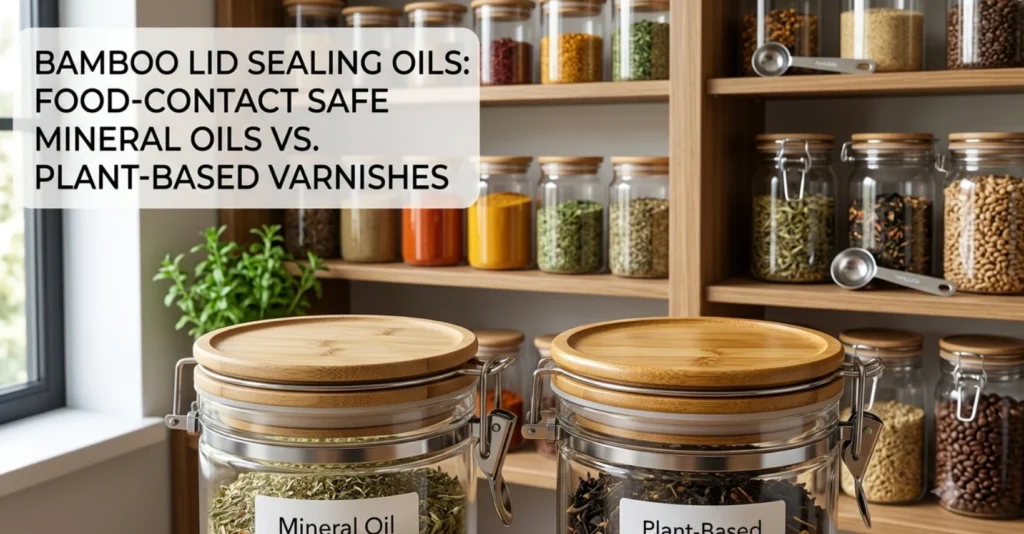
In the modern kitchenware market, bamboo-topped glass jars are no longer just a trend—they are a staple. Consumer demand for eco-friendly, sustainable, and warm-aesthetic pantry storage has made high-borosilicate glass jars with bamboo lids a top-selling category for retailers, importers, and private label brands globally.
However, for B2B buyers and product managers, bamboo presents a unique manufacturing challenge: it is a natural, porous organic material. Without the proper protective sealant, bamboo lids can absorb ambient moisture, warp, crack, or harbor mold during ocean transit, warehouse storage, or daily consumer use.
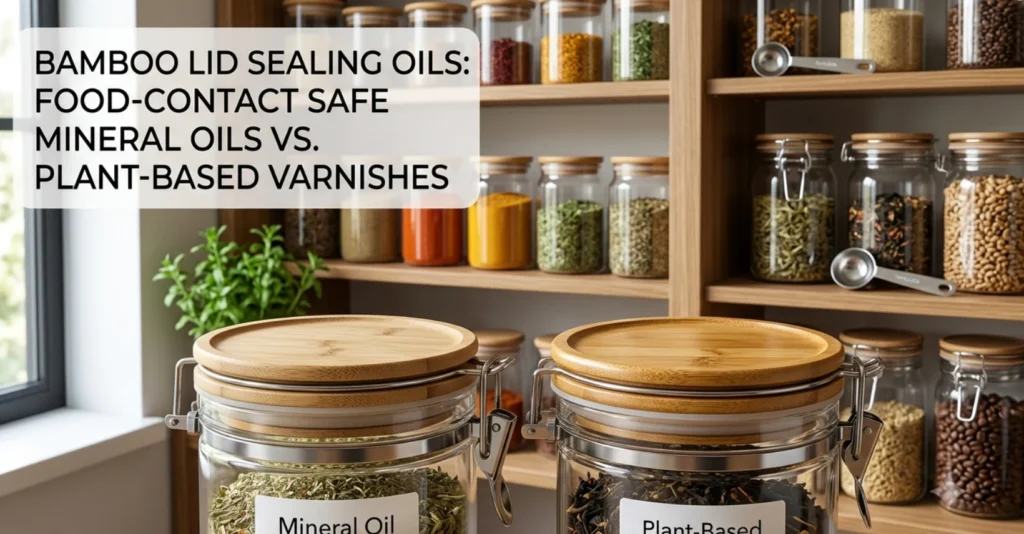
To protect the product and ensure safety, manufacturers apply a protective sealing coat. The two industry-standard choices are Food-Contact Safe Mineral Oil and Plant-Based Varnishes/Hardwax Oils.
Which finish is right for your kitchenware brand or retail lineup? This guide breaks down the technical, compliance, and commercial differences between mineral oils and plant-based varnishes to help you make an informed sourcing decision.
Food-Grade Mineral Oil: The Traditional Conditioning Finish
What It Is
Food-grade mineral oil is a highly refined, odorless, and colorless liquid petrolatum that meets strict international food-contact safety standards (such as US FDA 21 CFR 172.878). It penetrates deep into the bamboo fibers rather than curing into a hard outer shell.
Key Advantages for B2B Sourcing
- 100% Guaranteed Food-Contact Safety: Mineral oil is universally recognized by regulatory bodies for direct food contact, making FDA and LFGB compliance straightforward.
- Rancidity-Free: Unlike standard household vegetable or olive oils, refined mineral oil will never go rancid, smell, or turn sticky over time—a critical factor for inventory stored in warehouses for extended periods.
- Easily Renewable by End Consumers: If the wood looks dry after years of use, consumers can easily recondition the lid at home using standard cutting board oil.
Commercial Limitations
- Washes Away Over Time: Mineral oil does not form a permanent film barrier. Repeated washing by the consumer gradually strips the oil, requiring periodic maintenance.
- Moderate Water Resistance: While it repels light splashes, it does not provide an impenetrable barrier against high humidity or standing moisture.
Plant-Based Varnishes: The High-Performance Eco-Protector
What They Are
Plant-based varnishes and hardwax oils are derived from natural plant sources such as tung oil, linseed oil, or carnauba wax. When applied, they undergo a drying process to form a durable, protective layer on the surface of the bamboo.
Key Advantages for B2B Sourcing
Superior Moisture & Mold Barrier: Plant varnishes seal the bamboo pores completely. This provides high resistance to water absorption, dramatically reducing the risk of mold during humid ocean shipments and in humid kitchen environments.
Zero-Maintenance for End Users: The cured coating does not wash off with mild hand washing. This offers a “buy and forget” convenience that modern consumers prefer.
Enhanced Visual Appeal: Plant-based finishes accentuate the natural grain of the bamboo, giving the lid a rich, premium sheen that pops on retail displays and e-commerce product photos.
Strong ESG & Eco-Storytelling: Being 100% bio-based and renewable, plant varnishes allow your brand to market a truly sustainable, microplastic-free product line.
Commercial Limitations
Strict Certification Requirements: Unlike industrial polyurethanes, plant-based varnishes used on kitchenware must be explicitly certified for food-contact safety (FDA / LFGB / EU No 10/2011) to ensure zero toxic curing agents or harmful VOC emissions leach into stored foods.
Head-to-Head Comparison for B2B Sourcing
| Sourcing Factor | Food-Grade Mineral Oil | Certified Plant-Based Varnish |
| Regulatory Compliance | Universal FDA / LFGB approval | Requires certified food-safe formulas |
| Moisture & Mold Protection | Moderate (Repellent) | Excellent (Sealed Barrier) |
| End-User Maintenance | Requires periodic re-oiling | Maintenance-free |
| Sustainability Narrative | Refined mineral source | 100% Renewable plant source |
| Shelf-Life & Transit Safety | Good | Superior (Ideal for long sea freight) |
| Target Retail Positioning | Mass market / Value lines | Premium / Eco-luxury / Lifestyle lines |
What to Avoid in Bamboo Lid Manufacturing
When audit-checking suppliers or developing custom OEM/ODM specifications, ensure your factory avoids these common manufacturing pitfalls:
- Uncertified Industrial Polyurethanes: Cheap gloss coatings may look good initially, but they often contain heavy metals or phthalates that fail food-contact safety testing and emit harsh chemical odors upon unboxing.
- Raw, Unsealed Bamboo: Unsealed bamboo lids exposed to shipping containers during sea transit can absorb humidity, resulting in mold growth before the inventory even reaches your warehouse.
- Vegetable/Seed Oil Coatings: Non-drying cooking oils (like soy or canola oil) oxidize rapidly, resulting in foul smells, sticky residue, and potential bacterial growth.
The EasyLife Housewares Quality Standard
At EasyLife Housewares, we specialize in manufacturing high-borosilicate glass storage containers, stainless steel canisters, and precision-engineered bamboo storage systems for global brands and importers.
We prioritize safety, compliance, and durability across every product line:
- Certified Food-Contact Safety: All our bamboo lid coatings—whether natural food-grade mineral oil or certified plant-based varnishes—comply strictly with FDA, LFGB, and EU food safety standards.
- Anti-Mold & Transit Protection: Our bamboo materials undergo rigorous kiln-drying and surface sealing processes to ensure zero mold growth during international shipping and storage.
- Airtight Engineering: Every bamboo lid is fitted with precision, food-grade silicone seals to lock out humidity and keep food fresh.
- Flexible B2B Customization: We offer tailored finish options, custom logo laser engraving, and custom colorways to fit your brand’s unique market positioning.
Summary & Next Steps for Sourcing
Balancing regulatory compliance, long-term durability, and aesthetic appeal is essential when selecting the right bamboo lid finish for your product line. Both food-grade mineral oil and certified plant-based varnishes offer distinct functional advantages depending on your target market and sales channels.
At EasyLife Housewares, we work closely with brand owners and importers to tailor lid finishes, silicone seal tolerances, and material specifications to meet your market’s exact regulatory standards.
If you are evaluating specifications for an upcoming sourcing cycle, reach out to our engineering and OEM team to review technical data sheets, compliance documentation, or sample options.