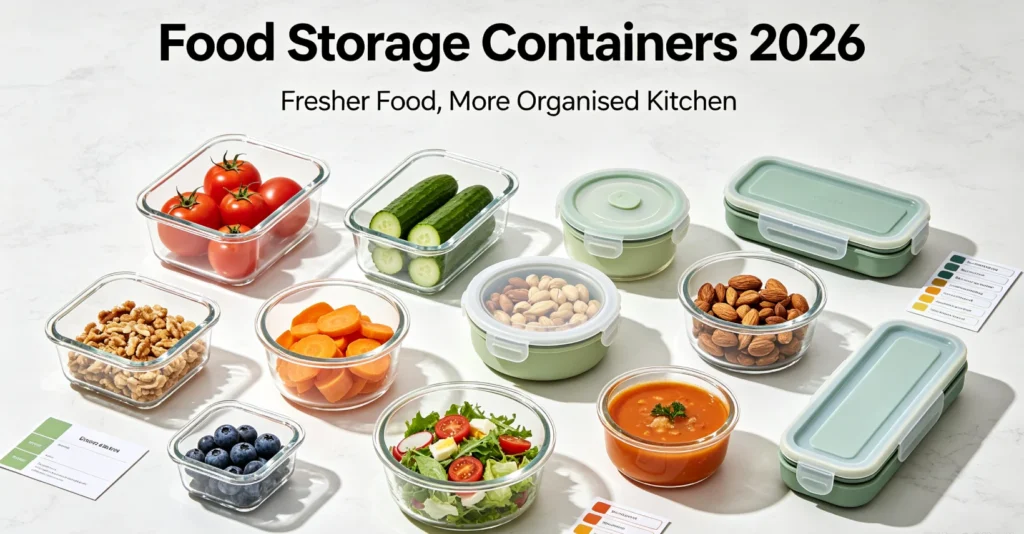
When you pick up a food container labeled “BPA-Free,” do you feel reassured? That reassurance may be misplaced. The chemical safety of food containers is far more complex than a single label suggests
— and the lid, which comes into direct contact with your food, may be exactly where overlooked risks hide.
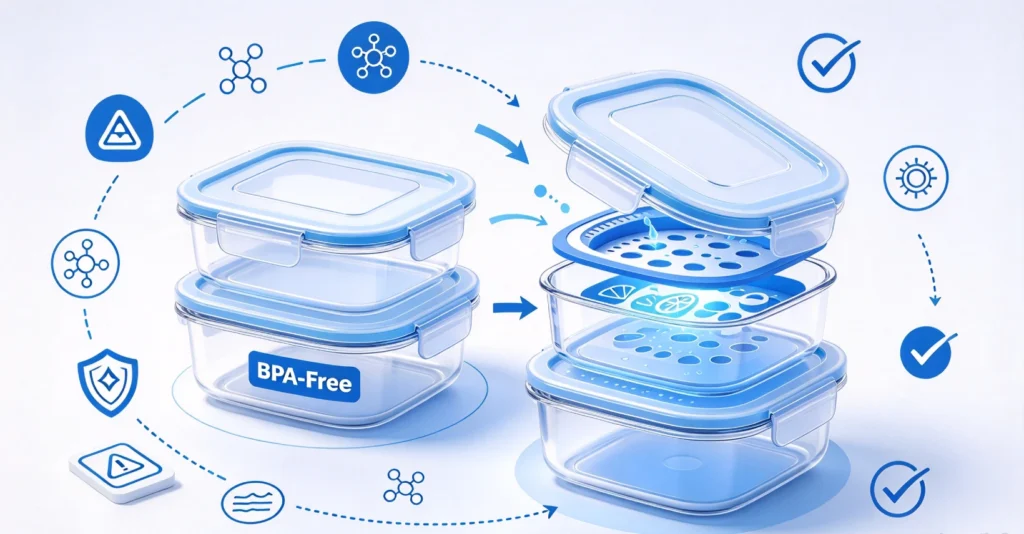
The Hidden Corners Behind the “BPA-Free” Label
BPA was once common in polycarbonate plastics and epoxy resins. As research revealed its potential endocrine-disrupting effects, a global “BPA-free” wave swept the market, and the EU banned BPA in food contact materials in January 2025.
However, “BPA-Free” does not mean safe. Many alternatives use structurally similar compounds such as BPS or BPF, which may also disrupt hormones. One study found that nearly all commercial plastic products—including “BPA-Free” ones—release detectable estrogenic chemicals. In some cases, BPA-Free products released even more than BPA-containing ones.
Even if a lid’s plastic contains no BPA, it may still release other harmful substances into your food.
The Lid: An Overlooked Contact Surface
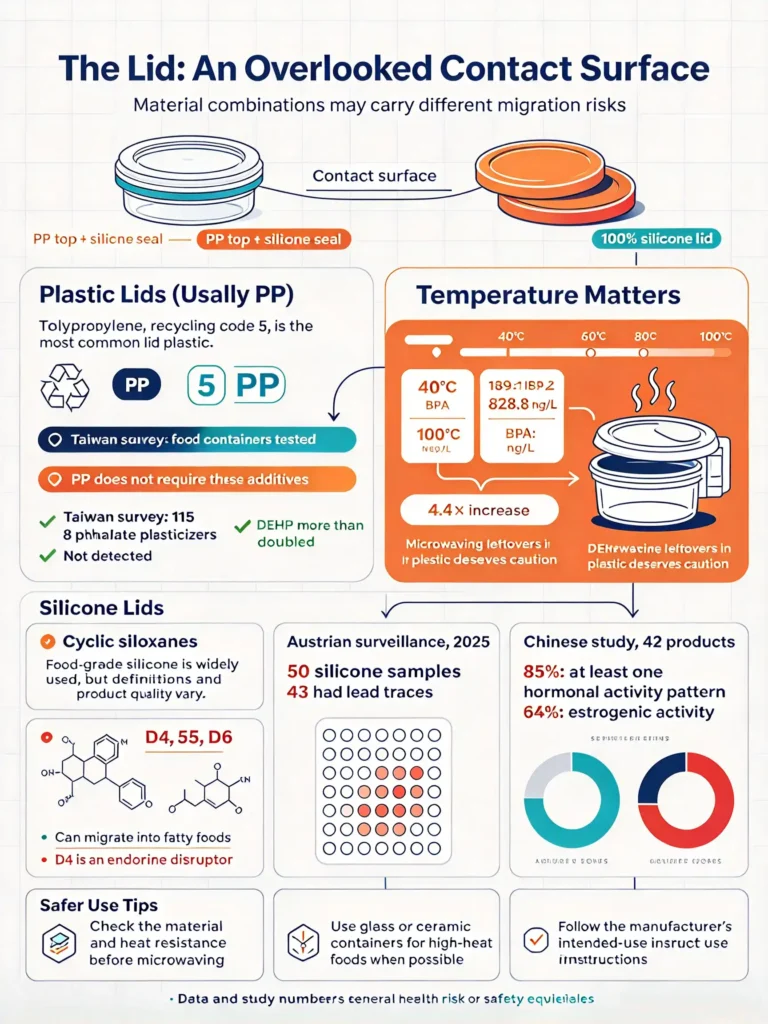
Lids are typically made from combinations of materials—a PP plastic top with a silicone sealing ring, or a fully silicone design. Each carries its own migration risks.
Plastic lids (usually PP). Polypropylene, recycling code 5, is the most common lid plastic. A Taiwan survey tested 115 plastic food containers for eight phthalate plasticizers—none were detected, since PP needs no such additives.
But temperature changes the picture. A 2025 study found BPA release from PP containers rose from 189.2 ng/L at 40°C to 828.8 ng/L at 100°C—a 4.4-fold increase. DEHP more than doubled. This is why microwaving leftovers in plastic deserves caution.
Silicone lids. Food-grade silicone is considered safe, but “food-grade” definitions and actual product quality vary. Japan’s Food Safety Commission noted silicone rubber may retain cyclic polydimethylsiloxanes (D4, D5, D6), which can migrate into fatty foods; D4 is an endocrine disruptor. A 2025 Austrian surveillance action found lead traces in 43 of 50 silicone samples. A Chinese study of 42 silicone products found 84% showed at least one hormonal activity pattern, 64% estrogenic activity.
Our Commitment: BPA-Free Sealing Lids, Food-Grade Silicone Seals, Plasticizer Safety
After learning about widespread industry risks, consumers ask: are there products that can be trusted? Yes—the key is choosing brands that control materials from the source. All our products, including sealing lids and rings, use BPA-free formulations. From plastic components to silicone seals, the entire system excludes BPA from the outset—container body,snap-on lid, and food-contact silicone ring alike.
Sealing rings are food-grade silicone. Unlike PVC, which needs phthalate plasticizers for flexibility, silicone’s flexibility comes from its cross-linked structure—no plasticizers needed—eliminating migration risk at the root.
Plasticizer safety is core to our material selection. PP needs no plasticizers; silicone needs none either. Dual materials, dual protection.
All plastic and silicone products have always complied with BPA-Free standards. This is a long-term commitment across the entire product line, with every batch controlled to food contact safety standards.
BPA-free plastic paired with food-grade silicone seals is a reliable option consumers can choose with confidence. Proper use still matters—avoid excessive high-temperature heating and replace aged components regularly.
Practical Protection Guide
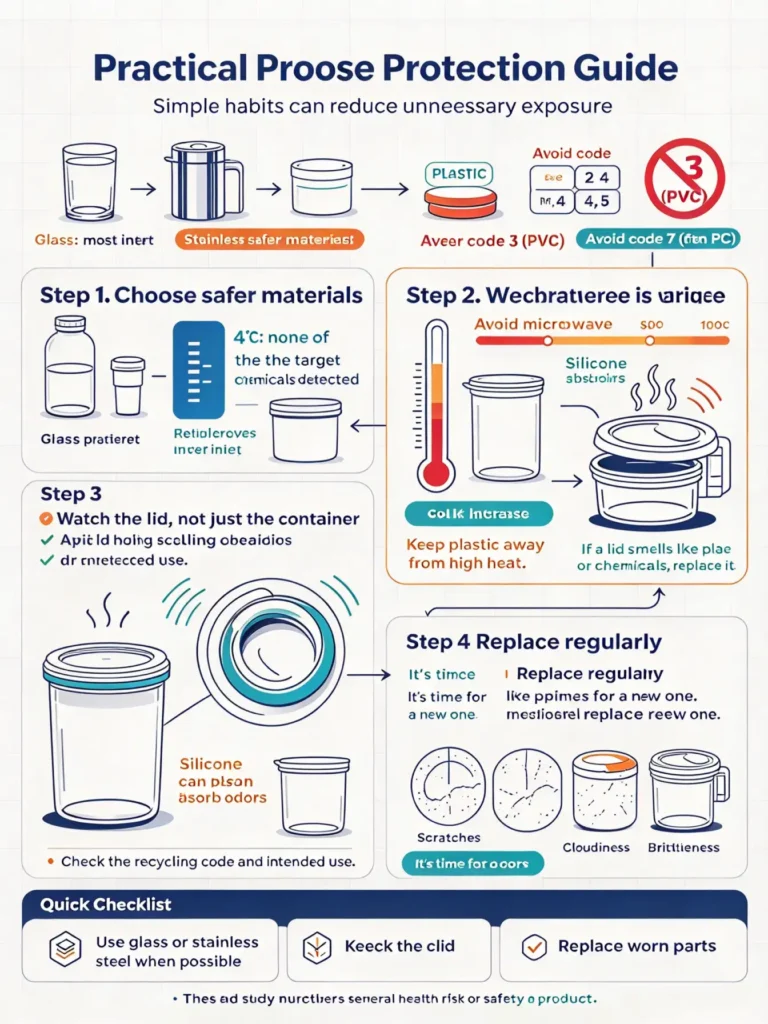
Choose safer materials. Glass and stainless steel are most inert. If using plastic, codes 2, 4, and 5 carry lower risk; avoid code 3 (PVC) and code 7 (often PC).
Temperature is the biggest variable. Avoid microwave heating and holding scalding food in plastic. At 4°C, none of the target chemicals above were detected.
Watch the lid, not just the container. Silicone absorbs odors—if a lid smells like plastic or chemicals, consider replacing it.
Replace regularly. Scratches, cloudiness, brittleness, or persistent odors mean it’s time for a new one.
Conclusion
“BPA-Free” is a starting point, not an endpoint. The lid is small, yet it touches food at zero distance—it deserves the same attention.
BPA-free sealing lids with food-grade silicone seals and strict plasticizer control form a material combination consumers can trust. All our plastic and silicone products have always complied with BPA-Free standards—not a slogan, but a responsibility toward every food contact. Glass and stainless steel are safest; BPA-free products with food-grade silicone seals are a reliable daily balance of safety and convenience. Control temperature, replace regularly, and trust your nose.