Many people wonder if they can put oil in a spray bottle, perhaps because they can’t find a suitable bottle, or the nozzle gets clogged after a few uses, or maybe they’re unsure if changing the way they pour oil will affect the flavor of their food.
So, can you put oil in a spray bottle? Let us tell you the answer based on our own practical experience: yes, you can certainly put oil in a spray bottle, and we strongly recommend that you do so. Using a spray bottle can even change your eating habits for the better!
However, to achieve the best oil spraying experience, we recommend that you fully understand the following: what materials are best suited for oil spray bottles, what types of oils are suitable for use in spray bottles, and how to properly maintain your oil spray bottle for long-term use etc. Welcome to the magical world of this transformative kitchen game!!!
Why Bother? The Benefits of Spraying Your Oil
You’ve made the decision to ditch the heavy pour—now let us show you why switching to a spray bottle is more than just a convenience; it’s a transformative kitchen game-changer and a smart lifestyle hack.
As a housewares manufacturer, we focus on tools that make life better, and the oil sprayer is at the top of that list. Here are the core benefits that make this simple device a must-have in every modern kitchen and home:
Precision & Portion Control: The Healthiest Pour You’ll Never Make
This is the single biggest benefit of switching to a spray bottle, and the one that often drives the decision.
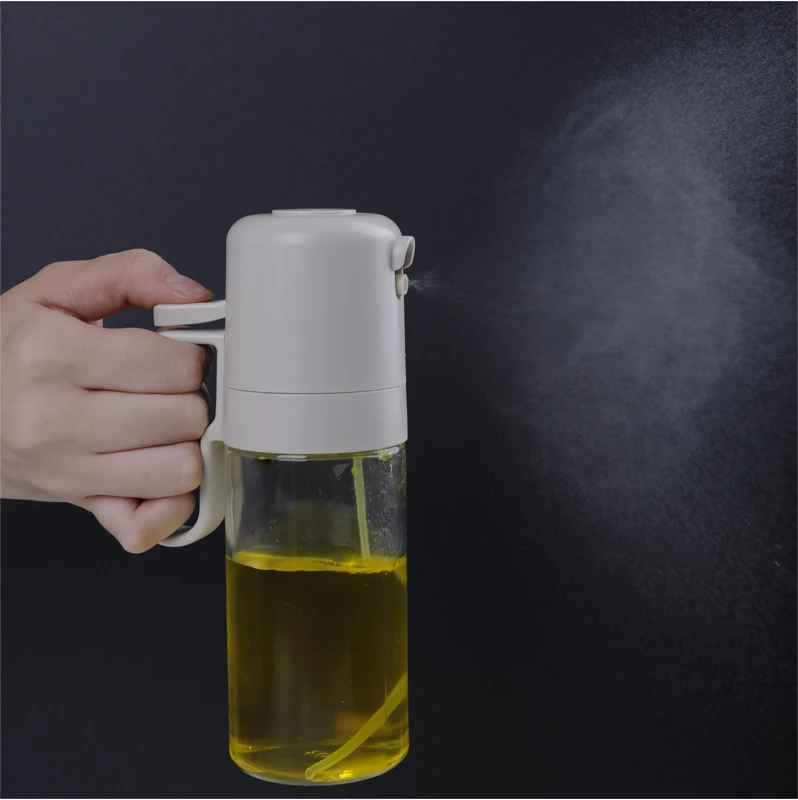
- Calorie Management: Pouring oil straight from a bottle, even with the best intentions, often results in 1 to 2 tablespoons of oil—that’s 120 to 240 calories per use! A quality sprayer delivers a light, controlled mist, drastically cutting down on unnecessary fat without sacrificing flavor. You only use what you need, making it an indispensable tool for anyone focused on healthier eating and weight management.
- Controlled Application: The sprayer allows you to apply oil uniformly and in smaller, precise amounts. In cooking, a little oil can be the difference between a perfectly seared crust and a greasy mess. Spraying oil ensures you just get the flavor and non-stick benefit, effectively avoiding excess calories.
Even Coverage Every Time: The Secret to Perfect Cooking
One of the greatest challenges in cooking is achieving perfect, even heat distribution, especially when coating a pan or preparing ingredients for high-heat cooking.

- Uniform Cooking: With a spray bottle, you achieve a fine, even mist of oil that’s perfect for ensuring everything cooks uniformly. Say goodbye to frustrating pools of oil in one spot and dry patches in another. This consistent, light layer helps your food cook perfectly, leading to crispier air-fryer snacks and more consistent roasted vegetables.
- Non-Stick Mastery: This is especially useful when you’re working with delicate non-stick surfaces or specialized equipment like waffle makers or air fryer baskets. A light, regulated spray is all you need to keep your food from sticking, without the heavy residue that can damage these surfaces over time.
Less Waste, More Savings: Good for Your Wallet and the Planet
In the long run, using a spray bottle is one of the easiest ways to cut down on waste and save money.
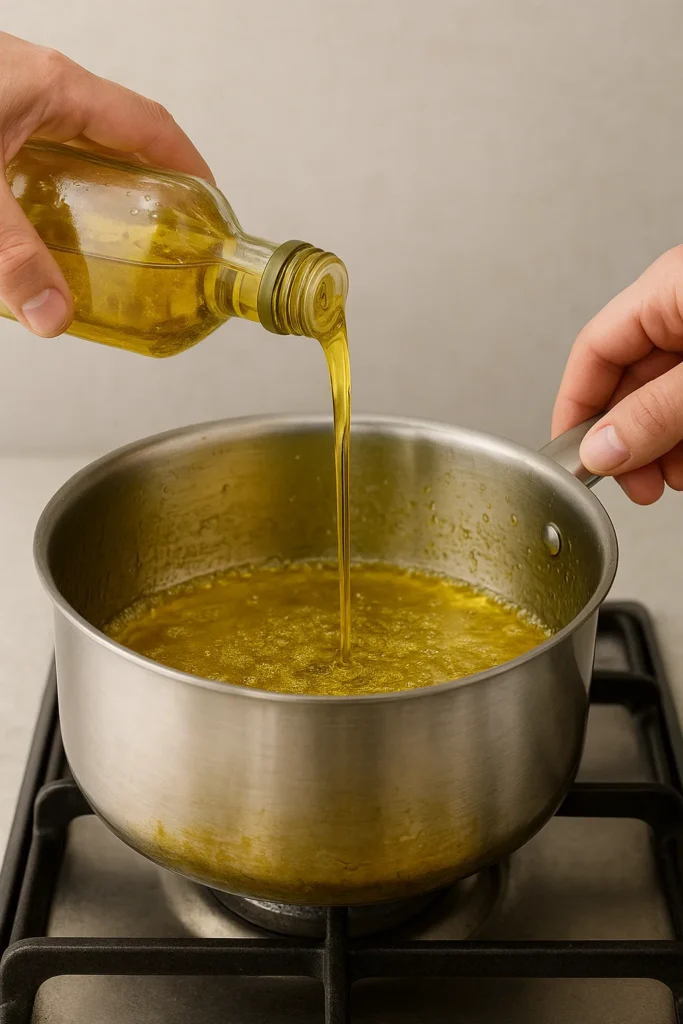
Reduce Spill and Mess: Pouring oil directly from a bottle can be messy, leading to drips down the side, sticky residue, and often results in using far too much. A spray bottle contains the oil and controls its output, preventing you from overusing it and eliminating countertop clutter.
Extend Ingredient Life: Because you use less oil per cooking session, your expensive specialty oils (like high-quality EVOO or Avocado Oil) last significantly longer. This small change in application leads to real, noticeable savings on your grocery bill.
Versatility and Convenience: Beyond the Kitchen
The inherent convenience of a spray bottle extends its utility far beyond the stove.
- Speed and Ease: It is much faster and easier than traditional pouring. Whether you need a quick spritz on a sheet pan before roasting, a light dressing for a salad, or a puff of oil over food coming off the grill, the spray bottle acts as a reliable, trigger-happy contraption.
- Multipurpose Application (Housewares Wholesaler Insight): The ability to apply a thin, controlled film is useful outside of food. For homeowners, it’s handy for applying oil to machinery, intricate tools, or even bicycle chains where precision and a mess-free application are crucial. For personal care, a fine mist of oil (like coconut or almond) can be applied to the hair or skin, allowing it to be absorbed better without leaving heavy, greasy patches.
- Portability: Spray bottles are incredibly portable. They’re ideal for travel, camping trips, or even picnics, allowing you to bring your preferred cooking oil without worrying about leaks or heavy, bulky containers.
Our Trial & Error: What Makes the Best Oil Spray Bottle?
The main reason people abandon their oil sprayers is poor performance—a mist turns into a frustrating, oil-drenching stream after a few uses, or the bottle material feels cheap and degrades quickly.
Through our extensive trials, we discovered that success lies almost entirely in the quality of the container material and the design of the spraying mechanism. Here is our breakdown of what to look for when selecting your kitchen partner:
The Container Material: Protection and Purity
The best container material balances durability, oil protection, and ease of cleaning. We narrow it down to two excellent choices and one to avoid:
| Material | Advantages | Disadvantages | Our Recommendation |
| Glass | Purity: Naturally chemical-free and does not absorb odors or flavors. Visibility: You can easily monitor oil levels and spot when they need cleaning. Durability: High-quality borosilicate or tempered glass is resistant to heat and cracking. | Light Exposure: Clear glass exposes oil to light, which can speed up degradation and rancidity (especially for sensitive oils like EVOO). Fragile: Susceptible to breaking if dropped. | Recommended (Clear): For oils you use quickly (e.g., general cooking). Recommended (Tinted): For better protection of delicate oils. |
| Stainless Steel | UV Protection: The opaque material completely blocks light, effectively preserving the flavor and quality of light-sensitive oils like Extra Virgin Olive Oil. Durability: Extremely robust and virtually unbreakable—ideal for busy, high-traffic kitchens. | No Visibility: You cannot see the oil level, making refills unpredictable. Temperature: Can heat up if stored next to a hot stove. | Highly Recommended: The gold standard for protecting and storing high-quality olive oil for the long term. |
| Plastic | Lightweight: Easy to handle and drop-safe. Budget-Friendly: The most affordable option. | Retention: Can retain odors and flavors over time, making it hard to switch between different oils. Longevity: Quality can degrade, and some plastics may leach into the oil over long storage periods. | Purity: Naturally chemical-free and does not absorb odors or flavors. Visibility: You can easily monitor oil levels and spot when they needs cleaning. Durability: High-quality borosilicate or tempered glass is resistant to heat and cracking. |
The Mechanism: Stream vs. Mist
The nozzle and pump system determines whether you get the fine, even mist you crave or a sad, single jet. There are two primary mechanism types:
1. Pressurized Pump Sprayers
How it Works: These require you to manually pump the bottle 10–30 times before spraying. This action builds up air pressure inside the sealed container, separate from the dispensing system.
The Pro: When the trigger is pulled, the pressurized air forces the oil through the nozzle. This creates a continuous, fine, aerosol-like mist that provides superior, even coverage without the chemical propellants found in aerosol cans.
The Con: Requires pre-pumping (a slight hassle) and the seals must be high-quality to maintain pressure, which usually means a higher price point. If the bottle loses air pressure, the spray quality diminishes.
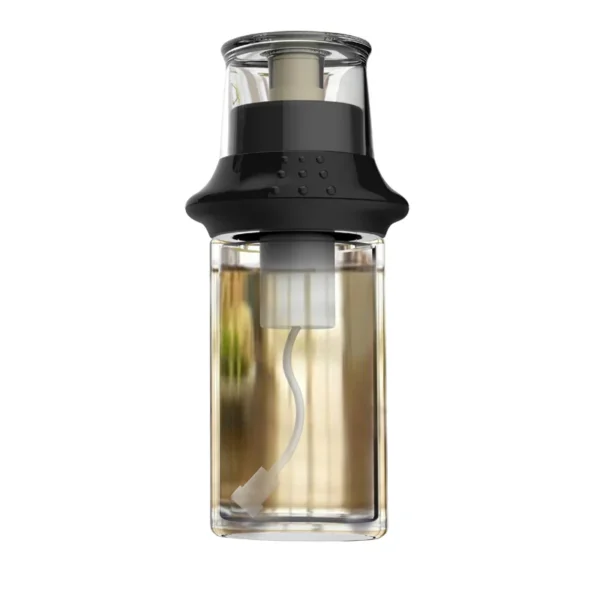
2. Trigger / Single-Shot Pump Sprayers
How it Works: These are similar to standard window cleaner sprayers. Pulling the trigger activates a piston, drawing oil up the dip tube and forcing it out of the nozzle in a single action.
The Pro: Instant use—no pre-pumping required. They are simple, durable, and generally inexpensive. Some models have adjustable nozzles for different spray patterns.
Con: Because oil is thicker than water, it is prone to clogging, as oil residue builds up inside the pump components.
Recommended products
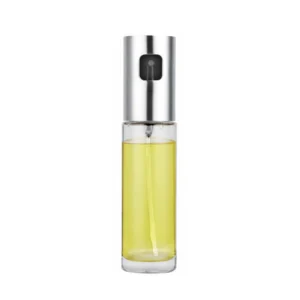
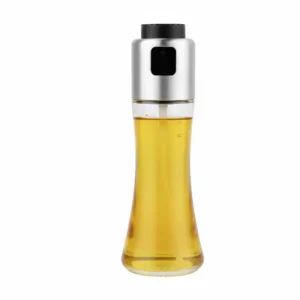
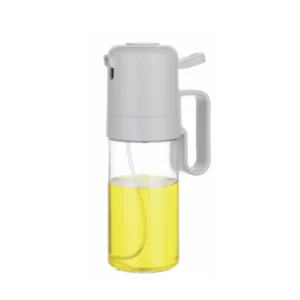
Our Trial Takeaway: To achieve the “magical world” of the fine oil mist, we strongly recommend investing in a high-quality Pressurized Pump Sprayer, preferably with a Glass or Stainless Steel base for oil purity and protection. The initial investment pays off in flavor, health, and less frustration!
What Oils Are Suitable for Spray Bottles?
Best Oils (Low Viscosity):
- Canola Oil
- Grapeseed Oil
- Vegetable Oil
- Refined Avocado Oil
Good, but Handle with Care (Medium Viscosity):
- Extra Virgin Olive Oil (EVOO) – The most common culprit for clogging. Advise readers to look for a high-quality, non-cloudy EVOO and stick to a pump-style sprayer.
- Light/Virgin Olive Oil
Oils to Avoid (High Viscosity/Additives):
- Thick, unfiltered, or ‘cloudy’ oils.
- Flavored oils with herbs or spices in the bottle (they will clog the nozzle immediately).
- Balsamic Vinegar (It’s too thick and sticky unless heavily diluted, which defeats the purpose).
Clog Control: How to Maintain Your Oil Sprayer Step by Step
The single biggest enemy of your oil spray bottle is congealed residue. Oils, especially extra virgin olive oil (EVOO), are made of fats that can solidify, polymerize (get sticky when exposed to air), and build up in the fine nozzle over time. This buildup turns your perfect mist into a frustrating, sputtering stream.
Fortunately, prevention and a simple routine are all you need to keep your sprayer working like new.
The Essential Maintenance Routine: The Hot Water Flush
This is the non-negotiable step we recommend performing every 2-3 weeks, or whenever you notice the spray pattern weakening.
- Empty the Bottle: Pour any remaining oil back into its original container or use it up. You should always start the cleaning process with an empty bottle.
- Add Hot, Soapy Water: Fill the sprayer bottle about halfway with the hottest tap water you can safely handle. Add just a couple of drops of mild dish soap. The heat is crucial here, as it gently melts and emulsifies the sticky oil residue.
- Shake and Agitate: Screw the top back on tightly and shake the bottle vigorously for at least 30 seconds.
- The Critical Step: Spray to Flush: Aim the nozzle into the sink. Pump the sprayer and spray the soapy solution out until the bottle is empty. This action forces the soapy water through all the internal pump mechanisms, the dip tube, and the nozzle—the parts most prone to clogging.
- Rinse with Clear Water: Fill the empty bottle again, this time with only warm water. Repeat the spraying action until the water comes out completely clear and you no longer see any soap suds. This ensures no soap residue is left to mix with your fresh oil.
- Dry Completely: Disassemble the cap and bottle. Let all parts air dry completely on a clean towel for several hours. Crucially, never put oil back into a bottle that still has water inside, as water can cause oil to go rancid quickly.
Stubborn Clog Rescue: Bring in the Vinegar Power
If the hot water flush doesn’t completely clear a stubborn blockage, it’s time for the acidic cleaning power of vinegar.
- The Solution: Mix a cleaning solution of approximately 1 part distilled white vinegar to 2 parts hot water.
- The Soak: Pour this solution into the empty sprayer bottle. Secure the top and let the solution sit for 15 to 30 minutes (or up to a few hours for tough buildup). Vinegar’s mild acidity helps break down stubborn, polymerized grease and mineral deposits.
- Final Flush: Pump and spray the vinegar solution through the nozzle into the sink until the bottle is empty.
- Rinse: Follow immediately with a thorough flush of clear water to remove all traces of vinegar.
Proactive Clog Prevention Tips
- Choose Wisely: Avoid thick oils or oils that are cloudy or unfiltered. Never use oils infused with herbs, garlic, or spices that contain solid particles, as they will instantly clog the micro-fine nozzle hole.
- Mind the Temperature: If you use an oil that solidifies in cooler temperatures (like coconut oil), store it in a slightly warmer cupboard, or run the bottle under warm water for a moment before use.
- Release Pressure: If you use a pressurized pump-style sprayer, make it a habit to release the remaining air pressure after each use. This helps clear the dip tube and nozzle, preventing oil from settling and solidifying right at the spray point.
- Proper Storage: Always store your oil sprayer in a cool, dark cabinet away from direct sunlight and heat from the stove. Heat and light cause the oil to degrade faster, thicken, and become more prone to clogging.
Conclusion & Final Recommendation
If you started this article wondering if you could put oil in a spray bottle, our answer is not only yes, but an enthusiastic absolutely!
Our personal trial experience, and the overwhelming consensus among home cooks and health experts, prove that this simple houseware tool is a profound addition to the modern kitchen. Switching from the traditional pour to the modern mist offers a triple win: it is healthier, more cost-effective, and delivers a level of precision in cooking that is simply unmatched.
For us, the oil spray bottle has been a true game-changer. Our roasted vegetables are now flawlessly crisp, our air-fried food has a perfect texture with minimal oil, and we’ve significantly reduced our weekly oil consumption without sacrificing the flavor we love. It’s the kind of small, smart change that leads to healthier cooking habits and better results.
Ready to transform your oil usage? Start experimenting with EasyLife Housewares and your favorite oils today and step into a world of healthier, more precise cooking!