It’s the classic kitchen aesthetic: a row of neatly organized Mason jars filled with rich, dark coffee beans. But if you’ve ever wondered, “Are Mason jars for coffee actually effective?”—the answer depends entirely on the lid and the glass type.
The answer is— Yes, Mason jars can be used for coffee, but they require specific modifications—like opaque glass and vacuum-sealing lids—to prevent your beans from going stale. While a standard, clear Mason jar with a basic two-piece lid is better than an open bag, it fails to protect coffee from its two primary enemies: UV light and trapped oxygen.
Here is how to master the use of mason jars for coffee while keeping your brew tasting as it came straight from the roastery.
1. The Versatility Factor: Hot vs. Cold
Beyond just storage, mason jars for coffee serve as multi-functional tools for different brewing styles.
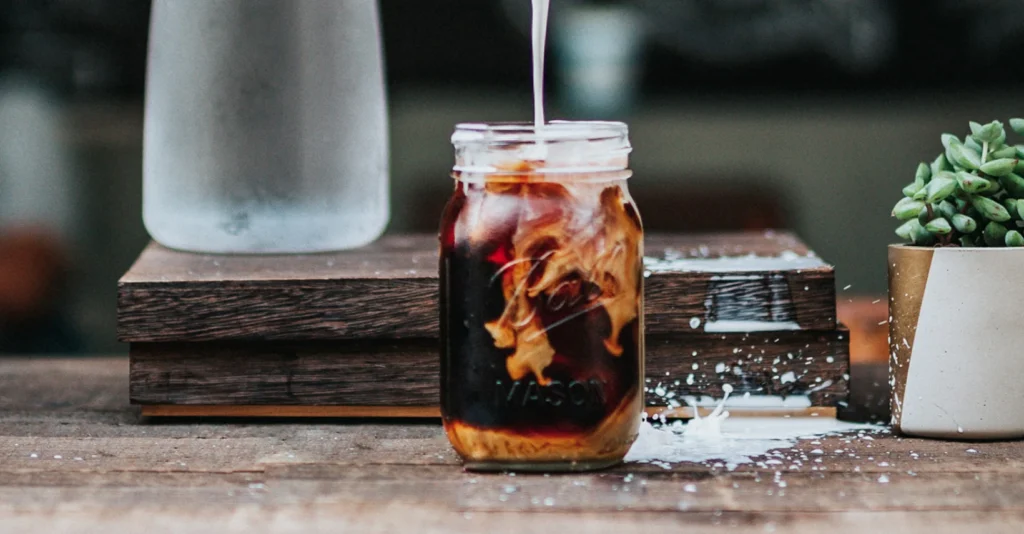
- The Cold Brew Standard: Because they are non-reactive, Mason jars are the preferred vessel for cold brew. You can steep grounds for 12–24 hours without worrying about metallic or plastic aftertastes.
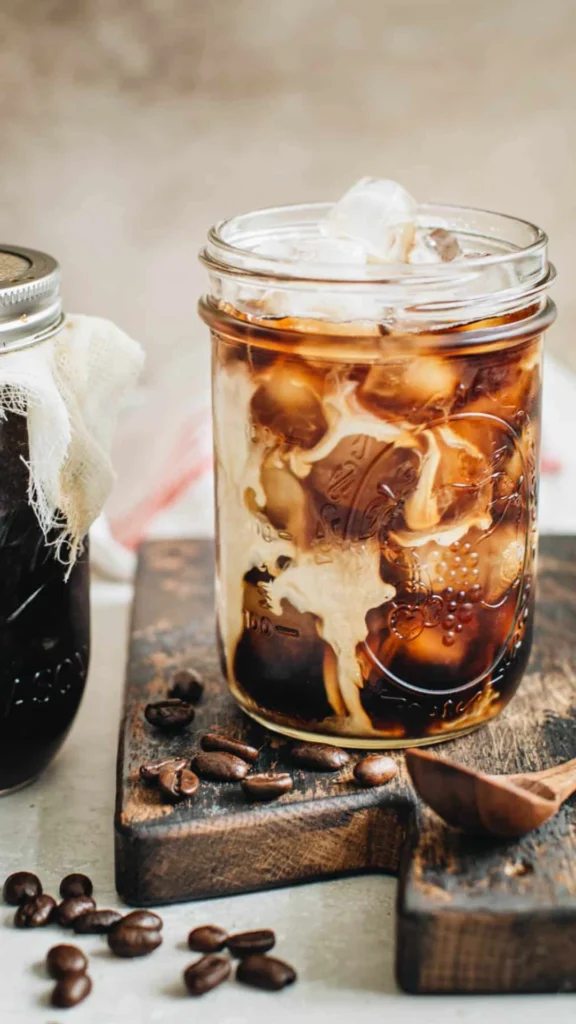
- Visual Layering: The transparency of glass makes these jars perfect for “coffee art,” such as layered lattes, iced macchiatos, or nitro-cold brews.
- Multi-use Functionality: You can use the same jar to brew your coffee, store the leftovers in the fridge, and drink from it the next morning.
2. Safety First: Avoiding Thermal Shock
One of the biggest risks with glass is “thermal shock,” which occurs when the material expands or contracts too quickly due to temperature changes.
- The Warming Technique: Never pour boiling water directly into a cold jar. Always rinse the jar with warm tap water first to gradually increase the temperature of the glass.
- Surface Awareness: Avoid placing a hot jar on a cold surface like marble or stainless steel. Use a wooden coaster or a towel to provide a thermal buffer.
- Crack Prevention: If you see even a tiny “spider crack” in your jar, retire it from hot coffee use immediately, as the heat pressure can cause it to shatter.
3. Achieve an Airtight Seal for Long-Term Storage
As mentioned in our blog’s beginning, a standard lid is good, but a vacuum seal is better. Oxygen causes coffee oils to oxidize, which leads to a bitter, stale flavor.
- The Two-Piece Lid: The flat disk and screw band provide a much tighter seal than a standard flip-top jar.
- Vacuum Sealing: For maximum freshness, consider using a vacuum sealer attachment designed for Mason jars. This removes the “trapped oxygen” that sits in the headspace of the jar.
- Freshness Check: If your beans are freshly roasted, they will release carbon dioxide. A good seal will hold that gas in, which actually helps preserve the beans by displacing oxygen.
4. Use Smaller Jars for Smart Portioning
The more “headspace” (empty air) you have in a jar, the faster your coffee will degrade.
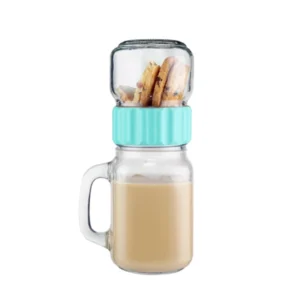
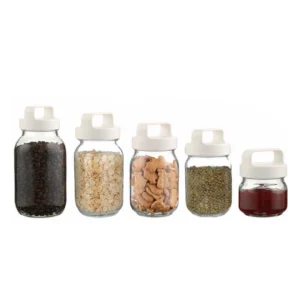
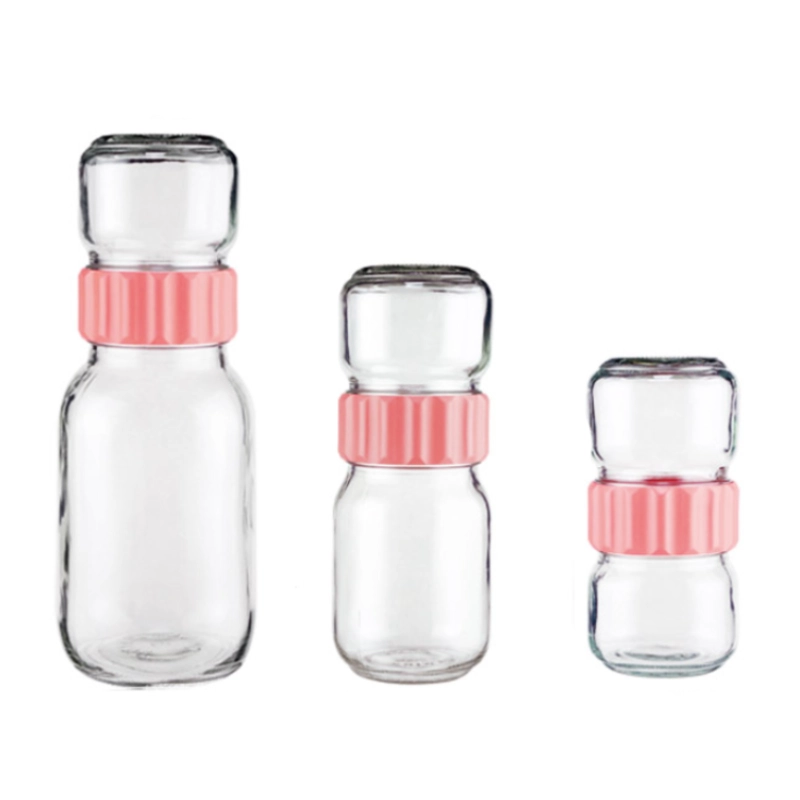
- Downsizing: As you use your coffee, move the remaining beans into smaller jars to minimize the amount of air sitting on top of them. We have different sizes of mason jars for coffee for you to choose from according to your needs, maximizing the freshness of the coffee beans.
- The “Daily Jar” Method: Store your main bulk of beans in a large jar and keep a “working jar” for your daily scoops. This prevents you from exposing your entire supply to fresh air every single morning.
- Portion Control: Using 8oz jars for specific portions ensures that the beans stay “dormant” until the very moment you are ready to grind them.
Recommended products

5. Mind the Light (Amber vs. Clear Glass)
Light is the second major enemy of coffee. UV rays accelerate the breakdown of the chemical compounds that give coffee its unique aroma and flavor.
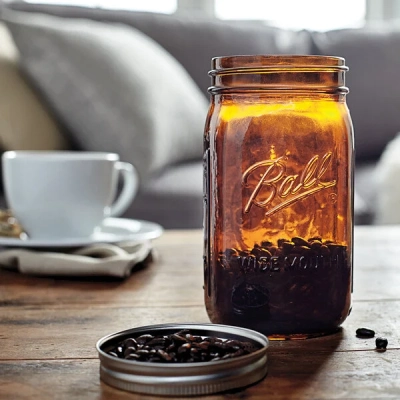
- Amber is Best: Switching to amber-colored mason jars is the easiest way to protect your coffee. These jars block the majority of harmful light waves.
- Dark Storage: If you prefer the look of clear jars, you must store them inside a dark cabinet or pantry. Never leave clear jars of coffee on a windowsill or under bright kitchen lights.
- Opaque Wraps: If you love your clear jars but have no cabinet space, consider using a silicone sleeve or even a decorative fabric wrap to block out the light.
6. The Sustainability Angle
Using mason jars for coffee is one of the easiest ways to move toward a zero-waste lifestyle.
- Infinite Reusability: Unlike plastic travel mugs that eventually scratch or degrade, glass can be sterilized and reused for decades.
- Chemical Purity: Glass is BPA-free and doesn’t leach chemicals, even when exposed to high-heat dishwashers or boiling water.
- Recyclability: In the rare event that a jar breaks, glass is 100% recyclable, whereas most coffee bags and plastic-lined cups end up in landfills.
7. Level Up with Must-Have Accessories
The modern market has transformed the basic jar into a high-performance coffee mug through specialized add-ons.
- Silicone Sleeves: These provide vital insulation to keep your coffee hot while protecting your hands from burns.
- Specialized Lids: You can buy lids with built-in straws for iced coffee or “sip lids” that mimic a traditional coffee cup.
- Precision Pouring: Many companies make “re-cap” lids that turn your Mason jars for coffee into a pitcher, making it easy to pour out cold brew concentrate without spills.
Conclusion: The Final Verdict
So, are mason jars for coffee truly the game-changer they appear to be? The answer is a resounding yes, provided you move beyond the “aesthetic” and embrace the functionality. While a standard glass jar is a humble object, its ability to be customized—through vacuum seals, UV-blocking tints, and thermal sleeves—makes it one of the most versatile tools in a coffee lover’s arsenal.
To summarize the transition, keep these final thoughts in mind:
- For the Flavor Purist: If you invest in high-quality, specialty beans, don’t let them die in a half-rolled paper bag. Shifting to an airtight Mason jar system is the most cost-effective way to extend the “peak flavor window” of your roast by days or even weeks.
- For the Eco-Conscious Brewer: Every time you fill your mason jars for coffee instead of grabbing a plastic-lined paper cup, you are making a tangible impact. The durability of glass means this is likely the last “coffee cup” you’ll ever need to buy.
- For the DIY Enthusiast: Whether you are steeping a batch of overnight cold brew or shaking up an iced latte to create that perfect foam, the Mason jar is a lab-grade vessel that handles the job with ease.
The Bottom Line: You don’t need expensive, high-tech canisters to keep your coffee fresh and your morning routine stylish. By respecting the “enemies of coffee”—light, heat, and oxygen—and using the tips we’ve outlined, you can transform the simple mason jar for coffee into a professional-grade coffee station staple. It is a rare example of a trend that is actually backed by common sense and sustainability.
FAQ about Using Mason Jars for Coffee
Can I put a mason jar in the microwave to reheat my coffee?
Yes, most Mason jars are microwave-safe because they are made of annealed glass. However, you must remove the metal lid and band before heating. Also, be careful of “hot spots”—give the coffee a quick stir after heating to ensure the temperature is even.
Is it better to store coffee beans or ground coffee in mason jars?
While Mason jars for coffee work for both, they are most effective for whole beans. Ground coffee has more surface area, which means it oxidizes much faster than whole beans. If you do store grounds in a jar, try to use a smaller jar to minimize the amount of air trapped inside.
Will my mason jar explode if I put hot coffee in it?
A jar will only “explode” or crack if it experiences thermal shock. This happens when there is a massive temperature difference (like pouring 95°C coffee into a jar that was sitting in a 20°C kitchen). As long as you pre-warm the jar with warm water, it is perfectly safe.
Can I use mason jars for coffee in the freezer?
Yes! Mason jars are excellent for freezing beans for long-term storage. To do this successfully, use “wide-mouth” jars (which handle expansion better) and ensure the jar is completely dry before adding beans to prevent ice crystals.
Important: Once you take the jar out of the freezer, do not open it until it has reached room temperature to avoid condensation forming on your beans.
How do I get the “coffee smell” out of the lid’s rubber seal?
Glass is easy to clean, but the rubber seal on the flat metal lid can sometimes trap odors. To fix this, soak the lids in a mixture of baking soda and hot water for 30 minutes. If the smell persists, it might be time to replace the flat lid (the screw bands usually last much longer). EasyLife can provide you with a large number of silicone seals to facilitate multiple replacements and repeated use.
Do mason jars keep coffee hot as long as a ceramic mug?
Standard glass does not have the same heat retention as thick ceramic or double-walled vacuum thermoses. To keep your coffee hot for longer, we recommend using a silicone or neoprene sleeve. This adds a layer of insulation that keeps your drink warm and your hands comfortable.