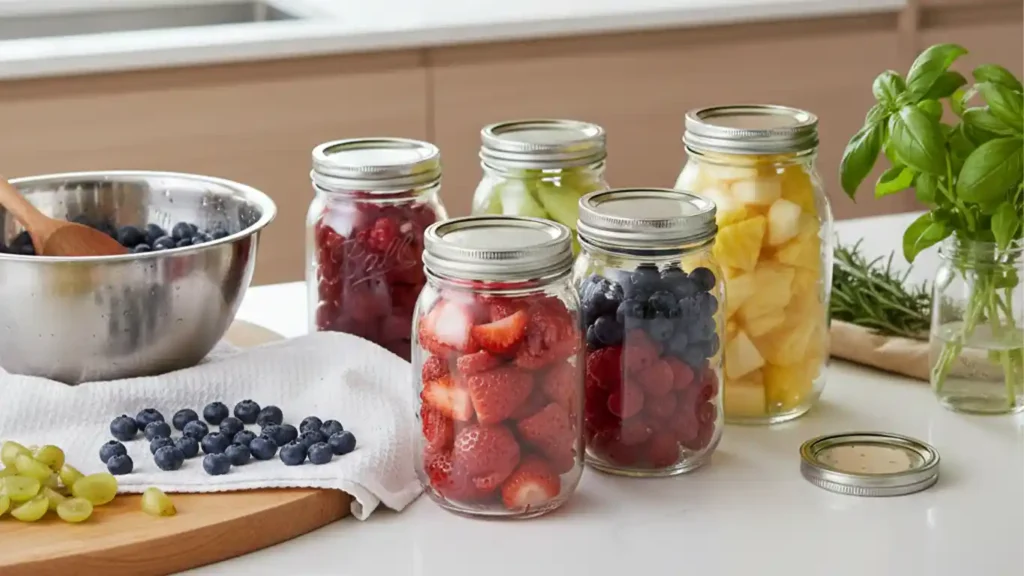
A well-organized kitchen is the heart of a functional home. Whether you are a professional chef or a home cook, the way you store your ingredients directly impacts their freshness, flavor, and even the aesthetic of your space. Research suggests that an organized pantry can reduce food waste by up to 25%, simply by making ingredients visible and accessible.
In this guide, we explore the different types of food storage jars and their uses, helping you understand which materials are best suited for your pantry, your countertop, and your lifestyle.
What Are Food Storage Jars?
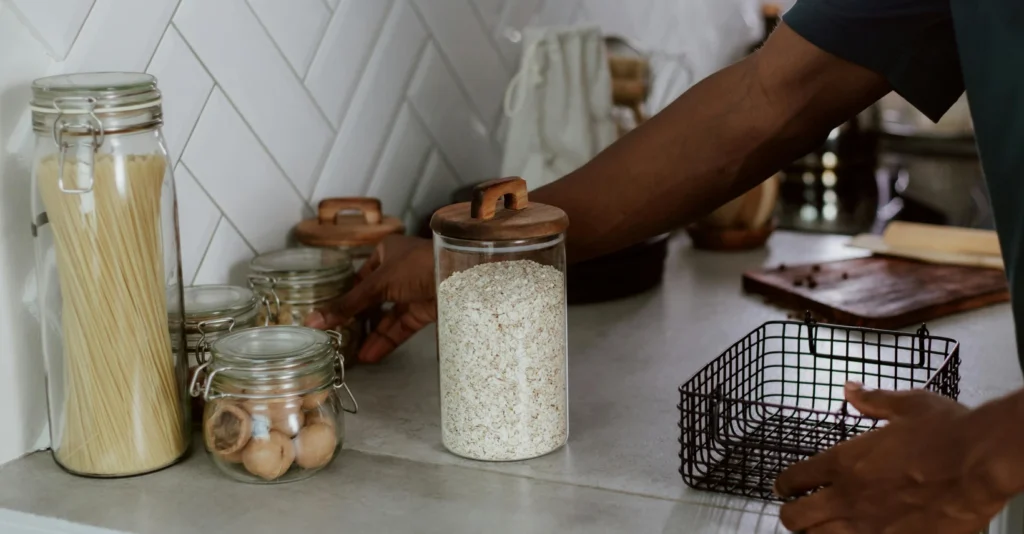
Food storage jars are specialized, typically airtight containers designed to protect raw or cooked ingredients from environmental degradation. Unlike temporary packaging (like plastic bags or thin wraps), these jars are engineered for reusability and long-term preservation. They serve as a barrier against the four primary enemies of food: air, moisture, light, and pests. In the modern kitchen, they have evolved from simple utility items into essential tools for organization, interior design, and sustainable living.
The Importance of Proper Food Storage
Proper storage is more than just “tidying up”—it is a critical practice for health and household economy:
- Waste Reduction: According to global food waste statistics, roughly one-third of all food produced is lost or wasted. Much of this happens at home due to spoilage. Using airtight jars can extend the shelf life of dry goods like flour and grains by 3 to 6 months.
- Nutritional Retention: Exposure to air causes oxidation, which depletes vitamins (especially Vitamin C and A) in food. Proper sealing ensures that the nutritional density of your ingredients remains intact.
- Cost Efficiency: Buying in bulk is significantly cheaper but requires proper storage to prevent the food from going stale. Investing in quality jars allows consumers to save an average of 15–20% on grocery bills by purchasing larger quantities safely.
- Pest Prevention: Sturdy glass, plastic, or steel walls are the only foolproof way to protect pantry staples from insects and rodents, which can easily chew through cardboard or thin plastic film.
Understanding Materials: Which Jar is Right for You?
Why Glass Food Storage Jars Matter More Than Other Materials
Glass remains the gold standard for purity and display. It is the top choice for premium storage for several reasons:
- Purity of Taste & Odor Resistance: Glass is an inert material, meaning it does not react with the foods stored inside. Unlike other materials, it has a 0% absorption rate for odors and flavors. This allows you to store pungent garlic cloves one week and delicate sugar the next, with no flavor “ghosting” after a standard wash. Based on my experience, even if you put a strong chili sauce in a glass jar, after using it, I clean it thoroughly and replace the lid with a new one. The entire glass jar is as good as new without any unpleasant smell.
- Chemical Safety & Health Standards: Glass is naturally BPA-free, phthalate-free, and lead-free. According to the FDA, glass is the only packaging material generally recognized as safe (GRAS). It provides peace of mind for health-conscious consumers concerned about microplastics or chemical leaching during long-term storage.
- Visual Clarity for Inventory Management: The 100% transparency of glass is its greatest functional asset. Studies in retail psychology show that humans are more likely to use what they can see. Clear glass jars act as a “visual grocery list,” preventing the accidental purchase of “duplicate” ingredients and ensuring you never run out of staples mid-recipe.
- Thermal Shock & Heat Resistance: High-borosilicate glass jars can withstand temperature fluctuations of up to 170°C. This makes them superior for “hot-filling” techniques or sterilization in boiling water. While standard soda-lime glass may crack, borosilicate is built for durability in both the freezer and the dishwasher.
- Infinity Recycling & Sustainability: Glass is 100% recyclable and can be recycled endlessly without loss in quality or purity. For the eco-conscious wholesaler or consumer, glass represents a “circular economy” product that reduces the carbon footprint compared to single-use alternatives.
- Elevated Aesthetic & Market Value: From a design perspective, glass with bamboo lids creates a modern, organic kitchen vibe. This aesthetic has seen a 40% increase in social media trending over the last three years, making glass jars a high-demand item for retailers focusing on “Pantry Goals” and home styling.
Types of Glass Food Storage Jars
As a wholesaler, providing variety allows your clients to meet different consumer needs. Here are the six essential types:
- High-Borosilicate Jars: Known for being lightweight yet incredibly strong, these are resistant to thermal shock. They are the premium choice for users who move jars between the fridge and a warm kitchen.
- Classic Soda-Lime Jars: These are thicker and heavier, providing a “vintage” feel. They are cost-effective and perfect for general dry storage, like pasta or decorative countertop displays.
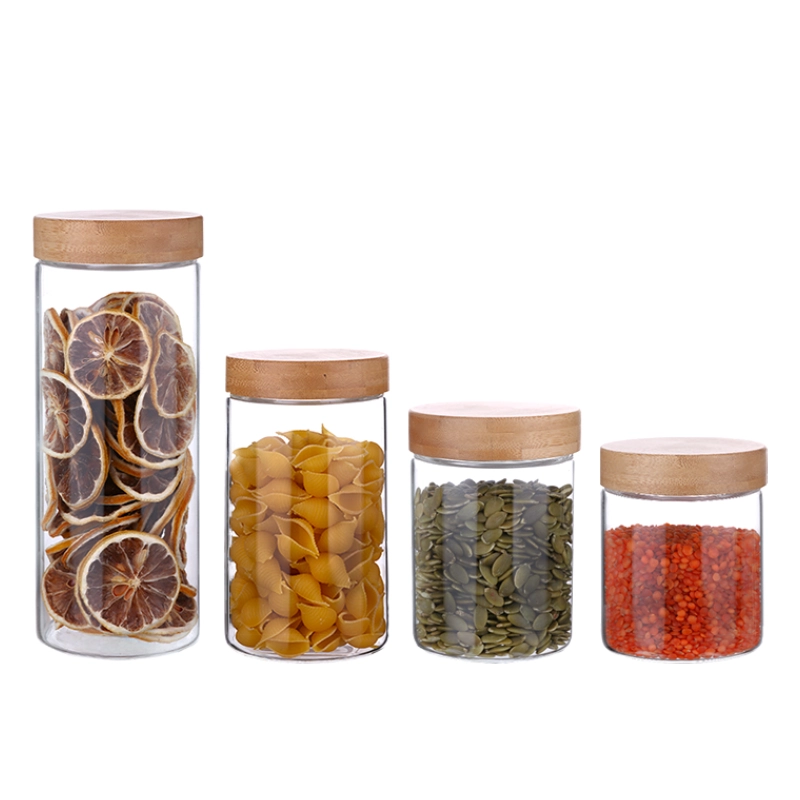
- Glass Jars with Bamboo Lids: The ultimate “eco-friendly” aesthetic. The bamboo provides a warm, natural look, while the silicone gasket ensures a modern airtight seal.
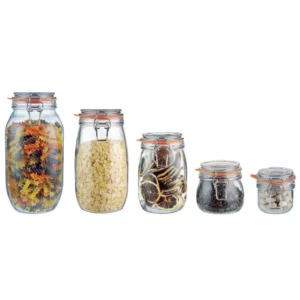
- Airtight Clip-Top (Fido) Jars: Featuring a glass lid and a metal lever mechanism, these provide the strongest mechanical seal. They are the industry standard for fermenting pickles or kimchi.
- Stackable Glass Canisters: These jars feature recessed lids (often plastic or wood) that allow the base of the next jar to lock in place, maximizing vertical space in small apartments.
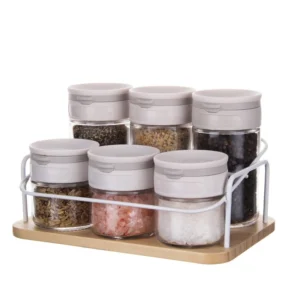
- Spice Glass Jars: Small-capacity jars (typically 100ml to 200ml) designed to create uniform spice racks. Using glass for spices is crucial as it prevents the potent essential oils in spices from degrading the container.
Recommended products


The Role of Plastic Jars: Durability and High-Volume Utility
- Shatterproof Security in High-Traffic Zones: In professional kitchens or homes with children, the risk of breakage is a liability. Plastic jars made from high-density polyethylene (HDPE) or PET are virtually unbreakable. If a 2-liter jar falls from a 1.5-meter shelf, it stays intact, protecting both the food and the user from dangerous shards.
- Lightweight Maneuverability for Bulk Goods: Plastic is approximately 80% lighter than glass of the same volume. For storing 5kg to 10kg of bulk goods like rice, pet food, or flour, plastic is the ergonomic choice. It reduces the load on pantry shelving units and makes pouring significantly easier for people with limited grip strength or the elderly.
- Space-Saving Geometry: Plastic jars can be manufactured with precision “sharp-corner” square designs. Because plastic can be molded with thinner walls than glass while maintaining strength, these jars offer up to 15% more storage volume on the same shelf footprint compared to round glass containers.
- Economic Scalability: For large-scale organization projects, plastic offers a lower cost-per-unit. This allows consumers to standardize their entire pantry at a fraction of the cost of glass, making it an essential entry-point product for any wholesale inventory.
The Role of Stainless Steel Jars: The “Blackout” Choice
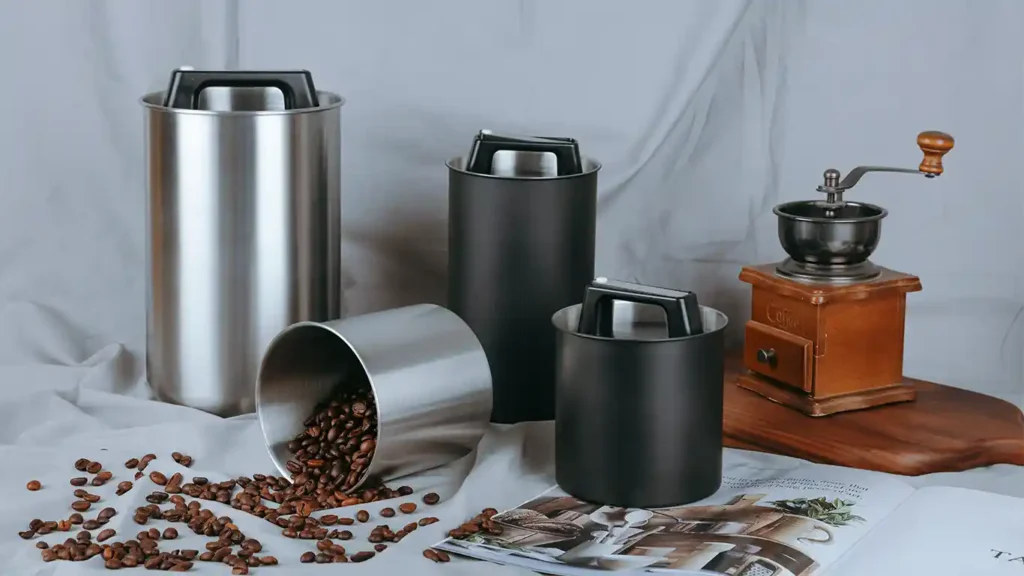
- 100% UV Protection for Sensitive Ingredients: Light exposure triggers “photo-oxidation,” which destroys the essential oils in coffee beans, tea, and spices. Stainless steel provides a total light barrier. Research shows that coffee stored in opaque containers retains its flavor profile up to 3 times longer than coffee stored in clear jars exposed to ambient light. With a near-vacuum exhaust valve lid, it has a good ability to isolate odors, such as a pet food storage container, to prevent odors from escaping.
- Industrial Durability & Longevity: Food-grade 304 stainless steel is rust-resistant and corrosion-proof. Unlike plastic, it won’t scratch or become cloudy over time, and unlike glass, it will never chip. It is the most durable material in the inventory, often lasting for 20+ years of daily use. Meanwhile, we support various treatments on the surface of the jars, such as black painting, colorful powder coating, or the original color.
- Temperature Stability & Insulation: Stainless steel is a poor conductor of heat compared to glass. This provides a minor insulating effect that protects ingredients from the rapid temperature spikes common in kitchens (such as heat from a nearby oven), keeping the internal environment stable.
Food Storage Jars and Their Uses
| Food Category | Recommended Material | Technical Justification |
| Pasta & Grains | Glass Jars (Tall) | Low moisture sensitivity; benefits from clear visibility for inventory. |
| Coffee & Loose Tea | Stainless Steel | Requires 0% light transmission to prevent oil rancidity. |
| Baking Flour/Sugar | Wide-Mouth Plastic | Large volumes require lightweight handling and easy “scoop-ability.” |
| Spices & Herbs | Small Glass Jars | Inert glass prevents the cross-contamination of strong aromatic oils. |
| Kids’ Snacks | BPA-Free Plastic | Eliminates injury risk; lightweight for “grab-and-go” convenience. |
| Fermented Foods | Borosilicate Glass | Non-reactive to high acidity (pH < 4.6) found in pickling brines. |
How to Choose the Right Jar: 6 Essential Buying Points
- Volumetric Calculation: Match the jar to the density of the food. For example, 1kg of salt is small, but 1kg of flour is large. Advise customers to buy jars 20% larger than the volume of the food to allow for easy pouring and lid closure.
- The Science of the Seal: A true airtight seal jar requires a high-quality silicone gasket. Test the “suction” of the airtight lids; a high-quality lid should offer resistance when pulled, indicating a vacuum-tight environment that keeps moisture levels below 15% for dry goods.
- Mouth Diameter for Functionality: For ingredients that require a measuring cup, a mouth diameter of at least 90mm is standard. Narrow-neck jars (50mm-60mm) are strictly for pourable liquids or small grains like quinoa.
- Environmental Placement: If storing on open shelving near a window, prioritize stainless steel. If storing in a dark, deep pantry, glass is better for identifying contents in low light.
- Nesting & Stackability: Look for “recessed” lid designs. A lid with a 2mm raised lip allows the jar above it to “lock” in place, preventing accidental sliding in high-seismic areas or busy kitchens.
- Certification & Safety: Ensure all materials meet FDA or LFGB (European) food-grade standards. For glass, confirm it is lead-free; for plastic, confirm it is marked as “BPA-Free.”
Versatility & Innovation: Creative Uses Beyond the Kitchen
One of the greatest selling points for high-quality food storage jars is that their utility doesn’t end in the pantry. Because your inventory features durable materials like borosilicate glass, food-grade plastic, and sleek stainless steel, they can be repurposed throughout the entire home.
Here are creative ways to use these jars to organize and decorate every room:
8 Creative Uses for Glass Jars
Glass is the most versatile material due to its transparency and “clean” look. Beyond storing pasta, consider these applications:
- Bathroom Apothecary: Use medium-sized glass jars to store cotton balls, swabs, or bath salts. The bamboo lids add a spa-like, organic feel to the vanity.
- Terrariums & Planters: Small glass jars make excellent homes for succulents or “propagation stations” for plant cuttings.
- Home Office Organization: Keep paperclips, binder clips, and staples visible and tidy on your desk.
- DIY Candle Vessels: High-borosilicate glass is heat-resistant, making it a perfect container for hand-poured soy or beeswax candles.
- Layered Gift Jars: Create “Cookies in a Jar” or hot cocoa mixes as thoughtful, eco-friendly gifts for holidays or weddings.
- Craft Room Storage: Perfect for sorting colorful buttons, beads, ribbons, or sewing kits where visibility is key.
- Minimalist Flower Vases: A tall, narrow glass jar is a chic, modern alternative to a traditional vase for fresh-cut flowers.
- Laundry Room Chic: Store laundry pods, scent boosters, or clothespins in large glass jars to turn a utility area into a designed space.
Creative Uses for Plastic Jars
Because plastic is lightweight and shatterproof, it is the best choice for “active” storage:
- Garage & Hardware: Sort nails, screws, and bolts. If a jar gets knocked off a workbench, there is no glass to clean up.
- Travel & Picnic Kits: Use small plastic jars to carry snacks or condiments for outdoor trips without adding extra weight to your bag.
- Toy Room Organization: Perfect for tiny building blocks (like LEGOs) or art supplies like crayons and markers.
Creative Uses for Stainless Steel Jars
The professional, opaque look of steel lends itself to modern decor:
- Modern Desk Caddy: A lidless stainless steel jar makes a sleek, industrial-style holder for pens and scissors.
- Outdoor Survival Kits: Because they are indestructible, steel jars are great for keeping matches, tinder, or first-aid supplies dry during camping trips.
- Hidden Storage: Since you can’t see through them, they are ideal for storing items you want to keep out of sight on a bookshelf or entryway table.
Final Considerations: Avoiding Mistakes and Choosing Sustainability
To wrap up our guide on food storage jars and their uses, it is important to look at how to maintain your jars for the long term and why your choice of material matters for the planet.
Common Mistakes to Avoid
Even with the best jars, small errors can lead to spoiled food or damaged containers.
- Washing Bamboo Lids in the Dishwasher: Bamboo is a natural material. High heat and excessive water will cause it to warp or crack. Always hand-wash bamboo lids and dry them immediately.
- Ignoring the Silicone Seal: Over time, the silicone ring that makes a jar airtight can collect dust or food particles. Remove the ring periodically to deep-clean it and ensure a perfect seal.
- Overfilling Before Freezing: If using glass jars to store soups in the freezer, never fill them to the top. Liquids expand when frozen, which can shatter even the strongest borosilicate glass.
- Storing Light-Sensitive Foods in Clear Glass: Avoid keeping expensive coffee or delicate herbs in clear glass on a sunny countertop. Use stainless steel or move the glass jars into a dark cupboard.
Sustainability & Cost Benefits
Investing in high-quality food storage is not just about organization—it’s an investment in the environment.
- Reduced Food Waste: Properly sealed jars extend the shelf life of ingredients by weeks or even months, meaning fewer groceries end up in the bin.
- Durability Over Disposables: While a glass or steel jar has a higher upfront cost than a thin plastic tub, it can last for decades. Glass is 100% recyclable, and stainless steel is one of the most recycled materials on earth.
- The “Bulk” Advantage: Having a set of reliable jars allows you to buy from bulk-bins at the grocery store, eliminating the need for single-use plastic packaging.
Conclusion: Partnering with EasyLife Housewares
Mastering food storage jars and their uses is more than just a kitchen trend—it is a strategic approach to efficient, sustainable, and professional living. Whether it is the crystal-clear purity of glass, the unbreakable utility of plastic, or the light-shielding power of stainless steel, the right container is a long-term investment in food quality and household economy.
As a premier wholesaler, EasyLife Housewares is dedicated to providing high-quality, food-grade storage solutions that meet the diverse needs of modern retailers and consumers. We understand that every pantry is unique, which is why our inventory spans the highest standards of borosilicate glass, BPA-free plastics, and 304 stainless steel. By choosing EasyLife Housewares, you are partnering with a supplier that prioritizes durability, safety, and aesthetic excellence. Let us help you transform the kitchen experience—one jar at a time.