As consumers look for more convenient ways to store, reheat, and serve food, glass food storage containers have become an important part of the modern kitchenware market. Among the different designs available, glass food containers with vented lids are gaining attention because they combine the visibility and reusable qualities of glass with a lid designed to release steam during reheating.
For consumers, a vented lid may seem like a small convenience. For B2B buyers, however, it represents a more important product-design consideration. The vent, sealing gasket, locking mechanism, lid material, and glass body all need to work together to deliver a reliable user experience.
For importers, distributors, retailers, and private-label brands, understanding how these components work together can help when evaluating suppliers, comparing products, and developing a food storage range.
What Is a Glass Food Container with a Vented Lid?
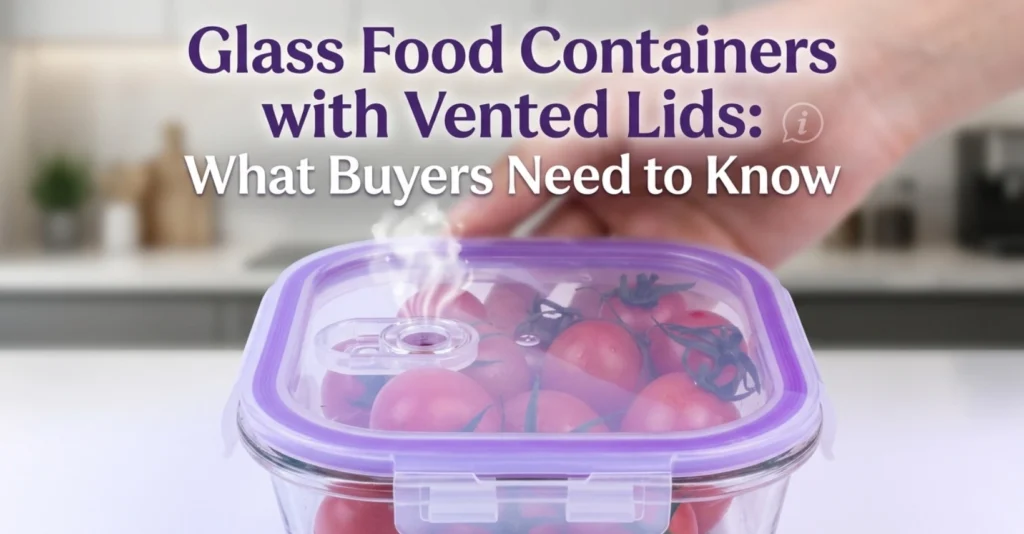
A glass food container with a vented lid is a reusable storage container whose lid includes a dedicated opening or valve for releasing steam. The container can be closed during normal storage, while the vent can be opened during reheating when the product is designed and tested for microwave use.
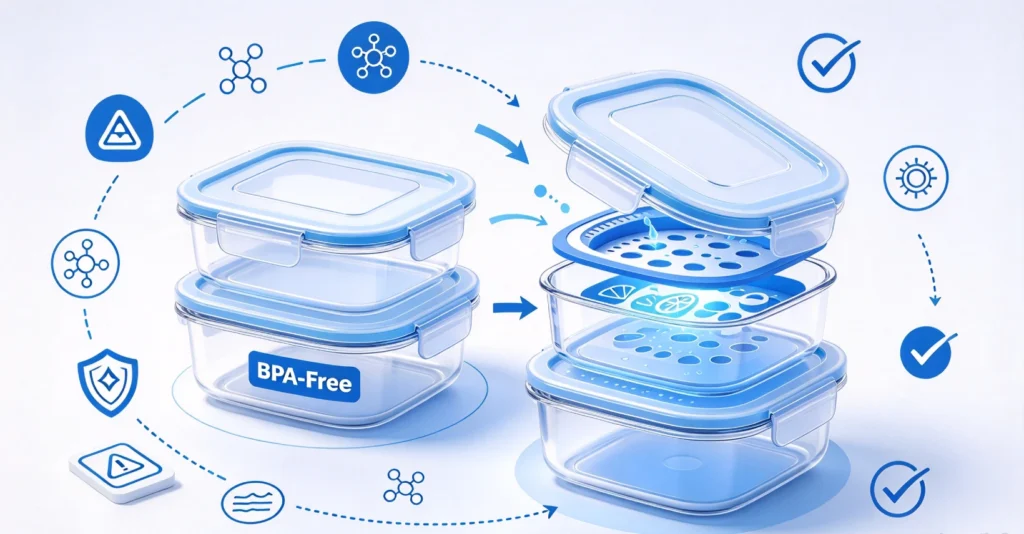
The basic construction usually combines a glass container with a plastic or composite lid, a silicone gasket, and a venting component. Each part serves a different purpose. The glass body holds the food and provides visibility, the lid protects the contents, the gasket supports the seal, and the vent provides a pathway for steam to escape.
This distinction is important because a vented lid is not simply a traditional lid with a hole added to it. The position and structure of the vent, the flexibility of the silicone component, the sealing area, and the locking mechanism all influence how the finished product performs.
For B2B buyers, the question should therefore not simply be whether a container has a vent. The more useful question is whether the entire container-and-lid system has been designed for its intended use.
Why Combine Glass with a Vented Lid?
Glass and vented lids solve different parts of the food storage problem, which is why they can work well together.
The glass body provides a clear view of the contents, making it easier for users to identify food without opening the container. This is particularly useful when several containers are stored together in a refrigerator. A transparent container can also create a clean and premium appearance, which is valuable for kitchenware brands looking to position their products in the modern food storage market.
Glass is also suitable for repeated food storage because its smooth surface is easy to clean and is less likely to retain food odors and colors compared with some other materials. For consumers who regularly store different foods, this can contribute to a more convenient long-term experience.
The vented lid addresses a different need: reheating.
When a glass container is specifically designed and tested for microwave use, the user may be able to move food through a simple store, refrigerate, reheat, and serve workflow without transferring it into a separate dish. The vent provides a controlled way for steam to escape during heating, while the glass container remains the main food-contact and storage vessel.
This combination is particularly relevant to meal-prep products, office lunch containers, leftover storage, and reusable kitchen storage ranges.
How Does a Vented Lid Work During Microwave Reheating?
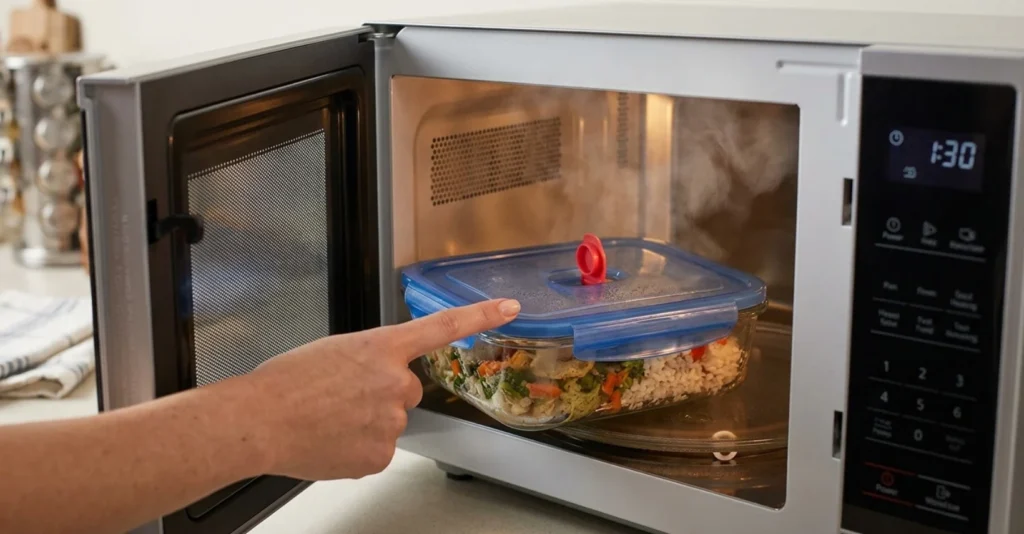
The main purpose of a vent is to manage steam during heating.
Many foods contain a significant amount of water. When food is heated, some of that water becomes steam. If a container is completely sealed during heating, steam has limited space to escape, causing pressure to build inside the container.
A vented lid provides a designated pathway for this steam to escape. Depending on the design, this may involve lifting a silicone valve, opening a small vent, or adjusting another integrated mechanism before placing the container in the microwave.
The effectiveness of this system depends on the entire lid design. The vent needs to provide sufficient steam release while remaining securely integrated with the lid. Its position can also affect how users interact with the product and where steam is released.
This is why the vent should be considered as part of the lid system rather than an isolated component.
For manufacturers and buyers, details such as the vent structure, silicone material, opening mechanism, gasket design, and lid rigidity can all influence the final product experience.
Vented Does Not Automatically Mean Leak-Proof
One of the most important distinctions for buyers is the difference between steam venting and liquid sealing.
A vent is primarily designed to release steam during heating. A gasket and locking mechanism, on the other hand, are responsible for helping the lid stay securely attached to the container and reducing the possibility of leakage during storage or transportation.
A well-designed container can combine these functions. For example, a silicone gasket can help create a seal around the glass rim, while a dedicated vent allows steam to escape when the container is being reheated.
However, buyers should not assume that every vented container is automatically leak-proof. Performance depends on the specific structure and manufacturing quality.
This is especially important when the product is intended to hold soups, sauces, dressings, or other liquid-based foods. When sourcing these products, B2B buyers should ask manufacturers how leakage performance is tested and under what conditions the stated performance applies.
What Should Buyers Know About the Glass?
Although the lid receives much of the attention in a vented container, the glass body remains an essential part of the product specification.
Different types of glass can offer different performance characteristics. Depending on the intended application, manufacturers may use different glass compositions, including soda-lime glass or high-borosilicate glass.
For products intended to move between refrigeration and heating, buyers should pay attention to the glass type, thermal performance, wall thickness, weight, transparency, and manufacturing consistency.
High-borosilicate glass is commonly considered for products where thermal shock resistance is an important requirement. However, the suitability of a particular container cannot be determined by glass type alone. The shape, thickness, manufacturing process, and intended temperature range all need to be considered together.
The appearance of the glass is also relevant from a retail perspective. Transparent glass allows consumers to see the food inside and gives the product a clean, organized appearance. For brands selling kitchen storage products, this visual quality can support a premium product presentation.
The Lid Is Just as Important as the Glass
A common mistake in product sourcing is to focus heavily on the glass container while treating the lid as a secondary component.
In reality, the lid has a major influence on usability.
A vented lid may combine several materials and components, such as a rigid plastic structure, silicone valve, and silicone sealing gasket. These components need to work together without making the lid unnecessarily difficult to open, clean, or maintain.
The silicone gasket is particularly important because it sits between the lid and the glass body. Its positioning and design can influence sealing performance. At the same time, a gasket that is difficult to remove or clean can create an inconvenient user experience.
The vent itself should also be evaluated from a maintenance perspective. If the valve can be removed, buyers should consider whether it can be cleaned easily and reassembled correctly. If it is integrated into the lid, the design should still allow practical cleaning around the vent area.
For a product that consumers may use several times a week, these details can have a greater impact on satisfaction than a purely visual feature.
Choosing the Right Size and Shape
Size and shape should be considered according to the intended use of the product rather than selected only for appearance.
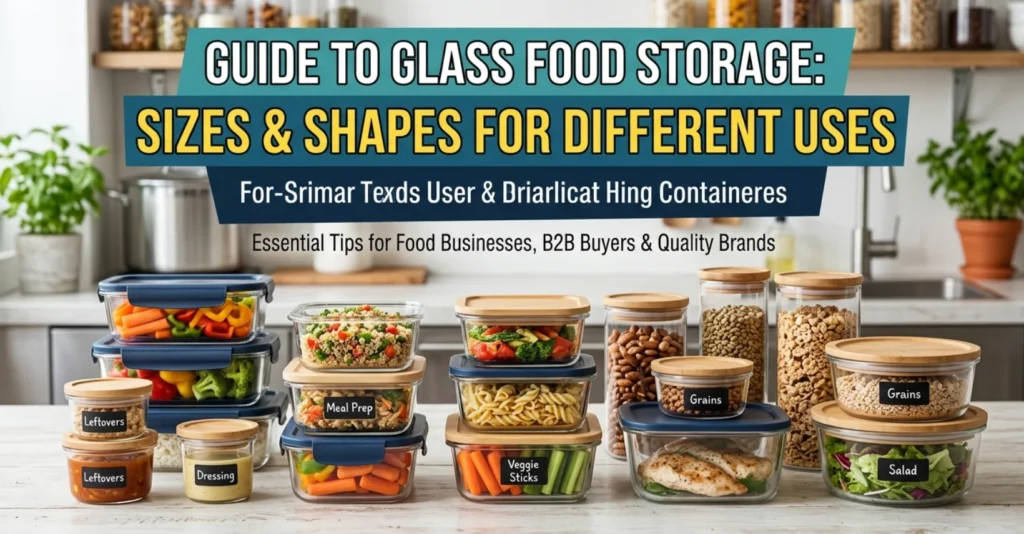
Smaller containers can work well for sauces, side dishes, snacks, and small portions. Medium containers are commonly associated with lunches, leftovers, and meal preparation, while larger formats can be used for family meals and batch cooking.
The shape also influences how the product fits into a refrigerator or storage cabinet. Round containers can be convenient for soups and certain liquid foods, while square and rectangular designs can make more efficient use of available storage space.
For B2B buyers, the decision also extends beyond the consumer’s kitchen. Container dimensions affect nesting, stacking, packaging volume, carton efficiency, warehouse storage, and shipping costs.
This means that a product range should be evaluated as a complete system. Offering several coordinated capacities and shapes can give consumers more choices while allowing brands to create a consistent product family.
Where Are Vented Glass Food Containers Used?
The strongest application for vented glass food containers is the combination of food storage and reheating.
Meal preparation is one example. Consumers can prepare several portions in advance, store them in the refrigerator, and reheat them when needed. When the container is specifically designed and tested for microwave use, the vented lid can make the reheating process more convenient.
Office lunches are another relevant application. Employees increasingly bring prepared meals to work, making reusable containers that can both store and reheat food attractive to this market.
The same concept also applies to leftovers and everyday home cooking. Rice, vegetables, pasta, soups, stews, and prepared meals can all be stored in appropriately designed containers.
For B2B brands, this broad range of applications creates an opportunity to position the same basic product architecture toward several consumer needs, from meal prep and healthy eating to everyday kitchen organization.
What Should B2B Buyers Evaluate Before Ordering?
When sourcing glass food containers with vented lids, buyers should evaluate both product performance and supplier capability.
The first step is to understand exactly what the product is designed to do. If microwave use is part of the product positioning, buyers should ask about the manufacturer’s testing and usage instructions. If the product will be marketed as leak-proof, they should ask how the leakage performance has been evaluated.
Material specifications should also be clear. Buyers should know what type of glass is used, what material the lid is made from, and what type of silicone is used for the gasket and vent. Depending on the target market, relevant food-contact testing and compliance documentation may also need to be reviewed.
The lid design deserves particular attention. Buyers should understand how the vent works, whether the gasket can be removed, how the lid is locked, and how the components should be cleaned.
Finally, commercial factors such as MOQ, sample availability, packaging options, lead time, customization capability, and production capacity should be discussed before placing a bulk order.
A reliable supplier should be able to explain not only what the product looks like, but also how its main components function together.
Vented Lids vs. Traditional Sealed Lids
Traditional sealed lids and vented lids serve different purposes, so the appropriate choice depends on the product’s intended application.
| Feature | Traditional Sealed Lid | Vented Lid |
|---|---|---|
| Food storage | Suitable | Suitable |
| Steam release during heating | Limited | Designed for steam release |
| Microwave reheating | Depends on product design | Convenient when specifically designed for microwave use |
| Pressure management during heating | Limited | Supports controlled steam release |
| Lid construction | Generally simpler | Usually includes additional vent components |
| Reheating convenience | Depends on design | One of the main design purposes |
A traditional sealed lid may be entirely appropriate for a product focused primarily on food storage. A vented lid becomes more relevant when the product is designed around the combined storage-and-reheating experience.
For B2B buyers, the objective should be to match the lid design with the intended market positioning rather than assuming that one design is suitable for every product.
How Can Vented Glass Food Containers Be Customized?
For private-label brands and distributors, vented glass containers also provide opportunities for OEM and ODM development.
Customization can start with basic specifications such as container capacity, dimensions, and shape. Brands may also request different lid colors, silicone valve colors, logo printing, or customized packaging to match their existing product range.
More advanced ODM projects can involve modifications to the lid structure, vent mechanism, container proportions, or product sets.
Packaging should also be considered early in the development process. A retail-ready color box may require different packaging dimensions from a bulk-pack solution intended for wholesale distribution. The final container design should therefore be evaluated together with packaging, carton dimensions, and shipping requirements.
At EasyLife Housewares, this type of B2B product development can be approached from both the product and commercial sides, allowing buyers to discuss specifications, samples, customization, and packaging as part of the same project.
FAQ
Are glass food containers with vented lids microwave safe?
They can be, but microwave suitability depends on the complete product design and manufacturer’s testing. Buyers should always follow the specific manufacturer’s instructions rather than assuming that any glass container is automatically microwave safe.
Does a vented lid make a container leak-proof?
Not necessarily. The vent is primarily intended to release steam, while leakage performance depends on the gasket, lid structure, locking system, and overall manufacturing quality.
Can vented glass containers be used for soup?
Some products are designed for liquid-based foods such as soup, but buyers should confirm the specific model’s sealing and leakage performance before using it for liquids.
Is high-borosilicate glass better for food storage containers?
High-borosilicate glass can offer strong thermal performance, but the suitability of a food storage container depends on the complete product design, manufacturing process, and intended application. Glass type should therefore be evaluated together with the container’s overall specifications.
Can the silicone gasket and vent be removed?
This depends on the specific lid design. Removable components can make cleaning easier, but buyers should confirm the manufacturer’s cleaning instructions and whether the components are designed for repeated removal and installation.
Can brands customize vented glass food containers?
Many B2B manufacturers can support customization of sizes, shapes, lid colors, logos, packaging, and other specifications. OEM and ODM options depend on the manufacturer’s product-development capabilities and the requirements of the project.
Conclusion
Glass food containers with vented lids are designed to address a practical challenge in modern food storage: how to combine convenient storage with easier reheating.
The value of the product does not come from the vent alone. It comes from the way the glass body, lid, silicone gasket, vent mechanism, locking structure, and overall manufacturing process work together.
For B2B buyers, evaluating these details before placing an order can help ensure that the final product matches its intended market, whether it is designed for meal preparation, office lunches, leftovers, everyday food storage, or a private-label kitchenware collection.
For brands, importers, and distributors looking for a reliable glass food storage partner, EasyLife Housewares supports B2B product development with standard products as well as OEM and ODM solutions. Customization can include product specifications, lid colors, logos, packaging, and other requirements depending on the project.
Looking for glass food containers with vented lids for your next product line? Contact EasyLife Housewares to discuss your product requirements, samples, wholesale orders, and OEM/ODM options.