Developing a successful food storage product involves much more than choosing a container shape or adding a brand logo. For houseware brands, importers, retailers, and distributors, a well-designed product must balance functionality, appearance, material performance, manufacturing feasibility, and target cost.
Whether you are planning a new glass food container collection, upgrading an existing storage solution, or developing a private-label product, understanding the development process can help you make better decisions and avoid unnecessary revisions.
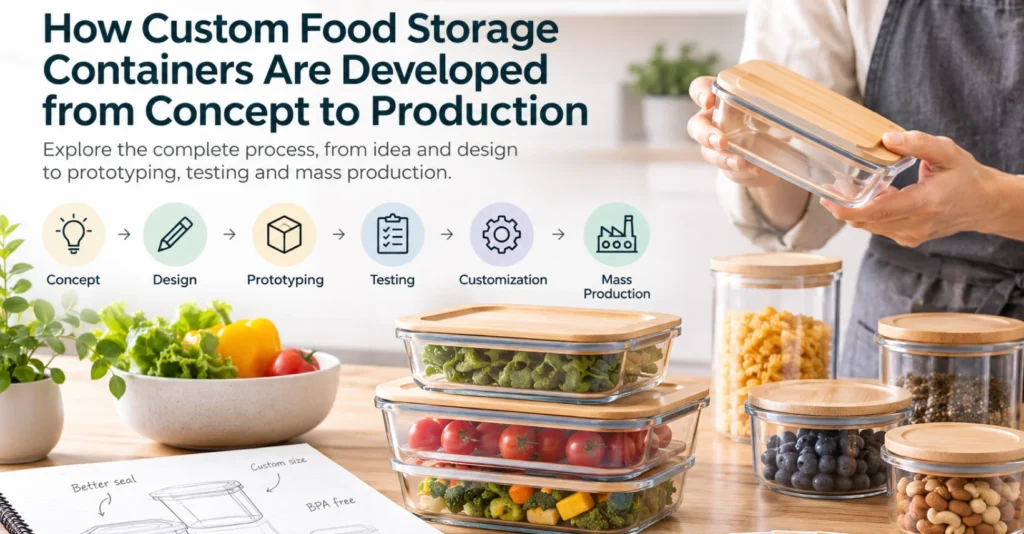
From the first product concept to the final production run, each stage plays an important role in determining the quality and commercial potential of the finished product. In this guide, we will explore how custom food storage containers are developed and what B2B buyers should consider when working with a manufacturing partner.
1. Start with a Clear Product Concept
Every successful custom food storage container begins with a clear understanding of the intended market and the problem the product is designed to solve.
Before discussing materials or dimensions with a manufacturer, consider who will use the product, where it will be sold, and what makes it different from existing products. A container designed for meal preparation may need to be microwave-compatible and easy to clean, while a pantry storage jar may place greater emphasis on appearance, airtight closure, and convenient access to dry ingredients.
Your target market also influences product positioning. A premium houseware brand may prioritize high-quality materials, refined finishes, and coordinated packaging. A retailer targeting price-sensitive customers may focus more on practical functionality, competitive pricing, and efficient packaging.
At this stage, buyers should establish several basic requirements: intended use, approximate capacity, preferred material, target price range, expected order quantity, and desired delivery schedule. Reference images, sketches, existing product samples, or preliminary drawings can help communicate the concept more clearly.
A detailed initial brief gives the manufacturer a stronger starting point. It also helps identify potential conflicts early, such as a complicated design that exceeds the target budget or a material choice that does not suit the intended application.
2. Select the Right Materials and Product Structure
Material selection is one of the most important decisions in food storage container development. It affects the product’s appearance, weight, durability, cost, and suitability for different storage environments.
Glass Food Storage Containers
Glass is a popular option for brands seeking a clean, premium appearance. Its transparency allows users to see the contents easily, while its smooth surface is generally resistant to retaining food odors and colors when properly cleaned.
Different glass designs can serve different purposes. For example, a rectangular glass container may be suitable for meal preparation and refrigerator organization, while a glass canister with a bamboo lid may be better suited to pantry storage and countertop display.
The type of glass, wall thickness, dimensions, and manufacturing process should be considered together. Buyers should also clarify whether the product is intended for ordinary food storage, freezer use, microwave heating, or oven use. These capabilities must be evaluated for the specific product rather than assumed from the material alone.
Plastic and Other Food-Contact Materials
Plastic may be appropriate when lightweight construction, impact resistance, or specific design flexibility is important. However, not all plastics have the same properties. The selected material should match the intended food contact, temperature conditions, durability requirements, and applicable regulations in the destination market.
For products made with multiple materials, each component needs consideration. A container body, lid, silicone gasket, and locking clip may perform differently under repeated use or temperature changes.
Lids, Gaskets, and Sealing Mechanisms
The lid is often just as important as the container body. A well-designed lid should fit the container correctly, be convenient to open and close, and provide the intended level of protection for the stored food.
Depending on the product concept, possible options include bamboo or wood lids, plastic lids, silicone sealing rings, locking clips, and vented lids. Each design offers different benefits and limitations.
For example, a vented lid may be useful for a container designed for microwave heating, while a silicone gasket may help improve sealing performance when used with a compatible lid and container structure. The final design should be evaluated as a complete system.
The best material combination is not necessarily the most expensive one. It is the combination that meets the product’s functional requirements, target price, visual identity, and manufacturing needs.
3. Turn the Concept into a Practical Design
Once the product requirements and material direction are established, the next step is to translate the concept into a design that can be manufactured consistently.
This stage involves confirming dimensions, capacity, shape, wall thickness, lid structure, opening mechanism, and other technical details. Designers and manufacturers also need to consider how the product will be handled, cleaned, stored, packaged, and transported.
For example, if a brand wants to develop a set of glass food storage containers in three sizes, the design team should consider whether the containers can be stacked efficiently and whether the lids can be shared across multiple sizes. Standardizing certain components may simplify inventory management, although the feasibility depends on the product structure.
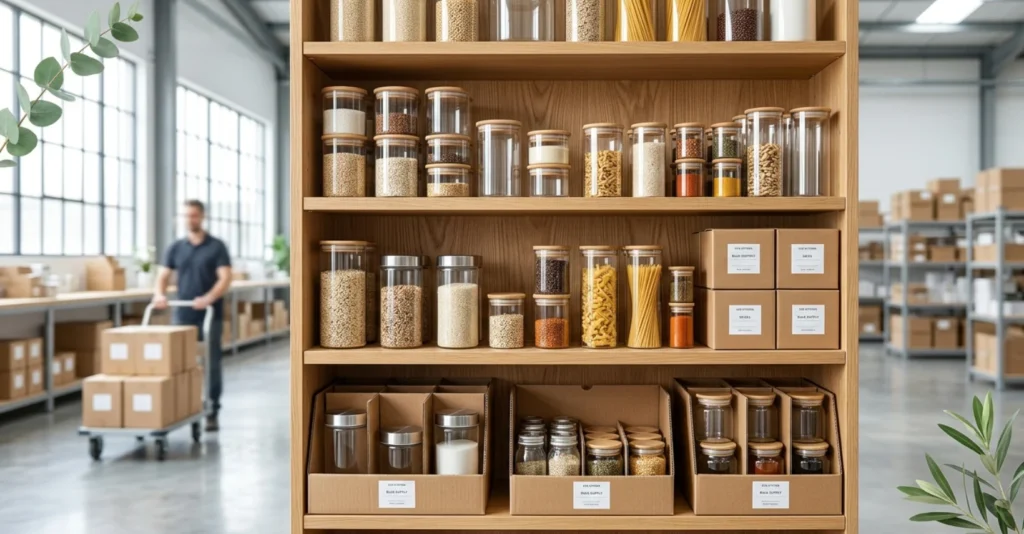
Appearance is another important consideration. Custom colors, logo placement, surface finishes, and coordinated lid designs can help create a recognizable product range. However, visual choices should not compromise usability or make manufacturing unnecessarily complicated.
At this point, it is useful to distinguish between OEM and ODM development.
OEM projects generally involve manufacturing products according to the buyer’s specifications, often by customizing an existing design or working from supplied drawings and requirements. ODM projects typically involve more design and development support from the manufacturer, potentially including the creation or refinement of a new product concept.
The exact scope varies by supplier. Buyers should confirm which services are included, whether new tooling is required, who is responsible for design approvals, and how any intellectual property or design files will be handled.
Early technical discussions can prevent avoidable problems later. A design may look attractive in a drawing but still need adjustments to improve manufacturability, assembly, sealing performance, or packaging efficiency.
4. Develop Prototypes and Review Samples
A product concept becomes much easier to evaluate once a physical sample is available. Prototyping and sampling allow buyers to identify issues that may not be obvious from drawings or digital renderings.
The first sample may be used to evaluate the general shape, dimensions, capacity, and usability. Later samples may be more suitable for checking the intended materials, colors, surface finishes, logos, lid fit, and packaging details. The sample process depends on the product’s complexity and the manufacturing methods involved.
Consider a brand developing a glass storage container with a bamboo lid and silicone gasket. During sample review, the buyer should check whether the lid sits evenly, whether the gasket fits correctly, whether the container is comfortable to handle, and whether the overall appearance matches the brand’s expectations.
If the product is intended to be sold as a coordinated set, buyers should also review the full size range rather than approving one container and assuming the others will perform identically.
Sample feedback should be specific and documented. Instead of saying that a lid feels too loose, describe the issue, provide reference images if possible, and explain the expected result. Clear feedback helps the manufacturer understand what needs to change and reduces unnecessary rounds of revisions.
Before mass production begins, the buyer and manufacturer should agree on the final specifications and the sample that represents the approved product. This provides a reference for subsequent quality checks.
5. Test Product Performance and Confirm Compliance
A product that looks good is not necessarily ready for commercial production. Appropriate testing helps determine whether it performs as intended and whether its claims are supported.
The required tests depend on the product’s construction, intended use, destination market, and performance requirements.
For containers designed to hold liquids, leak testing may be necessary under defined conditions. For products with airtight lids, testing should evaluate the sealing performance of the complete container and closure system. Locking clips, hinges, and other moving components may require durability checks where repeated operation is expected.
Temperature suitability also needs careful attention. Buyers should confirm whether the specific finished product is suitable for freezer storage, microwave heating, or oven use, as applicable. A container’s suitability cannot be determined solely by whether its body is made of glass or its lid contains silicone. The entire design, including the lid and other components, must be considered.
Material and food-contact documentation is another important part of product development. Buyers should discuss the applicable requirements for their target market and request relevant declarations, test reports, or supporting documents from the supplier as appropriate.
For background information, the U.S. Food and Drug Administration provides guidance on packaging and food-contact substances. Requirements differ across markets, so buyers selling internationally should identify the regulations relevant to each destination.
Packaging should also be evaluated before shipment. Glass products, in particular, may require appropriate protective packaging to reduce the risk of breakage during handling and transportation.
Testing should be planned early rather than postponed until the product is nearly ready to ship. This gives the development team more time to address problems without disrupting the production schedule.
6. Finalize Customization and Retail Packaging
After the product’s design and performance have been reviewed, the project can move toward final customization.
For B2B buyers, customization can help distinguish a product from standard market offerings. Depending on the product and manufacturing process, options may include custom lid colors, printed or embossed logos, coordinated product sets, customized labels, and retail-ready packaging.
Packaging deserves particular attention because it serves both a practical and a marketing purpose. It needs to protect the product during shipping while presenting the brand clearly at the point of sale.
A retail box for a premium glass container set may require a different design approach from bulk packaging intended for distribution to wholesalers or food-service businesses. Buyers should consider packaging dimensions, protective inserts, labeling requirements, and shipping efficiency.
Customization decisions can also affect costs and minimum order quantities. A special color, new mold, custom printed box, or additional component may require extra preparation or a higher order volume. Confirm these details before approving the final quotation.
At this stage, it is helpful to maintain a complete product specification covering the container, lid, materials, colors, logo, packaging, and agreed performance requirements. This document helps keep everyone aligned before production starts.
7. Prepare for Mass Production and Quality Control
Once the sample and specifications are approved, the manufacturer can prepare for mass production. The specific preparation required depends on whether the project uses an existing product structure or requires new tooling and production arrangements.
Before manufacturing begins, both parties should confirm the order quantity, approved specifications, packaging requirements, quality expectations, delivery schedule, and any outstanding documentation. Materials and components should also be coordinated according to the production plan.
Quality control should take place throughout the process rather than relying exclusively on a final inspection. Depending on the product and factory procedures, checks may cover incoming materials, dimensions, appearance, assembly, closure function, packaging, and finished-product condition.
For example, a glass container project may require checks for visible defects, dimensional consistency, lid fit, and packaging protection. A container with locking clips may need additional attention to closure operation and component assembly.
The manufacturer and buyer should agree on how defects will be identified, what acceptance criteria apply, and how nonconforming products will be handled. The appropriate inspection plan depends on the product, order requirements, and agreed quality standards.
Documentation also matters. Approved samples, product specifications, inspection records, and packaging instructions help create a clearer reference for future orders. They can be particularly useful when a brand plans to reorder the same product or expand a successful design into additional sizes and colors.
8. Manage Costs, Lead Times, and Communication
Product development is not only a technical process. It is also a commercial project that requires realistic budgeting and coordination.
The unit price is important, but it does not always represent the full cost of launching a custom product. Buyers may also need to account for sample development, tooling, testing, customized components, packaging, transportation, and other project-specific expenses.
Lead times vary according to design complexity, material availability, tooling requirements, sample revisions, testing, order quantity, and production capacity. A relatively simple customization of an existing product may follow a different schedule from a completely new design.
To manage expectations, establish clear milestones for the initial brief, design confirmation, sample review, testing, final approval, production, and shipment. Assign responsibility for reviewing drawings, approving samples, and confirming changes.
Communication is especially important when requirements change during development. A change to the container dimensions, lid structure, or packaging may affect cost, production methods, or delivery dates. The impact should be reviewed before the change is approved.
For first-time buyers, it is also worth discussing sample availability, minimum order quantities, payment terms, and shipping arrangements early. Clear commercial expectations help both parties determine whether the project is practical before committing significant time and resources.
9. How to Choose the Right Custom Food Storage Container Manufacturer
The manufacturing partner can influence every stage of product development, from the initial feasibility assessment to the consistency of repeat orders.
When comparing suppliers, look beyond product catalogs and unit prices. Consider whether the manufacturer has relevant experience with your product category, can explain material and structural choices, and has a clear process for sampling, customization, testing, and production approval.
A capable supplier should also communicate limitations honestly. If a requested feature requires new tooling, additional testing, or a different material, the manufacturer should explain the implications rather than making promises without evaluating feasibility.
Ask for relevant product specifications, available samples, quality-control information, and applicable compliance documentation. It is also useful to clarify the scope of OEM and ODM services, customization options, MOQ, expected lead times, and how product changes are managed.
For long-term partnerships, consistency matters as much as initial product development. Buyers need confidence that approved specifications can be followed in future production runs and that issues can be addressed through clear communication.
Choosing the right partner can help reduce avoidable revisions, improve coordination, and make it easier to develop a consistent product range as your business grows.
10. How EasyLife Housewares Supports Custom Food Storage Container Projects
At EasyLife Housewares, we work with B2B buyers on food storage solutions, from selecting existing products to discussing customized product requirements. Our range includes glass food storage containers, storage jars, and other kitchen storage products for different market needs.
For projects requiring customization, buyers can discuss options such as product specifications, colors, logos, and packaging, subject to the capabilities and requirements of the selected product. Where a project involves more extensive development, the first step is to clarify the intended use, design goals, target market, order quantity, and expected performance.
We believe that a productive development process starts with practical communication. By discussing requirements early, buyers and our team can evaluate possible solutions, clarify sample availability, and identify the key decisions that need to be made before moving toward production.
Whether you are expanding an existing houseware collection or exploring a new food storage concept, the goal is to develop a product that aligns with your brand, customers, and commercial requirements.
Have a custom food storage container project in mind? Contact EasyLife Housewares to discuss your product concept, customization requirements, and potential next steps.
FAQ
How long does it take to develop custom food storage containers?
The timeline depends on the complexity of the design, whether existing tooling can be used, the number of sample revisions, testing requirements, and production capacity. A project based on an existing product may require less development work than a completely new design. Ask the manufacturer for a project-specific schedule after the initial requirements have been reviewed.
What is the difference between OEM and ODM food storage containers?
OEM generally refers to manufacturing according to the buyer’s agreed specifications, often based on an existing design or buyer-provided requirements. ODM generally involves more design and development support from the manufacturer. Since service definitions vary between suppliers, buyers should confirm the exact scope of work before starting a project.
Can I customize the size, color, logo, and packaging?
Many manufacturers offer some combination of these options, but availability depends on the product structure, material, manufacturing process, MOQ, and budget. Custom colors, new tooling, and specialized packaging may involve additional costs or lead time.
Should I test samples before placing a bulk order?
Yes. Sample evaluation helps buyers confirm appearance, dimensions, usability, and the performance of relevant components before committing to mass production. For products with specific sealing or temperature requirements, appropriate testing should also be considered. Always clarify whether the approved sample represents the intended production materials and finish.
What information should I provide when requesting a quotation?
Provide the intended application, preferred material, approximate dimensions and capacity, reference images or drawings, customization requirements, packaging preferences, target order quantity, and destination market. The more clearly you define your requirements, the easier it is for the manufacturer to assess feasibility and prepare a relevant quotation.
What is the minimum order quantity for custom food storage containers?
MOQ varies by product and customization level. Existing products with simple logo or packaging changes may have different requirements from products involving custom tooling, special colors, or newly developed structures. Confirm the MOQ for your specific project rather than relying on a general industry figure.
Conclusion
Developing custom food storage containers from concept to production requires a coordinated process that combines product planning, material selection, design, sampling, testing, customization, and quality control.
For B2B buyers, the most effective approach is to define requirements early, evaluate physical samples carefully, verify product-specific performance claims, and establish clear specifications before mass production. Working with a suitable manufacturing partner can also make communication, customization, and future product expansion more manageable.
At EasyLife Housewares, we welcome discussions with brands, importers, retailers, and distributors looking for food storage solutions. If you have an existing design to customize or a new product idea to explore, contact our team to discuss your requirements and find a practical path from concept to production.