Pet parents often buy large bags of kibble to save money and time. However, the moment you break the factory seal on that bag, a countdown begins. Without the right storage, premium dog food quickly transforms from a nutritious meal into a stale, unappealing, and potentially harmful product.
As the owner of three dogs and one cat, I feel this deeply. In this guide, we’ll answer the question of how long does dry dog food last in airtight container and explore the science of pet food shelf life and why the container you choose is the most important investment you’ll make for your pet’s health.
The Quick Answer: How Long Does Dry Dog Food Last in Airtight Container
Once a bag of dry dog food is opened, it typically stays fresh for 2 to 4 weeks if left in the original bag. However, when moved to a high-quality airtight container, that shelf life can be extended to 3 to 6 months. For the absolute best results, using a pet food storage container is the gold standard, as it removes the oxygen that causes oils to go rancid.
Why Proper Storage is Non-Negotiable
It’s not just about keeping the “crunch.” Proper storage is essential for:
Flavor Retention: Dogs have 300 million olfactory receptors. If the fats smell “off,” they may refuse to eat.
Nutritional Integrity: Exposure to air breaks down essential vitamins and Omega fatty acids.
Safety: Airtight seals prevent infestations from ants or grain mites and block the growth of mold.
The Three Enemies of Pet Food
To understand why your storage choice matters, you have to understand what kills food quality:
- Oxidation: This is the chemical reaction between oxygen and the fats in kibble. It leads to rancidity, which ruins the taste and can cause digestive issues.
- Moisture: Humidity is the trigger for mold. Even a small amount of moisture trapped in a bin can spoil an entire 20lb bag.
- Heat & Light: UV rays and warm temperatures accelerate decay. This is why “where” you store the food is just as important as “what” you store it in.
How to Tell if Your Dog’s Food Has Gone Bad
Trust your senses (and your dog’s). Check for these warning signs:
The “Sour” Odor: If the kibble smells like old paint, vinegar, or sour oil, the fats have gone rancid.
A Greasy Texture: If the food feels unusually oily or “damp,” moisture has compromised the batch.
Pet Refusal: If your normally hungry dog sniffs the bowl and walks away, they are likely detecting spoilage that you can’t smell yet.
The Hidden Flaws in Popular Storage Methods
To understand the value of a high-performance vacuum canister, we must look at why the most common storage methods fail the consumer—and their pets—in the long run.
The “Roll-Down” Method: Many pet owners simply fold the top of the original paper bag.
- The Flaw: Paper is naturally porous. It provides zero protection against humidity and allows oxygen to seep in 24/7, leading to rapid oxidation of the food’s essential fats.
Standard Plastic Bins: These are the most common “upgrade” for pet owners, typically featuring simple snap-on lids.
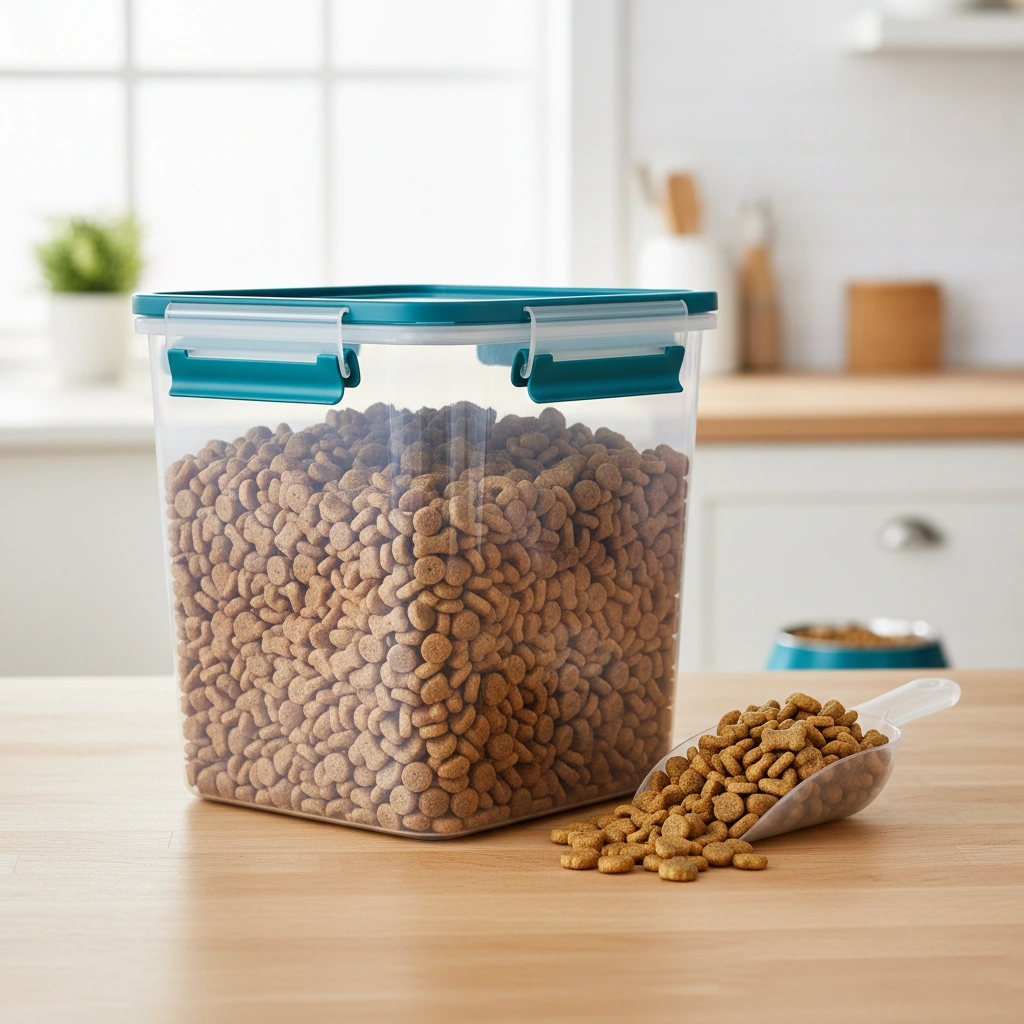
The Flaw: Plastic is chemically reactive; it can leach BPA into the food and permanently absorb rancid fat odors that are impossible to wash out. This cross-contaminates every new batch of food added to the bin.
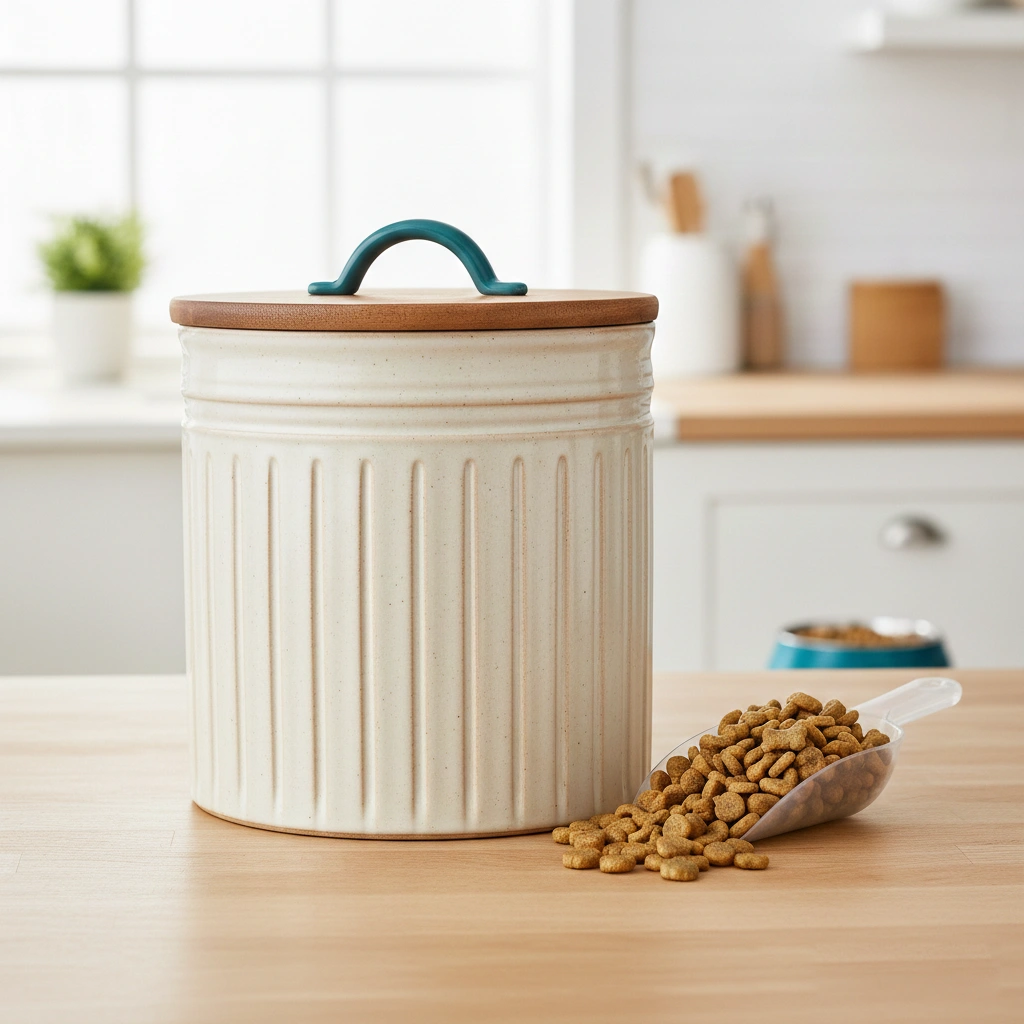
Decorative Ceramic Jars: These are often chosen for kitchen aesthetics.
The Flaw: While they look beautiful on a counter, they are almost never truly airtight. They are decorative, not functional, and fail to create the seal necessary to prevent spoilage.
The Professional Solution: Vacuum Storage Canisters
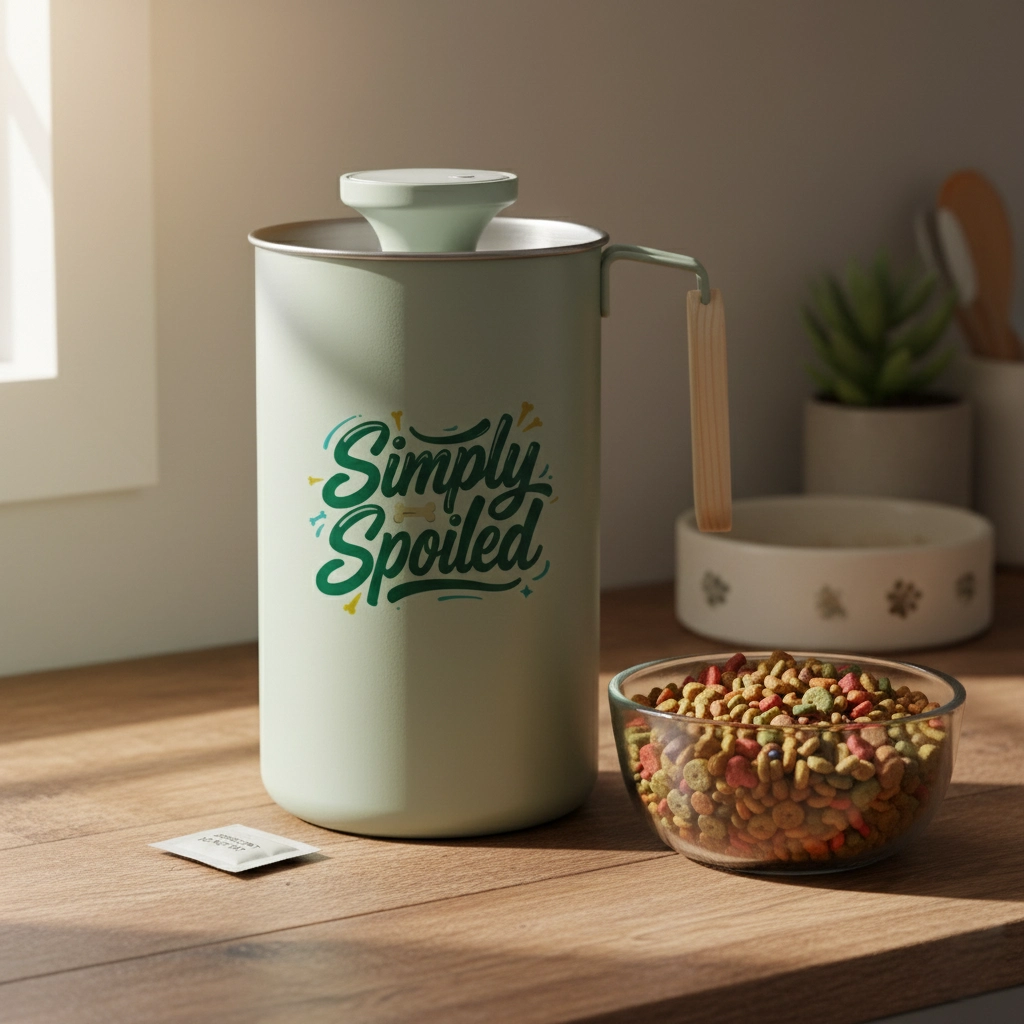
As a leading kitchenware wholesaler, we have engineered a better way to protect pet health. Our Stainless Steel and Glass Vacuum Canisters solve the problems that traditional bins can’t.
1. The Innovation: The Adjustable Vacuum Lid
Unlike a standard lid, our lid is designed to be adjustable. It “follows” the food level down. By physically reducing the “headspace” (the empty air inside the jar), you eliminate the oxygen that causes spoilage.

2. The “Teeterboard” & Button Vent
Equipped with a simple button or “teeterboard” vent, our canisters allow you to create a high-pressure seal with one touch. This mechanism allows you to press out excess air, creating a vacuum environment that locks in freshness for months, not weeks.
3. Material Excellence: Stainless Steel vs. Glass
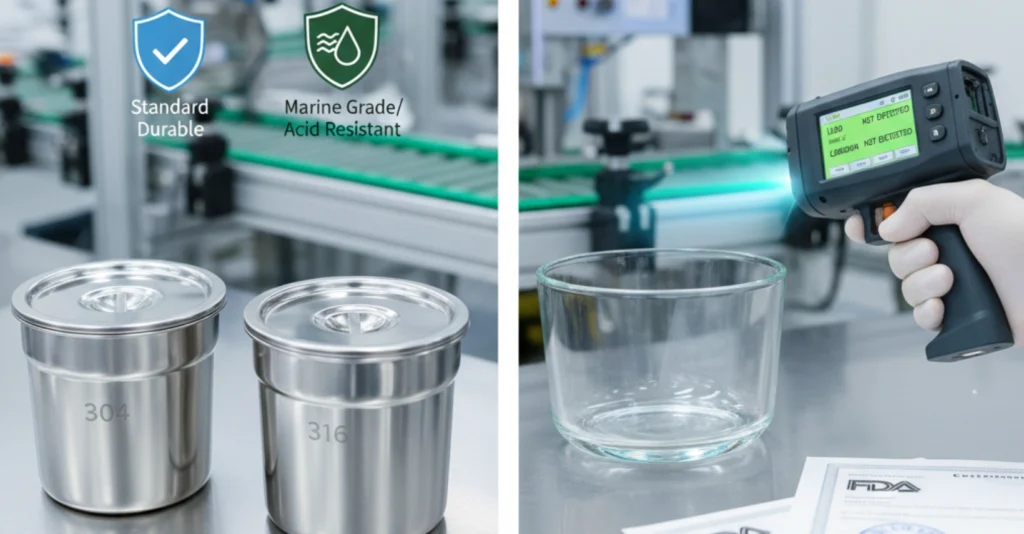
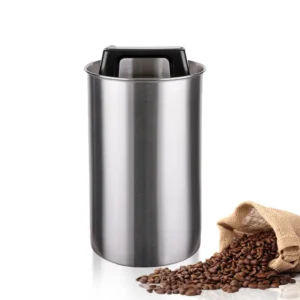
304 Stainless Steel: This is the ultimate “vault.” It is 100% opaque, blocking all light and UV rays, making it perfect for long-term storage on countertops.
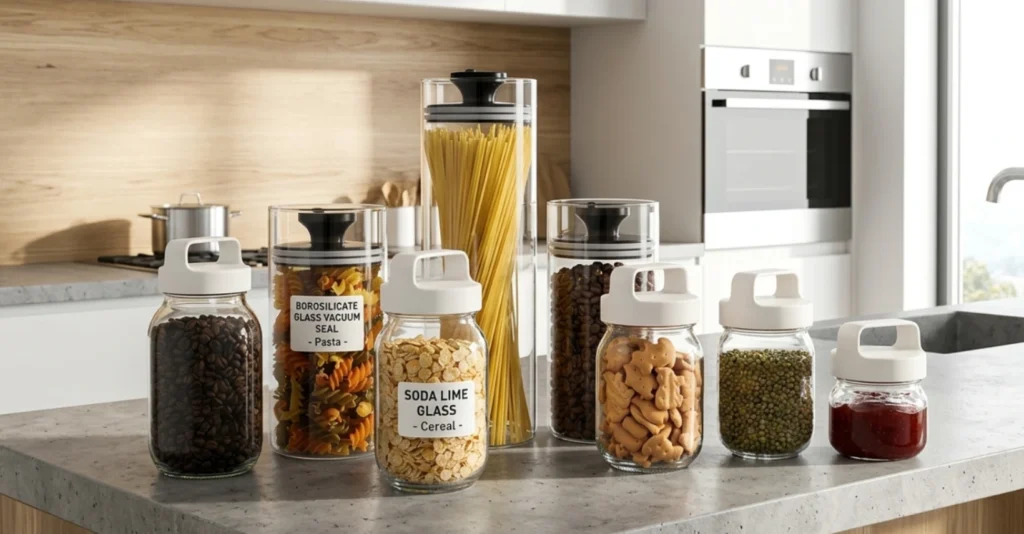
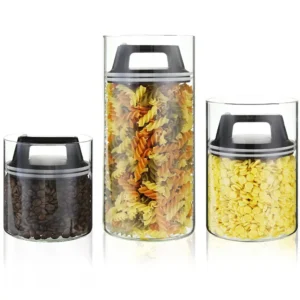
High-Borosilicate Glass: Ideal for the organized pantry. It is non-porous, easy to sanitize, and allows you to monitor food levels at a glance.
| Storage Method | Estimated Freshness (After Opening) |
| Open/Rolled Bag | 2–4 Weeks |
| Standard Plastic Bin | 4–6 Weeks |
| Vacuum Sealed Canister | 3–6 Months |
Pro-Tips for Maximum Freshness
The “Clean Slate” Rule: Always wash and dry your canister before refilling it. Never pour new food on top of old crumbs.
Location: Store your canisters in a cool, dark place.
Versatility: These canisters aren’t just for pets! Use them for coffee beans to preserve delicate oils or for pantry staples like nuts and dried fruit.

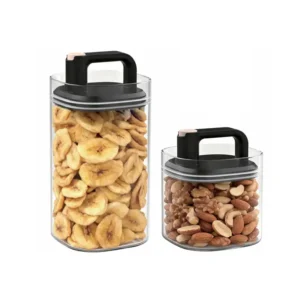
Stainless Steel vs. Glass: Which Material Wins for Pet Food?
When choosing between our star products, the decision often comes down to visibility vs. protection.
The Case for Stainless Steel (The Shield): While both materials are 100% airtight and odor-proof, our 304 Stainless Steel canisters offer a distinct advantage for long-term storage: total light opacity. Light (specifically UV rays) is a catalyst for photo-oxidation, which breaks down the proteins and fats in dog food even if the container is sealed. If you store your pet food on a countertop or in a sunlit kitchen, the stainless steel canister acts as a “vault,” blocking 100% of light and keeping the food temperature-stable.
The Case for Borosilicate Glass (The Organizer): Our High-Borosilicate Glass canisters are the favorite for organized pantries and “pet stations.” The crystal-clear walls allow you to see exactly how much food is left at a glance, so you never run out of kibble unexpectedly. Because glass is non-porous and easy to sanitize at high temperatures, it is the most hygienic option for owners who want to ensure no bacterial residue remains between batches.
Pro-Tip: If you love the aesthetic of glass but want to protect the food from light, simply store your glass canister inside a dark pantry or cupboard!
Conclusion: Invest in Quality
Keeping your pet’s food fresh is an investment in their longevity and your wallet. By switching to a vacuum-seal system, you ensure every bowl is as nutritious as the day the bag was packed.
Looking for a reliable supply of high-end storage solutions? As a premier kitchen storage wholesaler in China, we specialize in OEM/ODM services for stainless steel and glass vacuum canisters. Contact us today for bulk pricing and customization options to elevate your brand.