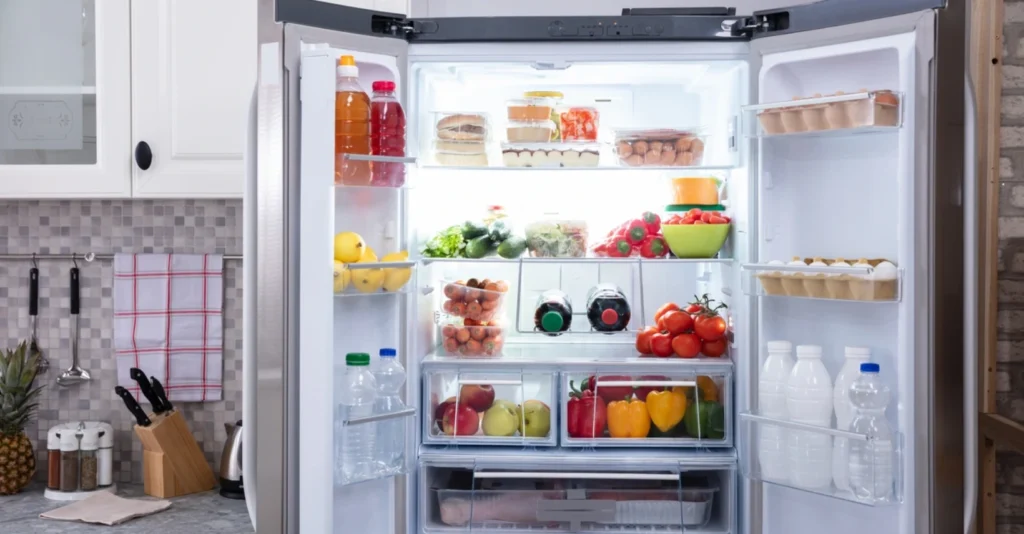
We’ve all been there. You open the kitchen cabinet to grab a simple leftover container, and—avalanche. A flurry of mismatched plastic lids and bottomless bowls tumbles onto the counter. It’s frustrating, it’s messy, and it’s a total time-waster when you’re just trying to get dinner cleared away.
If your kitchen feels a bit chaotic, don’t worry. Today, we are going to master how to organize food storage containers once and for all. By pulling the best strategies from organization experts like Martha Stewart and Simplify101, I’ve rounded up a foolproof system to turn that “junk cabinet” into a streamlined storage zone.
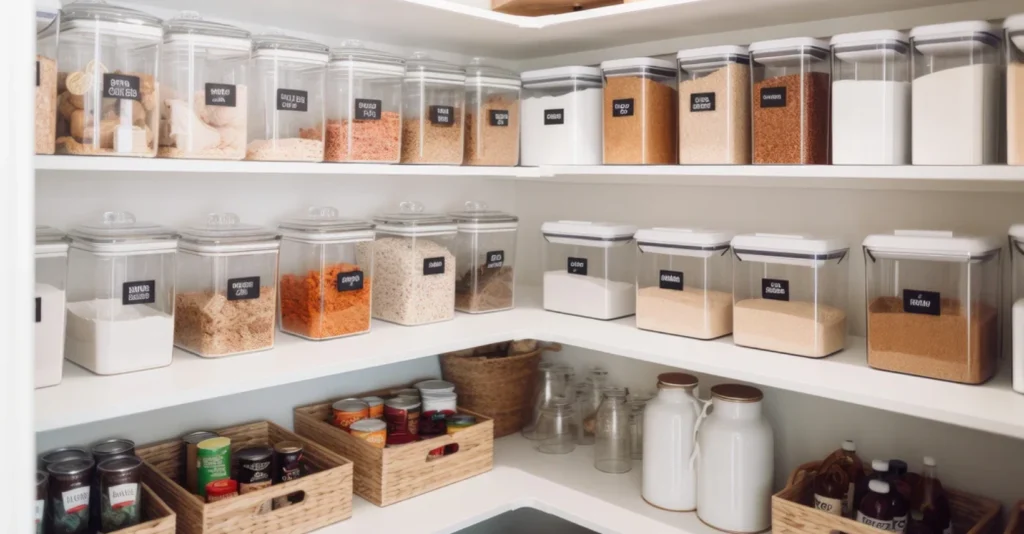
Step 1: The “Clean Slate” Reset
Before you can organize, you have to declutter. You cannot organize your way out of having too much stuff.
- Empty Everything: Clear out the entire cabinet or drawer.
- The Matching Game: Lay everything on your counter. Every container must have a matching lid. If it’s a “lonely” lid or a “homeless” bowl, set it aside. It’s a good idea to remove the labels from all bottles and relabel them according to the food you’re actually filling.
- The Audit: Be ruthless. Toss anything that is warped, badly stained, or has a lingering smell. If you have 40 containers but only a family of four, consider donating the excess. Most people only need about 10–15 high-quality pieces.
5 Proven Strategies: How to Organize Food Storage Containers
There isn’t a one-size-fits-all solution for every kitchen. Depending on your space, choose the method that works best for your layout:
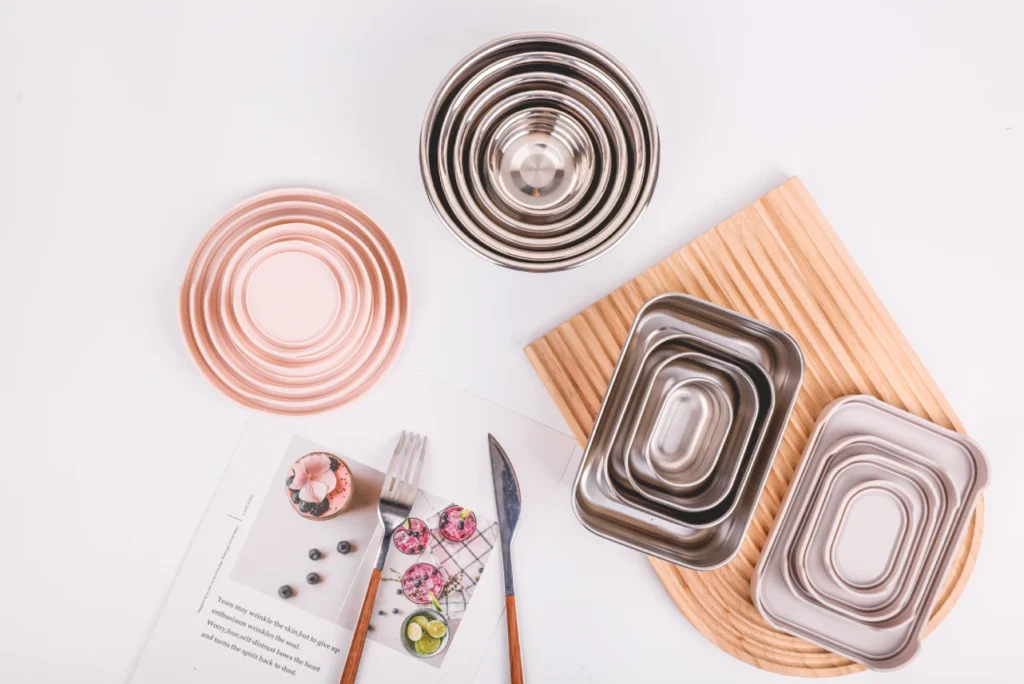
1. The “Nest and Corral” (Best for Small Cabinets)
This is the ultimate space-saver. Group your bases by shape (circles with circles, squares with squares) and nest them inside one another from largest to smallest.
- The Secret: Don’t let the lids float around. Use a small plastic bin or a dedicated lid organizer to “corral” them vertically right next to your nested stacks.
2. The “File & Fold” (Best for Deep Drawers)
If you have deep pull-out drawers, stop stacking! Instead, use dividers to create “files.” Stand your lids up vertically like records in a crate. This allows you to see every size at a glance without digging through a pile.
3. The “Snap & Stack” (The Minimalist Choice)
If you have a uniform set (like glass Pyrex), you can store them with the lids already snapped on. While this takes up more physical “airspace,” it completely eliminates the stress of hunting for a matching pair. This works best in tall cabinets with adjustable shelving.
4. The “Inside-the-Door” Hack
Maximize your “hidden” real estate. Use adhesive bins or a wire rack mounted to the inside of your cabinet door to hold your lids. This frees up the entire shelf for the bulky containers and keeps the lids at eye level.
5. The “Carousel” (For Corner Cabinets)
If your containers live in a dark corner cabinet, a large Lazy Susan (turntable) is a lifesaver. Place your nested containers on the turntable; one spin brings the back-of-the-shelf items right to your fingertips.
Pro Tools for a Better System
To keep your system functional in 2026, consider these modern upgrades:
- Tension Rods: Use small tension rods in drawers to create custom “fences” for your lids.
- Uniform Sets: If your collection is a hodgepodge of five different brands, it’s much harder to organize. Switching to one brand that uses “universal lids” (where one lid fits multiple sizes) is a game-changer.
- Bamboo Dividers: These are more sustainable than plastic and keep glass containers from clinking and chipping in drawers.
Maintaining the Order
The hardest part of learning how to organize food storage containers isn’t the setup—it’s the maintenance.
- The Unloading Rule: When the dishwasher is done, resist the urge to just toss things in. Take the extra 30 seconds to nest them properly.
- One-In, One-Out: If you buy a new set of trendy silicone bags or glass bowls, get rid of an old set to keep your inventory balanced.
Recommended products

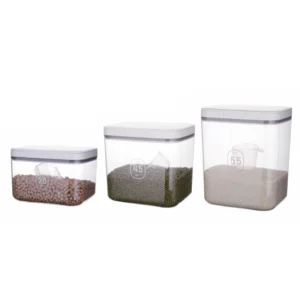
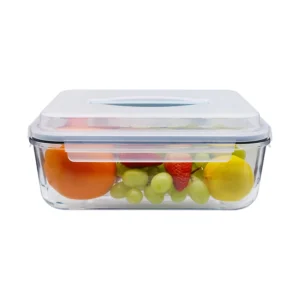
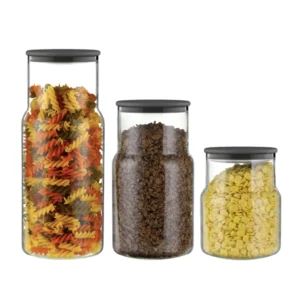
FAQ about How to Organize Glass Food Storage Containers
How to organize glass food storage containers?
To effectively organize glass food storage containers, focus on protecting the material from chipping while maximizing vertical space. Since glass is heavier and less flexible than plastic, the most efficient method is to nest the bases by shape (circular, square, or rectangular) with a thin layer of felt, a paper towel, or a silicone liner between each piece to prevent friction and “vacuum locking.” To avoid the clutter of heavy glass lids, store them vertically in a lid organizer or a bamboo drying rack placed right next to the stacks, rather than snapping them on, which can trap moisture and take up double the cabinet space. If you use deep drawers, utilize adjustable pegboard inserts to create custom “cells” that keep glass stacks from sliding and clinking when the drawer is opened, ensuring your high-quality sets stay safe and easily accessible.
How to organize food storage containers in the pantry?
When organizing food storage containers in a pantry, the goal is to treat them as a “station” rather than a scattered collection. Start by dedicating a single, eye-level shelf specifically for containers, utilizing clear, stackable bins to group smaller items like snack pots or dressing cups together. Because pantries often have fixed, deep shelving, use extra-deep pull-out bins or a Lazy Susan to ensure that containers in the back don’t become “lost” behind dry goods. For the lids, utilize the vertical space on the pantry walls or the back of the pantry door with adhesive spice-style racks or a hanging organizer; this keeps the lids visible and accessible without eating into the shelf space needed for the bulky bases.
How to organize food storage containers in a drawer?
To organize food storage containers in a drawer, the “file and partition” method is the most effective way to prevent a jumbled mess. Start by using adjustable drawer dividers or tension rods to create distinct zones for different shapes, such as a row for squares and a row for rectangles. Instead of stacking lids under the containers where they disappear, store them vertically in a lid organizer or a small bin at the front or side of the drawer, allowing you to flip through them like a filing cabinet. For glass sets, use non-slip drawer liners or a pegboard system to keep stacks from sliding and clinking when the drawer is pulled open, ensuring every piece stays in its designated home and is visible from a bird’s-eye view.
How to organize food storage containers with lids?
Organizing food storage containers with their lids attached is the most efficient “grab-and-go” strategy, provided you have the shelf height to accommodate it. To make this work without losing half your cabinet space, focus on vertical modularity: choose a uniform set of containers that are specifically designed with recessed lids to allow for secure, non-slip stacking. Arrange these “completed sets” by frequency of use, placing daily lunch containers at arm’s reach and larger, bulkier sets on higher shelves. If your collection is mixed, group them by material—glass with glass and plastic with plastic—and stack them in columns no more than three or four high to prevent the stacks from becoming unstable. This method eliminates the frustration of “lid hunting” entirely and ensures that every container in your cabinet is immediately ready for leftovers or meal prep.
Conclusion: Reclaiming Your Kitchen Peace
Organizing your food storage isn’t just about making your cabinets look “Pinterest-worthy.” It’s about reclaiming your time and reducing the daily friction of kitchen chores. When you know exactly where every lid is, meal prep becomes faster, cleanup becomes a breeze, and you stop wasting money on containers you can’t find.
By implementing a wholesale uniform system and choosing the stacking method that fits your specific cabinet style, you’re not just cleaning a shelf—you’re building a habit of efficiency. Start with the “Clean Slate” reset today, and say goodbye to the Tupperware avalanche forever!