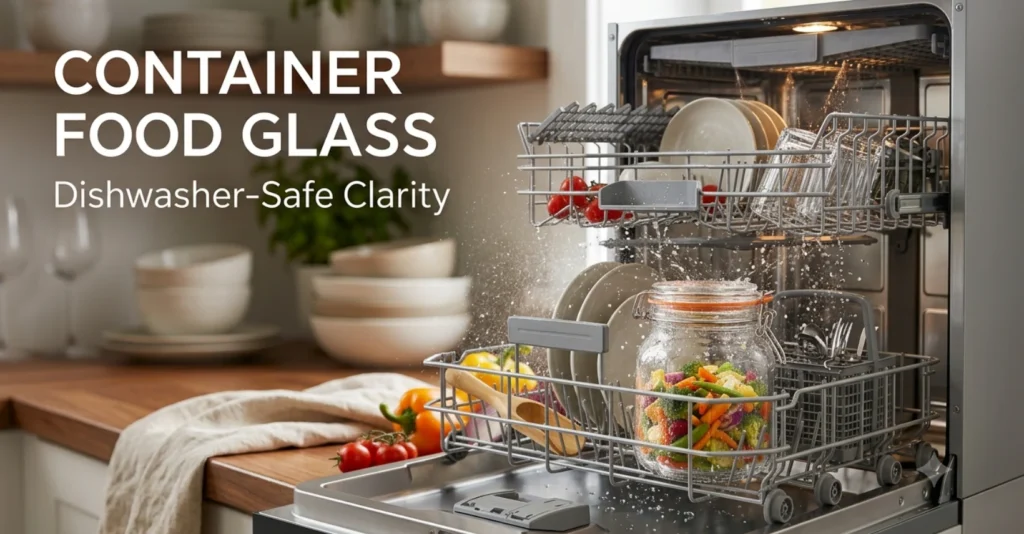
As consumers increasingly prioritize convenience in the modern kitchen, “dishwasher safety” has moved from a nice-to-have feature to a non-negotiable requirement for high-quality food storage solutions. Today, container food glass products have become the gold standard for meal prep, pantry organization, and long-term food preservation. However, for glassware brands, retailers, and distributors, one of the most frequent—and critical—customer inquiries remains:
“Are your container food glass storage sets truly dishwasher safe? And why do some glass containers turn cloudy after repeated wash cycles?”
“Clouding”—the milky, hazy film that forms on glass over time—is a major point of consumer frustration. Understanding the difference between temporary mineral buildup and permanent glass corrosion, as well as knowing how high-grade glass formulation prevents this issue, is essential for any homeware brand looking to build long-term consumer trust.
In this deep dive, we explore the science behind dishwasher cycles, why glass corrosion happens, how to prevent it, and how EasyLife Housewares engineers glass storage containers designed to withstand thousands of wash cycles without losing their crystal-clear brilliance.
Clouding vs. Etching: What Really Happens Inside the Dishwasher?
Not all cloudy glass is created equal. When customers complain that their glass storage containers are turning white or foggy, the issue usually falls into one of two distinct categories:
| Feature | Hard Water Film / Residue | Permanent Glass Corrosion (Etching) |
| Reversibility | Reversible (Cleans off easily with mild acid) | Irreversible (Permanent structural damage) |
| Primary Cause | Mineral scale buildup (Calcium & Magnesium) | Chemical erosion of the glass matrix structure |
| Visual Appearance | Spotty, uneven film, streaks, or water marks | Uniform, foggy haze made of microscopic scratches |
| Key Culprits | Hard water & insufficient rinse aid | High alkalinity (pH > 10), soft water, high heat |
A. Hard Water Film (Reversible)
In areas with mineral-rich hard water, calcium and magnesium deposits stick to the glass surface during the high-heat dry cycle. This creates a hazy, spotty residue. Luckily, this is temporary—it can easily be dissolved using mild household acids like white vinegar or citric acid.
B. Glass Corrosion / Etching (Irreversible)
Glass corrosion is a permanent structural issue. Inside a dishwasher, glass containers are subjected to an aggressive environment: sustained high temperatures, highly alkaline detergent chemicals, high-pressure water jets, and soft water.
Over time, sodium ions leach out from the glass surface and are replaced by hydrogen ions from water. Combined with strong alkaline chemicals in modern dishwasher tablets, the silica structure of weak glass is gradually stripped away layer by layer. This leaves behind millions of microscopic pits and micro-fissures that refract light erratically, making the glass permanently cloudy.
Key Triggers of Glass Corrosion in Dishwasher Cycles
To design and source truly “dishwasher-safe” containers, brands must understand the four primary environmental triggers that accelerate glass etching:
- High Water Temperatures: Sustained temperatures above 65°C accelerate chemical reactions between water and glass minerals.
- Over-Dosing Alkaline Detergents: Detergents rich in phosphates, silicates, and aggressive surfactants strip protective layers off lower-quality glass formulations.
- Over-Softened Water & Pre-Rinsing: Softened water is chemically hungrier for ions. If dishes are rinsed completely clean before entering the machine, detergent enzymes have no food soils to bind to—so they attack the silica structure of the glass instead.
- Mechanical Friction: High-pressure water spray jets causing container-to-container contact create micro-abrasions, providing entry points for chemical corrosion.
Materials Science: High-Borosilicate vs. Soda-Lime Glass
The single biggest factor determining whether a glass container will cloud over time is its raw material formulation and chemical stability.
| Glass Material Type | Thermal Shock Resistance (ΔT) | Hydrolytic / Corrosion Resistance |
| Standard Soda-Lime Glass | Low to Moderate (approx 50-80℃) | Fair (Prone to long-term etching and clouding) |
| High-Borosilicate Glass | Exceptional (up to 120-140℃) | Superior (Hydrolytic Class 1 Rating) |
Why High-Borosilicate Glass Prevents Clouding
High-borosilicate glass incorporates boron trioxide into the silica matrix alongside raw silica. This fundamentally transforms its physical and chemical resilience:
- Superior Hydrolytic Resistance: Borosilicate glass is chemically inert and classified under Hydrolytic Class 1—the highest international rating for water resistance. It actively resists ion leaching even under prolonged exposure to hot, alkaline dishwasher cycles.
- Exceptional Thermal Shock Resistance: With a very low coefficient of thermal expansion, high-borosilicate glass handles sudden temperature fluctuations. It transitions smoothly from freezer to microwave to high-heat dishwasher cycles without structural fatigue, surface micro-cracks, or clouding.
Best Practices for End-Users: How to Keep Glass Storage Sparkling
Educating your retail customers on proper dishwasher care adds value to your brand and reduces unnecessary product returns. Consider including these preventative tips in your care guides:
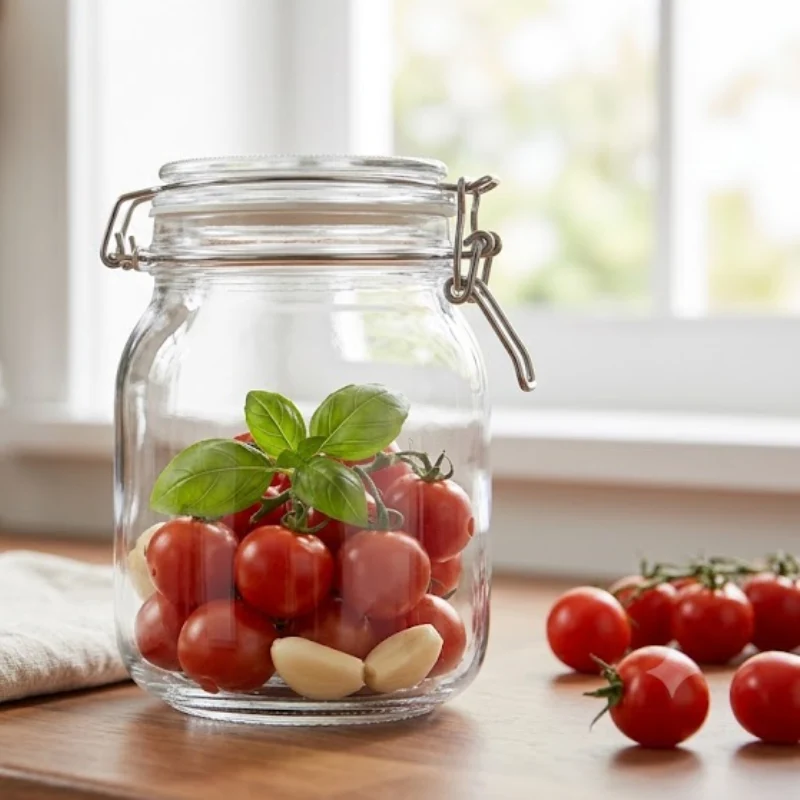
- Select Eco/Glassware Cycles: Encourage users to select dishwasher modes that cap wash temperatures between 50-55℃.
- Adjust Detergent Dosage: Use less detergent if a home water softener is installed to prevent aggressive chemical etching.
- Avoid Over-Rinsing: Leave minimal grease or food particles on containers so detergent agents bind with organic matter rather than attacking the glass.
- Position Jars Securely: Ensure containers are placed firmly on the top rack without touching adjacent glass vessels to prevent mechanical scratching during spray cycles.
- Separate Lids & Gaskets: Always remove silicone sealing rings and plastic lids before washing (or place them strictly on the top rack) to prevent heat deformation.
Why EasyLife Housewares is Your Trusted OEM/ODM Partner for Dishwasher-Safe Glassware
At EasyLife Housewares, we recognize that a single customer complaint regarding cloudy or shattered glass can compromise a brand’s reputation. That is why we engineer chemical stability and durability directly into every container we manufacture.
As a global manufacturer of glass food storage solutions, EasyLife Housewares combines advanced material science with strict testing protocols to deliver 100% certified dishwasher-safe products.
The EasyLife Advantage for B2B Buyers:
- High-Purity Borosilicate Formulations: We utilize high-borosilicate glass engineered to handle sudden thermal shock, ensuring containers withstand residential and commercial dishwashers without cracking, dulling, or etching.
- Accelerated Dishwasher Aging Tests: Our QA lab subjects prototype containers to multi-cycle accelerated dishwasher testing—verifying resistance to alkali compounds, acid exposures, and rapid temperature swings before mass production begins.
- Precision Lid & Gasket Engineering: Beyond the glass container itself, our custom-engineered clip-lids, removable food-grade silicone rings, and stainless steel bails are built to resist thermal warping, discoloration, and moisture trap-in.
- Comprehensive OEM/ODM Customization: Looking to introduce custom stackable meal-prep sets or leak-proof storage containers? Our R&D engineers support your product lifecycle from CAD modeling and structural stress analysis to custom logo embossing, color tinting, and retail packaging.
Conclusion: Building Consumer Confidence Through Quality
Claiming true “dishwasher safety” requires more than printing a logo on a box—it demands superior raw materials, precise chemical engineering, and rigorous quality verification. By offering consumers high-borosilicate glass storage containers that retain their crystal-clear transparency wash after wash, your brand builds lasting loyalty and authority.
Whether you are expanding your existing kitchenware catalog or building a private-label glass storage collection from scratch, EasyLife Housewares is your dependable supply chain partner.
Contact the EasyLife Housewares team today to request samples, discuss technical specifications, or explore custom OEM/ODM manufacturing options for your brand!