In the B2B kitchenware industry, “airtight” is often treated as a generic marketing term. However, for professional buyers and premium brands, a true vacuum seal is a matter of material science. The most critical component in any storage solution isn’t just the glass—it is the silicone gasket.
As a professional wholesaler and manufacturer, EasyLife Housewares ensures every component works in perfect harmony. While many suppliers cut costs by using TPE (Thermoplastic Elastomer), we have standardized our production on 100% food-grade silicone. Here is the technical breakdown of why this choice protects your brand’s reputation and your customers’ food.
What is a Silicone Gasket?

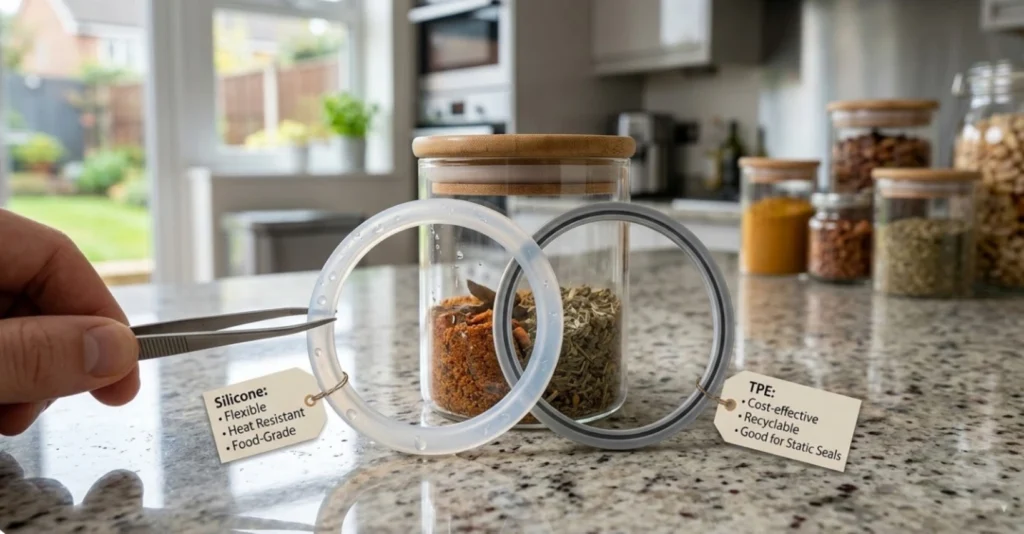
A silicone gasket is a “thermoset” elastomer. Once molded into its ring shape, it stays in that shape permanently. Its defining characteristic is High Elastic Memory. No matter how long it is compressed by a lid, it will always return to its original form. This makes it the “gold standard” for professional-grade food storage where a long-term vacuum seal is required.
What is a TPE Gasket?
TPE (Thermoplastic Elastomer) is a blend of plastic and rubber. While it is recyclable and cost-effective, it is a “thermoplastic,” meaning it can soften with heat. In airtight applications, TPE tends to suffer from “compression set”—meaning it can permanently flatten over time, eventually allowing air to leak into the canister.
Technical Comparison: Silicone vs. TPE
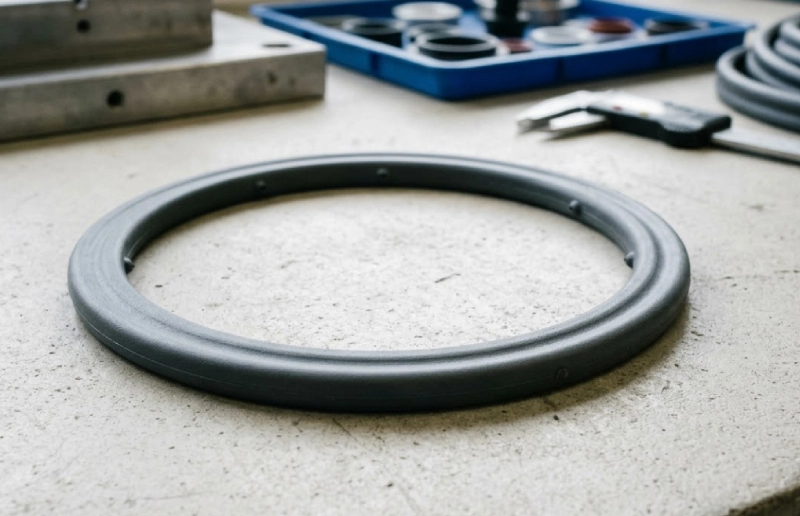
We provide this data to give our clients full transparency. While TPE has its place in high-volume, budget-friendly markets, we focus on silicone for our premium airtight glass canister lines, especially for our hot-selling airtight coffee container line.
| Silicone Gasket | TPE Gasket | |
| Material Class | Material Class Thermoset Polymer | Thermoplastic Blend |
| Elastic Memory | Superior (Never flattens) | Moderate (May lose shape) |
| Airtight Reliability | Lifetime Performance | Short-to-Medium Term |
| Heat Resistance | Up to 250°C | Up to 100°C |
| Food Safety | BPA-Free / Odorless | BPA-Free / Potential for scent absorption |
How to Identify the Difference in the Field
Identifying the difference between these materials is essential for quality control. Here are four simple “Field Tests” to distinguish a silicone gasket from a TPE gasket:
- The Stretch Test: Firmly stretch the gasket. Silicone maintains its color. TPE will often turn white or show pale “stress marks” at the point of tension.
- The Recovery Test: Pinch the gasket hard for 10 seconds. Silicone snaps back instantly with no crease. TPE may show a temporary “dent” or a slow recovery.
- The Texture Test: Rub your finger across the surface. Silicone feels “grippy” or tacky. TPE feels smoother, waxier, or more “plasticky.”
- The Burn Test (Destructive): If burned, silicone turns into a fine white ash. TPE melts, drips, and produces dark smoke.
| Feature | Silicone Gasket | TPE Gasket |
| Stretch Result | Maintains color | Often turns white/pale |
| Recovery | Instant snap-back | Sluggish; may crease |
| Touch/Feel | Grippy, tacky, rubbery | Waxy, smooth, plasticky |
| Burn Test | White ash; no melting | Melts and drips |
Why We Use the Silicone Gasket as a Professional Wholesaler
As a manufacturer, we choose the silicone gasket because it eliminates the most common consumer complaint: a lid that becomes “loose” over time.
- Zero-Deformation Seal: Because silicone doesn’t “settle,” the vacuum seal on day 500 is just as tight as it was on day 1.
- Climate Proof: Our canisters are shipped globally. Silicone gaskets won’t melt in tropical heat or crack in arctic cold, ensuring consistent performance regardless of the destination.
- Hygienic Surface: Silicone is non-porous and resists mold growth, making it the safest choice for long-term food contact in an airtight environment.
- Verified Purity: Every batch is audited for FDA & LFGB compliance before it leaves our facility.
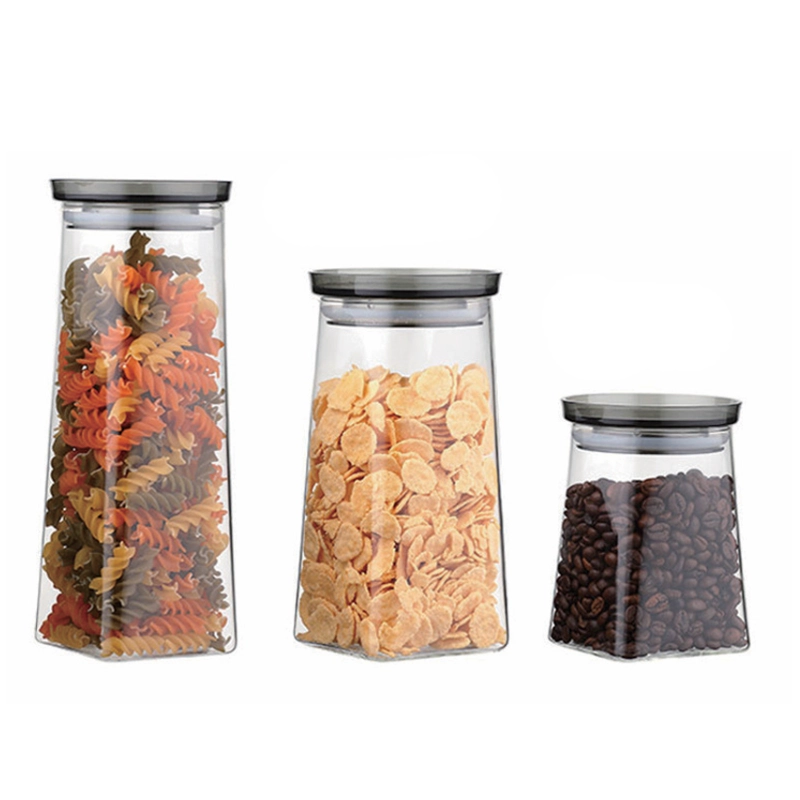
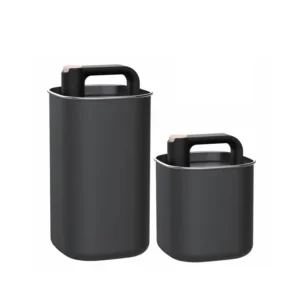
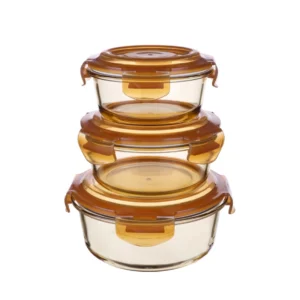
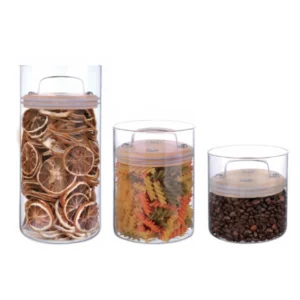
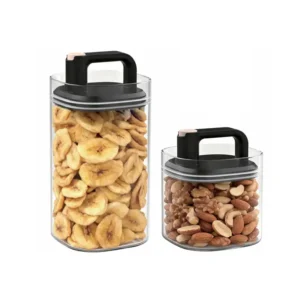
Recommended Glass Food Jars with Silicone Gasket
Precision Tooling: Designing for “The Whoosh”
An airtight glass canister is a mechanical system. The “whoosh” sound a customer hears isn’t accidental—it’s engineered.
Tapered Ribbing: We design our silicone gaskets with multiple tapered ribs. This allows the lid to slide on easily while creating three or four independent “air dams” that block moisture.
Venting Technology: For some larger canisters, we integrate a one-way valve or a small notch in the silicone. This allows excess air to escape as the lid is pushed down, creating a partial vacuum without the lid “popping” back up.
Sustainability: Is Silicone Better than TPE?
This is a common question from eco-conscious brands.
Durability vs. Recyclability: While TPE is technically easier to melt down and recycle (as a thermoplastic), it has a shorter lifespan.
The “Buy it Once” Philosophy: Because a silicone gasket lasts 5–10 years without degrading, it prevents the entire glass canister from being thrown away or requiring a replacement part. We argue that longevity is the truest form of sustainability in the kitchenware industry.
Which Material Should You Choose? A Strategic Buyer’s Guide
Choosing between silicone and TPE depends entirely on your market positioning and the specific needs of your customers. As a professional wholesaler, we generally advise that while TPE is an acceptable entry-level material, silicone is the superior choice for high-quality housewares.
When to Choose a Silicone Gasket
Silicone is the “set it and forget it” material for premium storage. You should choose it if:
- Longevity is a Priority: Your customers expect the airtight glass container to work perfectly for 3 to 5+ years.
- Extreme Environments: The product will be used in dishwashers, microwaves, or stored in freezers.
- Sensitive Contents: You are selling to coffee connoisseurs or tea lovers who require a 100% odorless and inert seal to protect flavor profiles.
- Brand Reputation: You want to minimize returns caused by “leaky” lids or deformed seals.
When to Choose a TPE Gasket
TPE is a functional alternative for specific commercial scenarios. You might choose it if:
- Strict Budget Constraints: You are producing for mass-market retail or low-cost promotional giveaways where the price point is the primary driver.
- Short-Term Use: The canisters are intended for high-turnover pantry items where a lifetime vacuum seal isn’t as critical.
- Eco-Recycling Programs: Your brand identity is built specifically on thermoplastic recyclability, as TPE can be reprocessed more easily than silicone.
Quick Comparison: Which fits your business?
| Requirement | Silicone Gasket | TPE Gasket |
| Market Tier | Premium / Professional | Mass Market / Budget |
| Durability | High (Does not age) | Moderate (May degrade) |
| Seal Strength | Permanent / Reliable | Temporary / Variable |
| Best For | Specialty Coffee, Spices, Flour | Pasta, Cereal, General Org |
As a manufacturer, we have seen that the cost difference between the two is relatively small compared to the cost of a lost customer. We recommend silicone gaskets for almost all glass canister airtight applications to ensure the highest level of consumer satisfaction and “airtight” integrity.
Conclusion: Making an Informed Investment
For a professional wholesaler or manufacturer, the goal is to eliminate product returns and maximize long-term customer satisfaction. While TPE is a functional choice for entry-level budget lines, the silicone gasket provides the technical security and “premium feel” required for a high-performance glass canister airtight.
By choosing silicone, you are investing in a product that maintains its vacuum-seal integrity for years, ensuring that “airtight” remains a promise kept. In a competitive market, these small engineering details are what differentiate a standard jar from a professional-grade storage solution.