In the high-performance kitchenware sector, selecting the appropriate glass substrate is a critical decision that impacts product safety, durability, and thermal reliability. As a leading manufacturer, we prioritize educating our partners on the material science behind our products to ensure the right fit for your market’s needs. This guide will give you an intuitive and in-depth understanding of the points about tempered glass vs borosilicate.
What is Borosilicate Glass?
Borosilicate glass is a specialized type of glass characterized by the inclusion of boron trioxide (typically at least 5%) within its silicate structure. This chemical composition fundamentally alters the physical properties of the material compared to standard soda-lime glass.
The defining technical characteristic of borosilicate glass is its low coefficient of thermal expansion. In professional terms, this means the glass does not expand or contract significantly when subjected to rapid temperature fluctuations.
- Thermal Shock Resistance: It can withstand a temperature differential of approximately 170°C.
- Chemical Durability: It is highly resistant to chemical erosion and acid degradation, making it an inert choice for food contact.
- Optical Clarity: It maintains superior transparency and does not “cloud” over time or after repeated dishwasher cycles.
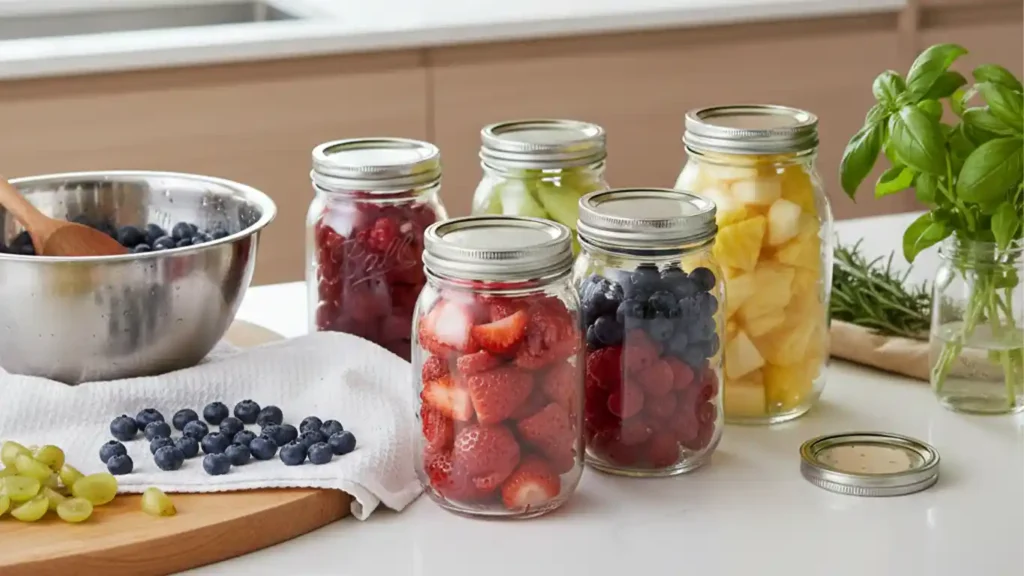
Think of this as the “Thermal Hero.” It’s what we use for our food storage containers and lunch boxes. It’s designed to go from a cold freezer to a hot oven without cracking.

What is Tempered Glass?
Tempered glass, often referred to as “toughened glass,” is not defined by its chemical makeup, but by its thermal manufacturing process. It is typically a soda-lime glass that has undergone a controlled heating and rapid cooling (quenching) procedure.
During tempering, the exterior surfaces are put into a state of compression, while the interior remains in a state of tension. This stored energy provides the glass with its mechanical strength.
- Mechanical Strength: It is approximately 4 to 5 times stronger than annealed (standard) glass of the same thickness.
- Safety Profile: When the structural integrity is compromised, the internal tension causes the glass to shatter into small, blunt granules rather than sharp, jagged shards.
- Physical Resilience: It offers high resistance to impact and bending, making it ideal for components handled frequently.
This is the “Impact Specialist.” We often use this for lids because it’s incredibly tough and can withstand the bumps and clangs of a busy kitchen drawer.

How are These Glasses Made?
The manufacturing processes define their “personalities”:
Tempering Process: Glass is heated to around 600°C and then cooled rapidly with high-pressure air (quenching). This puts the outer surfaces into compression and the interior into tension.
Borosilicate Process: This involves adding boron to the silicate mix during the melting stage. It isn’t just a treatment; it’s a fundamental change to the glass’s chemistry.
Are These Glasses Safe?

Tempered: If it breaks, it shatters into small, relatively harmless granular chunks (dice) instead of jagged shards.
Borosilicate: It is less likely to break from temperature swings, but if it does break, it can still shatter into sharp, dangerous shards.
Tempered Glass vs Borosilicate: Key Differences
| Property | Borosilicate Glass | Tempered Glass |
| Primary Advantage | Thermal Stability | Physical Impact Resistance |
| Material Composition | Boron-rich silicate | Processed Soda-Lime |
| Failure Mode | Traditional cracks/shards | Granular fragmentation (Dicing) |
| Oven Compatibility | High (Excellent for thermal shifts) | Limited (Risk of thermal stress) |
| Manufacturing Cost | Higher (Raw materials & energy) | Moderate (Standard glass + processing) |
The primary difference is Thermal Shock Resistance.
- If you take a tempered glass dish out of a 200°C oven and put it in cold water, it will likely explode.
- Borosilicate glass can handle that transition much more gracefully because it doesn’t expand or contract nearly as much.
Applications of Borosilicate & Tempered Glass
Applications of Borosilicate Glass
Borosilicate’s utility is derived from its chemical inertness and its ability to withstand extreme thermal gradients without structural failure.
Culinary & Food Processing
- Premium Bakeware: Ideal for “Freezer-to-Oven” product lines where the glass must survive a Delta T of up to 170°C instantly.
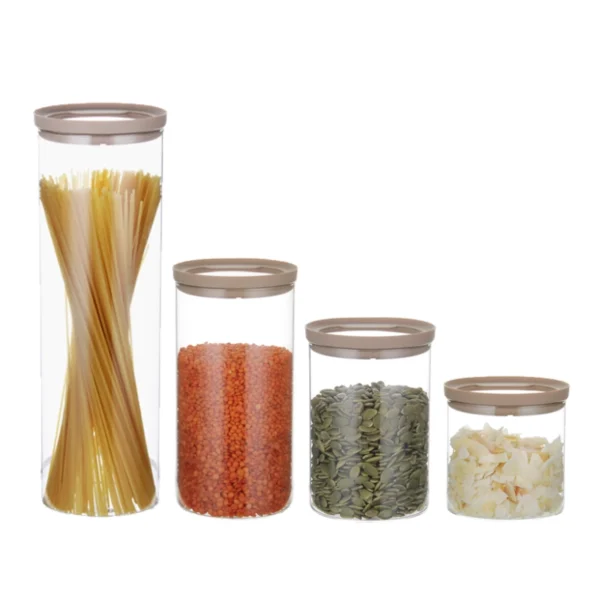
- High-Transparency Spice Systems: Used in spice jars and pepper mills due to their high refractive index and resistance to essential oil corrosion.
- Beverage Steeping: The standard for French presses, teapots, and double-walled espresso cups, where boiling water is poured directly into a room-temperature vessel.


Laboratory & Medical Science
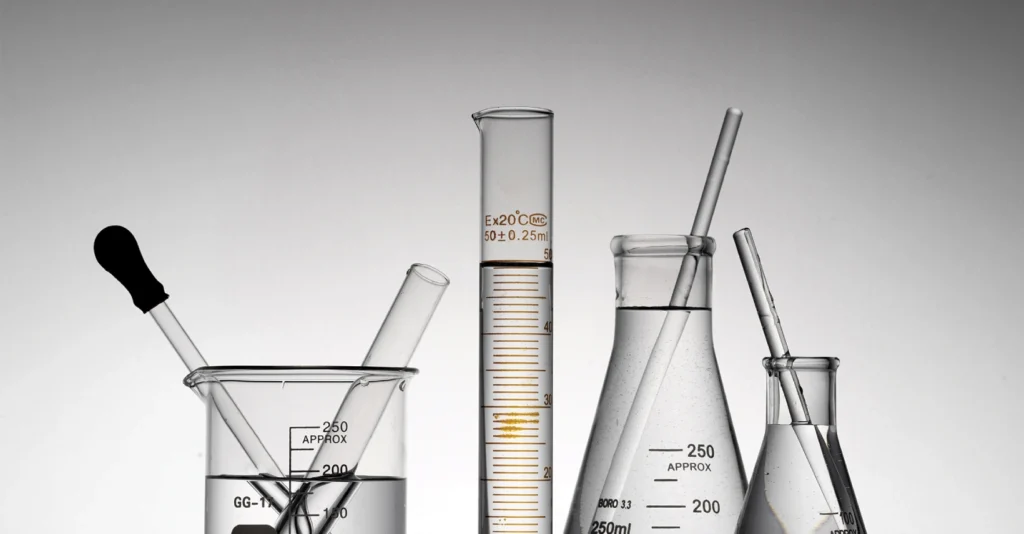
- Volumetric Glassware: Beakers, flasks, and test tubes must remain dimensionally stable under heat to ensure measurement accuracy.
- Pharmaceutical Packaging: Borosilicate (Type I) glass is used for vaccine vials and ampoules because it does not leach chemicals into the medicine.
Industrial & High-Tech Engineering
- Sight Glass: Used in industrial boilers and chemical reactors so operators can safely monitor high-temperature reactions.
- Lighting Technology: High-intensity discharge (HID) lamps and cinema-grade lighting equipment that generate significant heat.
- Aerospace & Optics: Utilized in telescope lenses and spacecraft thermal insulation tiles due to its minimal expansion in extreme environments.
Applications of Tempered Glass
Tempering is the preferred choice when the primary threat to the product is mechanical impact or high-traffic physical stress.
Kitchenware & Appliance Components
- Cookware Lids: The industry standard for pot and pan lids. Its high impact resistance protects the glass if it is dropped on a tile floor or knocked against a granite countertop.
- Oven Door Windows: While the inner pane may be borosilicate, the outer aesthetic pane is often tempered to resist external impacts.
- Internal Shelving: Used for refrigerator and cabinet shelving due to its ability to support significant weight loads.
Architecture & Interior Design
- Structural Glazing: Used in frameless glass doors, shower enclosures, and partitions.
- Safety Balustrades: Essential for balconies and staircases where human impact is a risk.
- Furniture: Table tops and display cases where the glass must support heavy objects and resist scratching.
Automotive & Electronics
- Vehicle Side Windows: Designed to shatter into blunt granules during a collision to prevent passenger lacerations.
- Public Infrastructure: Bus shelters, phone booths, and ATM screens where durability and vandalism resistance are paramount.
- Mobile Device Protectors: Specialized thin-film tempering used for smartphone screen guards to absorb the energy of a drop.
Limitations & Technical Trade-offs
Understanding the “Achilles’ heel” of each material allows for better product engineering and risk management.
Borosilicate Glass: The Thermal Specialist
- Mechanical Fragility: While it is the “thermal king,” it is more brittle than tempered glass. If dropped on a hard tile floor, it is more likely to crack or fracture.
- Failure Mode: When it fails, it breaks into large, razor-sharp shards. Unlike tempered glass, it does not “self-destruct” into safe granules, which requires careful handling during breakage.
- Production Cost: Borosilicate requires melting temperatures exceeding 1,600°C (compared to ~1,400°C for soda-lime). This results in higher energy consumption and specialized molybdenum electrodes, leading to a higher unit price for the end client.
Tempered Glass: The Impact Specialist
- Thermal Shock Sensitivity: Tempered glass has a high coefficient of thermal expansion. While it can handle high static heat, it cannot handle rapid temperature shifts. Taking a tempered lid from a boiling pot and placing it on a cold marble counter can cause spontaneous breakage.
- Post-Production Rigidity: Once the tempering process is complete, the glass cannot be altered. Any attempt to drill, cut, or grind the edge will release the internal tension and cause the entire piece to shatter instantly.
- The “Explosion” Risk: Due to the internal stress, if a tempered piece has a microscopic manufacturing defect (like nickel sulfide inclusions), it can occasionally shatter without any apparent cause—a phenomenon known as spontaneous explosion.
Professional Decision Guide: Tempered Glass vs Borosilicate, which is better?
As a wholesale partner, we recommend selecting your glass based on the primary “User Journey” of the product.
Scenario A: Oven-to-Table or Meal Prep
- Requirement: Frequent movement between freezer -20°C, microwave, and oven +200°C.
- Recommendation: Borosilicate Glass. Its low expansion rate is the only way to guarantee the container won’t explode during rapid reheating.
Scenario B: High-Impact Daily Handling (Lids/Serving)
- Requirement: Durability in dishwashers, resistance to being dropped, and frequent handling by children or staff.
- Recommendation: Tempered Glass. Its 4–5x mechanical strength makes it “rugged.” For a lid that might be knocked off a counter, tempering is the superior safety feature.
Scenario C: Dry Storage & Aesthetics (Spice Jars/Mills)
- Requirement: High clarity, chemical purity (no leaching), and a lightweight, premium feel.
- Recommendation: Borosilicate Glass. It offers a sleeker profile and superior resistance to the acidic or volatile oils found in spices and peppercorns.
Optimize Your Product Line with Our Engineering Team
In many cases, the most “professional” solution is a Hybrid Design: a Borosilicate vessel for thermal safety paired with a Tempered glass lid for impact durability. This combination addresses 100% of the typical failure points in a kitchen environment.
Contact our professional product engineers to tailor highly competitive products that are irreplaceable in terms of appearance and quality and safety!
Manufacturing Synergies: Why We Use Both
From a professional wholesaler’s perspective, the “best” glass depends entirely on the component’s functional requirements.
For Food Storage Vessels: We utilize borosilicate glass. This ensures the end-user can safely move the product from a freezer at 20°C directly into a preheated oven at 180°C without the risk of catastrophic thermal failure.
For Product Lids and Accessories: We often employ tempered glass. Lids are the components most susceptible to being dropped or knocked against hard surfaces. The high impact resistance of tempering ensures longevity and consumer safety in the event of a kitchen accident.

Upgrade Your Kitchen with Professional-Grade Glass
In the competitive housewares market, the quality of your glass is a direct reflection of your brand’s commitment to consumer safety and product longevity. At EasyLife Housewares, we don’t just supply products, we provide engineered kitchen solutions.
As a specialized manufacturer, we understand that a “one-size-fits-all” approach does not work for the modern kitchen. That is why our catalog is built on the strategic application of material science:
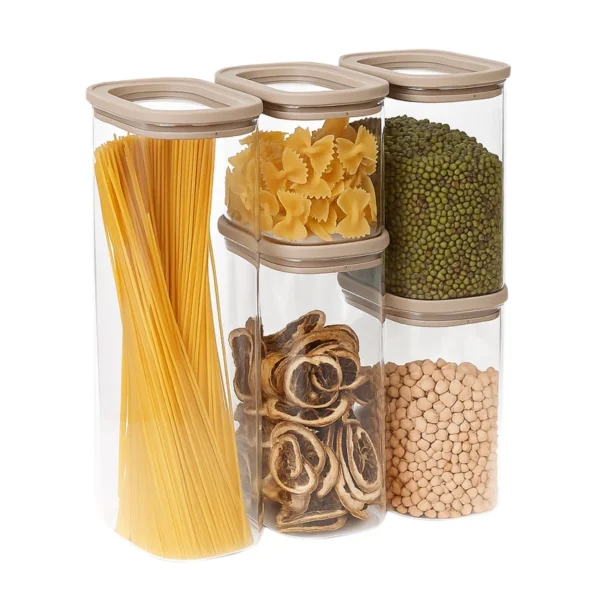
- Precision-Engineered Borosilicate: Our food storage containers, lunch boxes, and spice jars utilize high-grade borosilicate to ensure they withstand the rigors of thermal shock—from deep-freeze storage to high-heat oven environments.
- High-Impact Tempered Solutions: For components prone to physical stress, such as our lunch box lids, we utilize advanced tempering processes to ensure maximum durability and “shatter-safe” performance.
- Comprehensive Product Range: From crystal-clear spice jars and precision pepper mills to versatile meal-prep sets, our diverse inventory allows you to source all your glass kitchenware needs from a single, quality-controlled partner.
FAQ about Tempered Glass VS Borosilicate Glass
-
What are the disadvantages of borosilicate glass?
While borosilicate glass is the gold standard for thermal stability, it is more brittle and prone to fracturing from physical impacts than tempered glass. It is also more expensive to produce due to specialized raw materials and high energy requirements. Furthermore, when it fails, it breaks into large, sharp shards rather than blunt granules, requiring more cautious handling.
-
What is the disadvantage of tempered glass?
The primary disadvantage of tempered glass is its vulnerability to thermal shock; it can shatter if moved quickly between extreme temperatures. Because it is under constant internal tension, surface scratches or microscopic defects can also lead to rare “spontaneous breakage.” Additionally, tempered glass is physically permanent—it cannot be cut or resized after processing, as any attempt to alter it will cause the entire piece to disintegrate.
-
Is tempered glass safe for food?
Yes, tempered glass is entirely safe for food contact and is a standard material in the global kitchenware industry. It is non-porous and chemically inert, meaning it will not absorb food odors, stains, or bacteria, nor will it leach harmful chemicals like BPA or phthalates into your meals even when heated. While it lacks the extreme thermal shock resistance of borosilicate, it remains a hygienic, easy-to-clean, and “shatter-safe” choice for lids, serving platters, and storage, provided it is used within its recommended temperature limits.
-
Is borosilicate glass good or bad for you?
Borosilicate glass is exceptionally safe and healthy due to its chemical stability. As a non-porous, lead-free, and pharmaceutical-grade material, it won’t leach chemicals or odors into food, even under extreme heat. Unlike plastic, it remains inert and hygienic throughout its life, while its thermal shock resistance makes it a physically safer choice for oven-to-table use.
-
Is tempered glass safer than borosilicate glass?
“Safety” depends on the hazard: tempered glass is safer against physical impact because it is harder to break and shatters into blunt, harmless granules. Conversely, borosilicate glass is safer against thermal stress, as it won’t crack or explode during extreme temperature shifts (like freezer-to-oven). In a professional context, they are complementary—tempered glass handles drops and rough mechanical use, while borosilicate ensures thermal reliability and chemical purity.
-
What is the most non-toxic glass?
Borosilicate glass is widely considered the most non-toxic and safest glass for food contact. Unlike some cheaper soda-lime glasses that may contain trace amounts of lead or cadmium, borosilicate is made from natural minerals and is completely lead-free. Its high chemical resistance means it is “Type I” pharmaceutical grade, ensuring it won’t leach chemicals, odors, or microplastics into your food even when exposed to high heat or acidic ingredients.
Conclusion
In the professional kitchenware industry, the choice between borosilicate and tempered glass is a strategic decision between thermal endurance and mechanical strength.
Both tempered and borosilicate glass share a fundamental commitment to durability and thermal reliability. EasyLife eliminates the guesswork for our partners. By utilizing borosilicate for high-heat containers and tempered glass for high-impact lids, we engineer products that handle both the oven and the accident. Whether you are sourcing for durability or thermal performance, our comprehensive range ensures your inventory meets the highest industrial standards.
Partner with EasyLife Housewares and experience our commitment to quality firsthand—we provide glass samples at every stage of our collaboration to ensure your total confidence in our products.