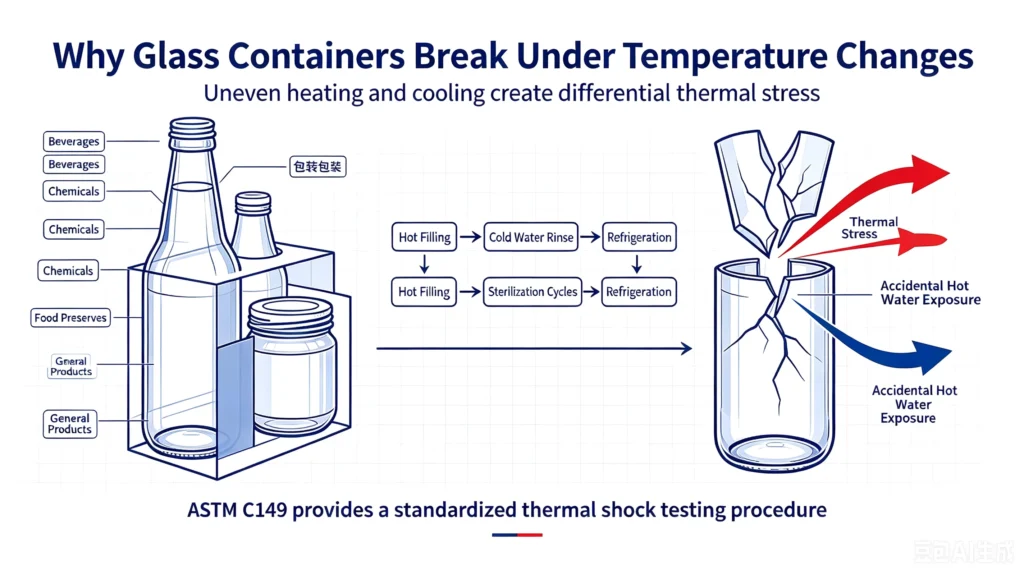
Glass containers—including bottles, jars, and other forms of commercial packaging—are widely used across industries to hold beverages, food preserves, chemicals, and various products that often experience temperature fluctuations during manufacturing, filling, transportation, and everyday use. When a glass container is suddenly subjected to a temperature change—such as hot filling followed by cold-water rinsing, sterilization cycles, refrigeration, or accidental exposure to hot water—uneven heating or cooling generates differential thermal stresses. If these stresses become too high, they can lead to fracture. ASTM C149 offers a standardized testing procedure to evaluate how well glass containers resist such thermal shock.
Understanding Thermal Shock in Glass Containers
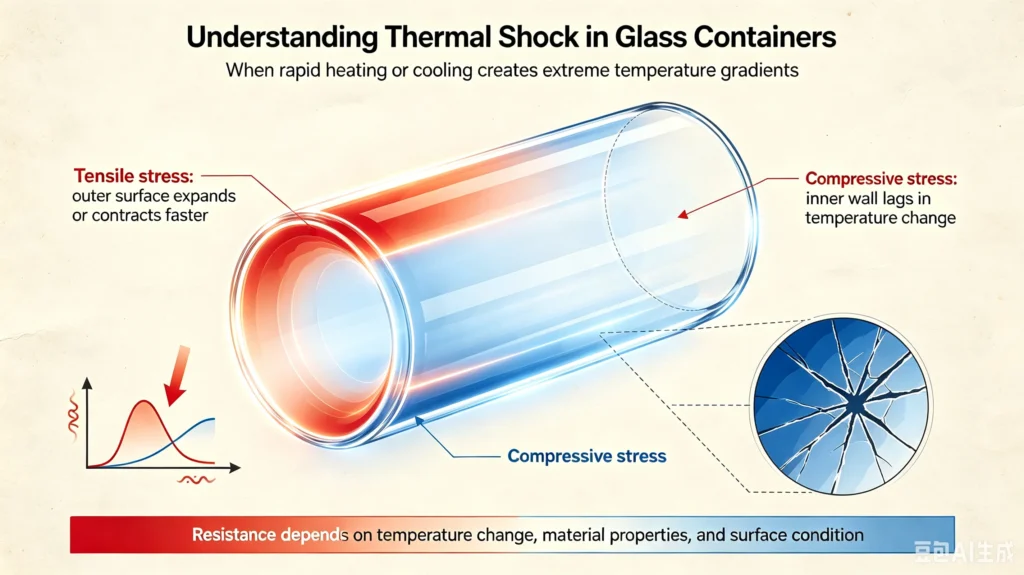
Thermal shock occurs when different parts of a material are simultaneously at different temperatures. In glass containers, this typically happens when the outer surface rapidly heats or cools while the inner wall remains at its original temperature. The resulting difference in thermal expansion creates tensile stress on one side and compressive stress on the other. If the tensile stress exceeds the local strength of the glass—especially at surface flaws or areas of stress concentration—the container will crack or break.
The thermal shock resistance of glass is influenced by several factors: the size of the temperature change, the glass’s coefficient of thermal expansion, its thermal conductivity (how efficiently heat travels through the glass thickness), and the condition of its surface, since defects can significantly reduce effective strength.
Typical Thermal Shock Resistance Ranges for Common Glass Types
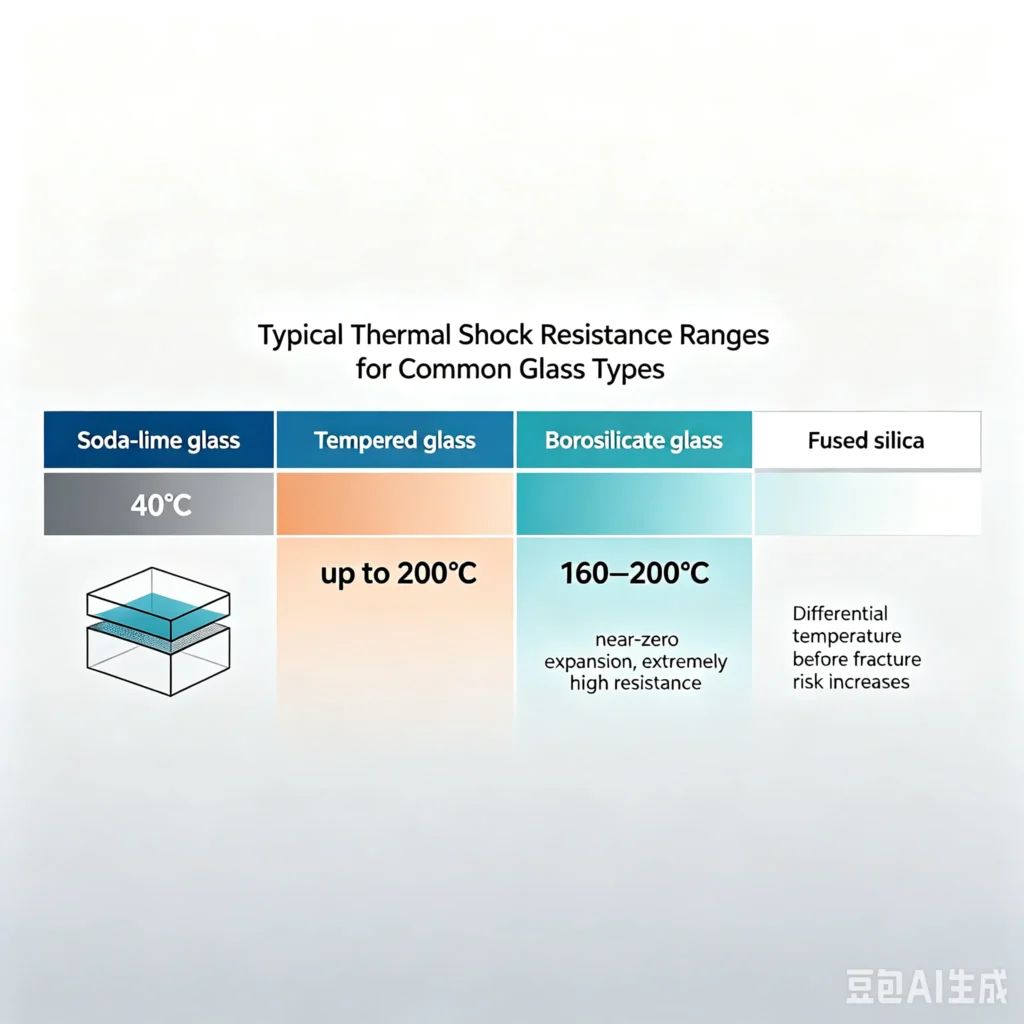
Soda-lime glass: roughly 40°C differential before fracture risk becomes significant
Tempered glass: can withstand differentials of up to 200°C
Borosilicate glass: 160–200°C, owing to its low thermal expansion
Fused silica: extremely high resistance, with near-zero expansion
Overview of ASTM C149
ASTM C149—officially titled Standard Test Method for Thermal Shock Resistance of Glass Containers—determines the relative thermal shock resistance of commercial glass bottles and jars. The method involves exposing containers to sudden, precisely controlled temperature changes and then measuring either the proportion of samples that survive or the minimum temperature differential that causes failure.
This standard is particularly relevant for commercial glass packaging that must endure rapid temperature shifts during real-world use, such as hot-fill operations, pasteurization, carbonated beverage bottling, and other processing steps involving swift thermal transitions.
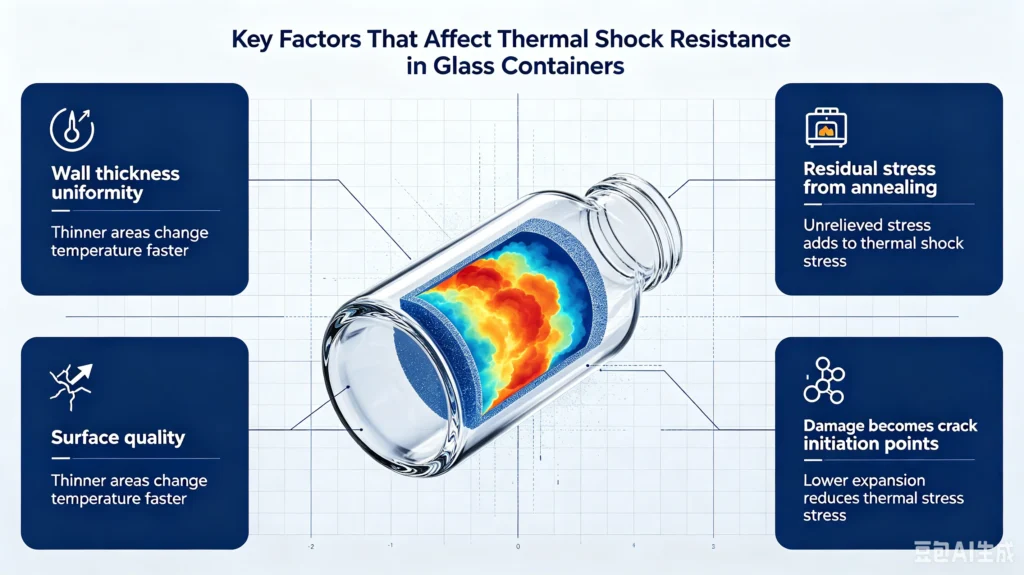
Key Factors That Affect Thermal Shock Resistance in Glass Containers
Wall thickness uniformity: variations in thickness lead to uneven heating or cooling, with thinner areas changing temperature faster and creating stress at thickness transitions.
Residual stress from annealing: glass that has not been properly annealed retains internal stresses, which add to those generated by thermal shock.
Surface quality: scratches, chips, or other surface damage act as initiation points for cracks, lowering the container’s ability to withstand thermal stress.
Glass composition: borosilicate glass, with its much lower thermal expansion coefficient compared to soda-lime glass, offers substantially better thermal shock performance.
Industrial Applications
In the beverage sector, thermal shock testing ensures that glass beer and soft drink bottles can survive tunnel pasteurization without breaking. In pharmaceuticals, this test is a mandatory qualification step for primary packaging containers such as vials and ampoules. For laboratory glassware—including beakers, flasks, and autoclave vessels made from borosilicate glass—thermal shock testing is used to confirm that the products can reliably endure repeated steam sterilization cycles.
Can Thermal Shock Testing Serve as a Production Defect Screen in the Glass Kitchenware Industry?
Yes. Thermal shock testing functions as a sensitive quality-control tool for detecting issues such as non-uniform wall thickness, inadequate annealing, and surface checks or cracks. Containers with these defects tend to fail the test before they ever reach consumers, making it an effective frontline screening method.
Conclusion
In essence, ASTM C149 places glass containers under controlled thermal stress to simulate extreme temperature changes they may encounter in practice, thereby verifying their structural integrity and safety under real-world conditions. For high-borosilicate glass products, this test is especially critical—it not only demonstrates the material’s superior performance characteristics but also serves as a key indicator of manufacturing process stability.
We have always prioritized product quality as our foremost commitment. Backed by mature manufacturing expertise and rigorous process control, we consistently deliver glass products of outstanding performance to our customers. Our high-borosilicate glass food storage containers, for instance, reliably pass the thermal shock test batch after batch, confirming their durability and dependability in everyday household use.