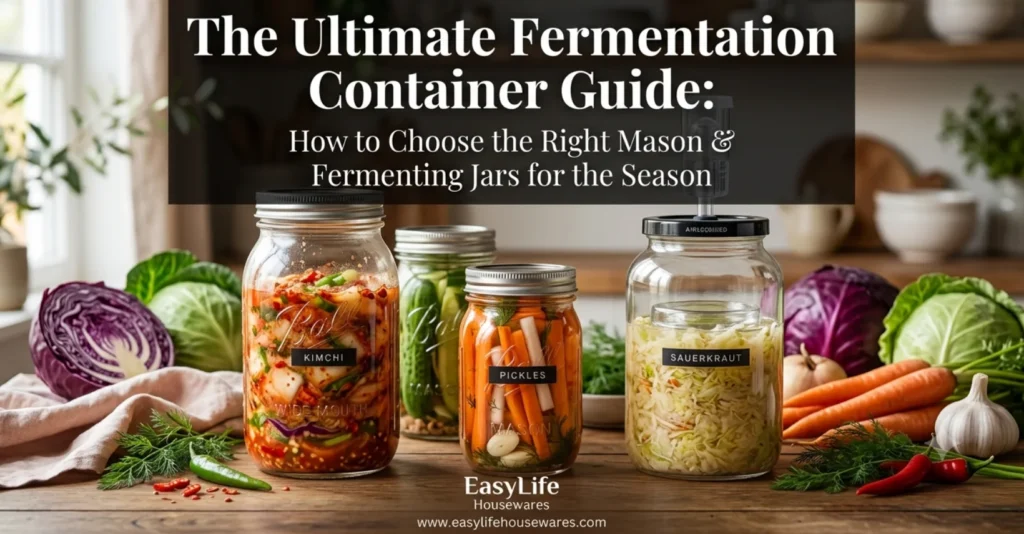
As the harvest season rolls in, the popularity of home fermentation reaches its annual peak. From probiotic-rich kimchi and tangy sauerkraut to refreshing kombucha and artisanal pickles, more consumers are discovering the health benefits and culinary joys of fermenting at home.
For retailers, brands, and wholesalers, this seasonal surge presents a massive opportunity. However, success in the fermentation market isn’t just about selling jars—it’s about offering the right fermentation container.
In this comprehensive guide, we’ll explore why material choice matters, compare standard Mason jars with dedicated fermenting jars, and reveal how working with an experienced manufacturing partner like EasyLife Housewares can help your brand stand out with customized, market-differentiating products.
Material Matters: Why Container Choice Makes or Breaks Fermentation
When choosing a fermentation container, material isn’t just an aesthetic choice; it directly impacts food safety, flavor, and success rates.
Why You Should Avoid Plastic Fermentation Containers
While plastic containers might seem cheap and durable, they pose serious risks during the fermentation process:
Chemical Leaching: Fermentation generates an acidic environment (low pH) and small amounts of alcohol. These conditions can degrade plastic over time, causing harmful chemicals like BPA, phthalates, or microplastics to leach directly into the food.
Micro-Scratches & Mold Traps: Plastic is a soft material prone to microscopic scratches from utensils or cleaning sponges. These tiny crevices become breeding grounds for unwanted bacteria and wild mold that are virtually impossible to sanitize completely.
Odor & Stain Retention: Plastic is porous. It absorbs intense flavors and colors—meaning your next batch of kombucha might end up tasting like last month’s garlic kimchi.
Warping & Aging: Frequent washing and acidic exposure cause plastic to discolor, warp, and weaken over time.
Glass vs. Ceramics vs. Stainless Steel
Ceramics: Great for light blockage and traditional fermentation, but heavy, opaque (you can’t monitor progress without opening the lid), and often expensive to produce and ship.
Stainless Steel: Excellent for large-scale industrial brewing, but costly for retail consumers and prone to corrosion if low-grade steel is exposed to high-salt brines.
Glass (The Ultimate Choice): Glass is 100% non-porous, chemically inert, and food-safe. It won’t react with acids, leach chemicals, or absorb lingering odors. Plus, its crystal-clear transparency allows users to monitor bubble activity, color shifts, and mold growth without opening the seal and disturbing the anaerobic environment.
Fermenting Jars vs. Standard Mason Jars: What’s the Difference?
| Feature | Standard Mason Jars | Dedicated Fermenting Jars |
| Best For | Beginners, Multi-purpose storage | Serious fermenters, Batch recipes |
| Gas Release | Manual “burping” or add-on lids | Built-in 1-way airlock / Water lock |
| Entry Barrier | Very low cost, widely available | Slightly higher initial investment |
| Success Rate | Good (requires active monitoring) | High (set-and-forget convenience) |
Standard Mason Jars: Highly versatile and economical. When paired with wide mouths and specialized fermentation accessories (like silicone airlocks or glass weights), standard Mason jars become accessible fermenting stations for everyday home cooks.
Dedicated Fermenting Jars: Designed specifically for gas release and airtight control. These often incorporate built-in water seals or automatic one-way valves, minimizing oxygen exposure and drastically lowering the risk of batch spoilage.
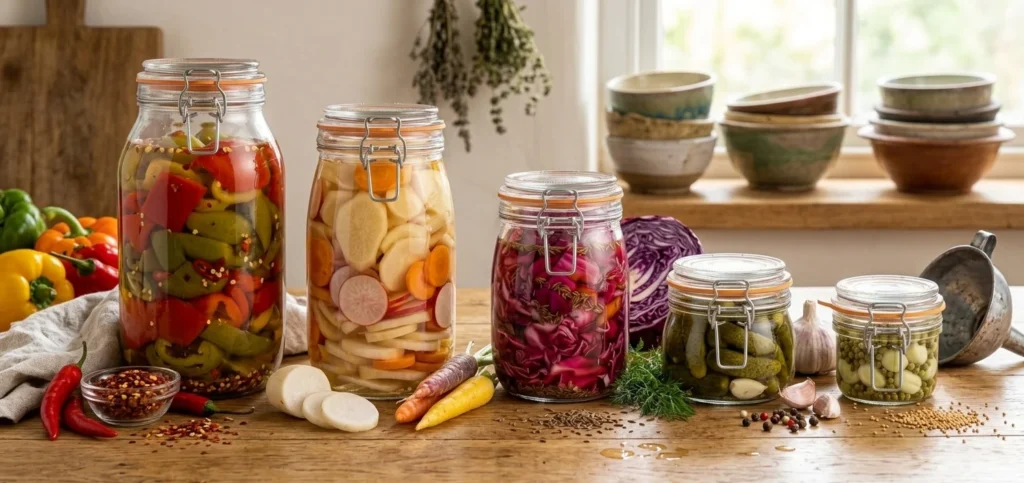
Key Features to Look for in a Fermentation Container
When stocking your inventory for the fermenting season, ensure your product lineup covers these essential specifications:
- Wide Mouth Design: Essential for packing down vegetables tightly, inserting fermentation weights, and easy cleaning.
- Capacity Variety: Offer a range from 16 oz (500 ml) for small test batches to 1 Gallon (3.8 L) for bulk fermentation.
- Reliable Lid & Gasket Systems: Leak-proof silicone seals and reliable pressure-release mechanisms are crucial for preventing jar explosions while keeping wild yeast out.
Stand Out in the Market: Custom OEM & ODM Solutions with EasyLife Housewares
In today’s competitive homeware market, offering the same off-the-shelf Mason jars as everyone else limits your profit margins. To win over modern consumers, brands need product differentiation—both in visual appeal and functional performance.
This is where EasyLife Housewares excels.
As a leading wholesale supplier and manufacturer of premium glass food storage jars, EasyLife Housewares offers comprehensive OEM and ODM services tailored to bring your unique product vision to life.
Why Partner with EasyLife Housewares?
- In-House Professional R&D Team: Our specialized R&D team stays ahead of global market trends. Whether you come to us with a rough sketch or detailed specifications, we engineer innovative solutions that balance aesthetic elegance with structural integrity.
- Aesthetic & Visual Differentiation (OEM/ODM): Custom embossing, exclusive jar shapes, vibrant lid colorways, and premium metal or bamboo accents that make your brand pop on retail shelves and e-commerce listings.
- Functional Innovation: Need a proprietary single-way release valve integrated into the lid? A custom stackable jar structure? Or an all-in-one fermentation starter kit with matching glass weights? Our engineering team makes it happen.
- Uncompromised Quality & Safety: All our glass containers are crafted from high-grade, lead-free glass engineered to withstand thermal shock and internal pressure, meeting strict international food-contact standards.
Building a Better Fermentation Lineup
Successful fermentation relies on precision, safety, and reliability—qualities that begin with the container itself. By providing consumers with durable, food-grade glass vessels designed for the unique demands of fermenting, brands can build trust and drive long-term customer loyalty.
At EasyLife Housewares, we believe that thoughtful design and dependable engineering are key to creating products consumers love. Whether you are exploring subtle design enhancements for classic Mason jars or developing fully customized OEM/ODM fermentation vessels, having an experienced supply chain partner makes all the difference in bringing those ideas to market efficiently.
As you prepare your product lineup for the upcoming season, feel free to reach out to the EasyLife Housewares team to discuss customized designs, technical specifications, or catalog options.