That $30 bottle of premium extra virgin olive oil you just bought is dying. From the moment you crack the seal, a silent countdown begins. Within weeks, exposure to the air in your kitchen can transform heart-healthy antioxidants into bitter, rancid fats.
Most people spend a fortune on high-quality ingredients only to ruin them with subpar storage. At EasyLife Housewares, we’ve spent years perfecting the science of kitchen preservation. We know that the difference between a Michelin-star meal and a kitchen disaster often comes down to one thing: the oil container. In this guide, we’ll dive into the physics of oil degradation and reveal why the right storage choice is the ultimate secret to fresher, healthier, and more flavorful cooking.
Why Proper Cooking Oil Storage Matters
Many home cooks invest in high-quality oils for their health benefits and flavor profiles, but few realize that how you store your oil in an oil container is just as important as the oil you buy. Once a bottle leaves the store, its quality is in your hands. Here is why proper storage is non-negotiable:
1. Preserving Vital Nutritional Integrity
Oils like Extra Virgin Olive Oil (EVOO), avocado oil, and nut oils are prized for their high levels of polyphenols, antioxidants, and Vitamin E. These compounds are susceptible to the environment. Proper storage prevents these nutrients from breaking down, ensuring that your body actually receives the heart-healthy benefits you paid for.
2. Preventing Harmful Oxidative Rancidity
When oil is exposed to oxygen and light, it undergoes a chemical change called oxidation. This doesn’t just ruin the taste; it creates harmful free radicals and polar compounds (like aldehydes). Consuming oxidized, rancid oil has been linked to cellular inflammation and digestive discomfort, making correct storage a matter of long-term health.
3. Maintaining the “Smoke Point” Stability
The smoke point is the temperature at which an oil begins to burn and produce toxic fumes. As oil degrades due to poor storage, its smoke point actually drops. An oil that was once safe for medium-heat sautéing can become unstable and burn much faster if it has been sitting in a warm, poorly sealed container.
4. Protecting the Culinary Flavor Profile
High-quality oil should taste fresh, ranging from peppery and grassy to buttery and nutty. Poor storage introduces “off” flavors that can be described as metallic, soapy, or like damp cardboard. Since oil is the base of most recipes, rancid oil will contaminate the flavor of every ingredient it touches, from delicate fish to fresh salad greens.
5. Significant Cost Savings and Waste Reduction
Premium oils are a culinary investment. Storing oil in a subpar plastic oil container or near a hot stove can cut its shelf life by more than 50%. By using an airtight, light-protected container, you ensure the oil stays fresh until the very last drop, preventing you from having to pour expensive, spoiled products down the drain.
6. Avoiding Chemical Contamination
Oil is a powerful solvent. When stored in low-quality plastic oil containers, especially in warm kitchens, there is a risk of “leaching.” Harmful chemicals like BPA or phthalates can migrate from the plastic into the oil. Choosing a non-reactive material like glass ensures that your oil remains pure and free from synthetic contaminants.
The Science of Spoilage: What Actually Destroys Your Olive Oil?
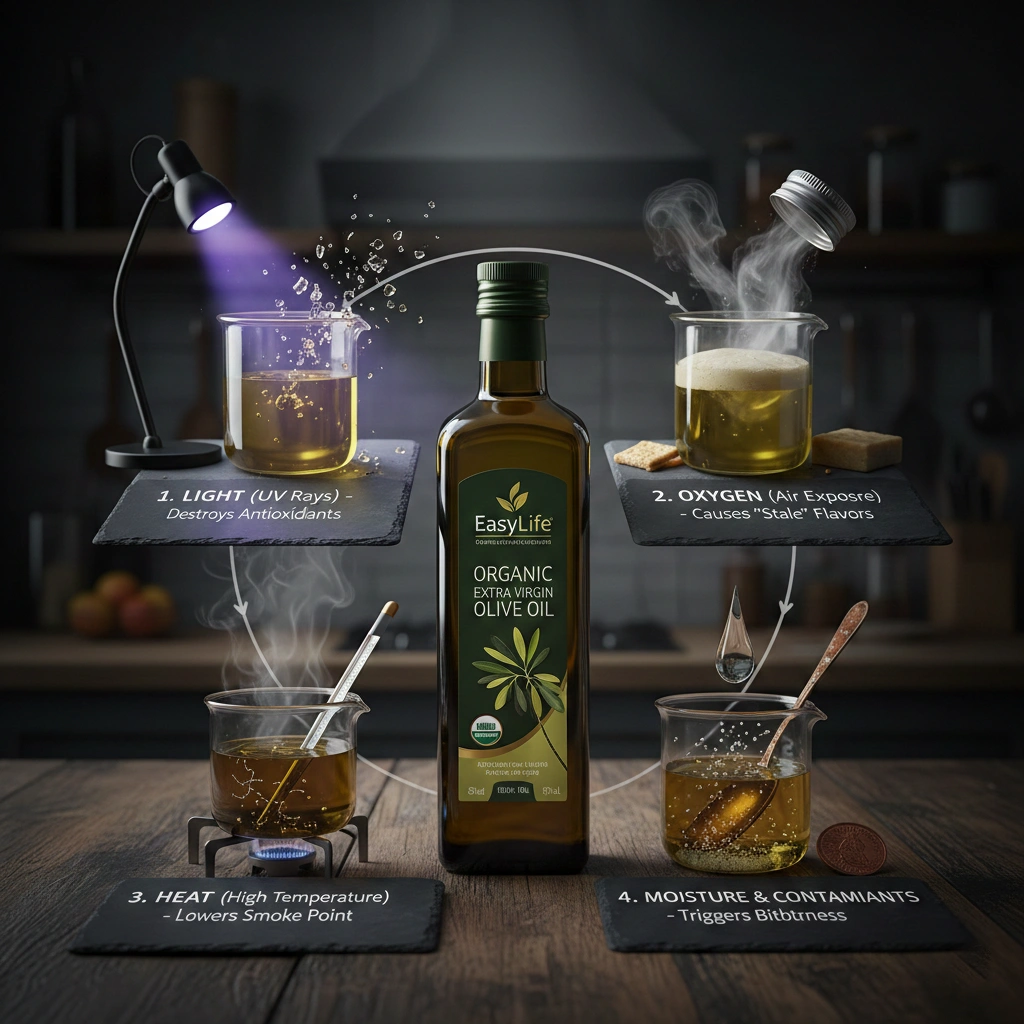
Buying premium oil is only half the battle; the other half is defending it. To keep your oil in peak condition, you must understand the four primary catalysts of degradation. At EasyLife Housewares, we design our oil containers specifically to neutralize these “four horsemen” of oil spoilage:
1. Light (The Trigger of Photo-Oxidation)
Light is perhaps the most invisible and aggressive enemy of cooking oil. When oil is exposed to UV rays—whether from direct sunlight or even harsh kitchen fluorescent bulbs—it triggers a reaction called photo-oxidation. This process breaks down chlorophyll and fatty acids, causing the oil to lose its vibrant color and destroying its delicate antioxidants (like tocopherols). This is why professional-grade glass oil containers are often tinted or kept in dark pantries to act as a shield against light energy.
2. Oxygen (The Catalyst of Rancidity)
The moment you break the seal on an oil container, the clock starts ticking. Oxygen is the primary driver of oxidative rancidity. When air comes into contact with the oil’s surface, it causes a chemical chain reaction that produces hydroperoxides. These eventually break down into aldehydes and ketones, which are responsible for that unmistakable “old paint” or “damp cardboard” smell. An oil container with a high-quality, airtight seal is essential to keep the air out and the freshness in.
3. Heat (The Accelerator of Chemical Breakdown)
Heat acts as a powerful catalyst that speeds up every other form of degradation. Storing your oil in the oil container on the countertop next to a stove, on top of a refrigerator, or near a dishwasher can double or even triple the rate of oxidation. High temperatures cause the molecules to move faster and collide more frequently, leading to a rapid loss of flavor and a significant reduction in the oil’s smoke point. To preserve the oil’s structure, it must be kept in a cool, temperature-stable environment.
4. Moisture and Contaminants (The Source of Hydrolysis)
Water is the “silent” enemy of oil. Even a small amount of moisture—introduced by a wet measuring spoon or condensation from being left open in a humid kitchen—can lead to hydrolysis. This process breaks the bonds between glycerol and fatty acids, increasing the acidity of the oil and making it taste bitter or “soapy.” Furthermore, trace minerals like copper or iron from poor-quality metal lids can act as catalysts that accelerate the spoilage process. Using non-reactive materials like borosilicate glass ensures that no moisture or metallic ions ever interfere with your oil’s purity.
A Comprehensive Look at Different Oil Container Options
Selecting the right material is a balance of science and lifestyle. Here is how the most common materials perform under pressure:
| Material | Pros | Cons | Best Application |
| Dark Glass | Superior UV protection (99%); non-reactive; preserves polyphenols. | Heavy; fragile; can break if dropped on stone floors. | Premium Finishing Oils: Best for Extra Virgin Olive Oil, Avocado, or Nut oils kept on the counter. |
| Stainless Steel | 100% light-proof; unbreakable; extremely durable; professional look. | Opaque (hard to track inventory); can be expensive. | High-Volume Cooking: Ideal for busy professional kitchens or bulk refill stations. |
| Ceramic | Naturally light-proof; elegant and decorative; easy to clean. | Fragile; quality varies (must ensure lead-free glaze). | Aesthetic Kitchens: Perfect for those who want a “farmhouse” look while protecting light-sensitive oils. |
| Plastic (HDPE/PET) | Lightweight; shatterproof; low-cost; easy for travel/shipping. | High leaching risk (BPA); semi-permeable to oxygen. | Short-Term/Portable Use: Best for camping trips, squeeze bottles for prep work, or high-turnover vegetable oil. |
| Clear Glass | Aesthetic; easy to see oil levels; non-reactive and sustainable. | Zero UV protection; oil degrades quickly if exposed to light. | Dark Pantries: Only recommended if the oil is stored strictly inside a dark, cool cabinet. |
Key Factors to Consider When Choosing Oil Containers
Selecting a storage solution is a strategic decision. At EasyLife, we believe that an oil container should do more than just “hold” oil; it should actively defend it. Here are the nine critical factors you must evaluate to ensure you are using the best possible packaging:
1. Chemical Inertness and Purity
Oil is a natural solvent that can absorb chemicals from its oil storage container. EasyLife’s high-borosilicate glass is 100% chemically inert, meaning it will never react with the oil or leach harmful substances like BPA, phthalates, or microplastics. This ensures the oil’s chemical profile remains identical to the moment it was pressed.
2. UV Barrier and Light Protection
Light exposure is the fastest way to kill the flavor of a premium oil. If your oil is destined for a countertop or a retail shelf under bright lights, a UV barrier is mandatory. Dark-tinted glass (such as amber, deep green, or cobalt) filters out the specific wavelengths that trigger photo-oxidation, preserving the oil’s natural color and antioxidant count.
3. Airtight Seal Integrity
Oxidation is a relentless process. A high-quality oil container must feature a precision-engineered sealing mechanism. Whether it is a silicone gasket, a stainless steel flip-top, or a screw-on cap, the seal must prevent any gas exchange. Even a microscopic leak can lead to a “cardboard” taste within weeks.
4. Precision Drip-Free Functionality
A messy bottle is more than just an inconvenience—it is a hygiene risk. Oil that drips down the side of a bottle becomes “sticky” as it oxidizes in the open air, attracting dust and bacteria. EasyLife focuses on drip-free spouts that ensure every drop goes into the pan, keeping the oil container clean and the oil inside uncontaminated.
5. Headspace and Volume Efficiency
The “headspace” is the pocket of air trapped between the oil and the lid. The more air in the oil container, the faster the oil oxidizes. It is vital to choose an oil container size that matches your consumption rate. Professional B2B buyers should offer various sizes of oil bottles (e.g., 250ml, 500ml, 750ml) to help consumers minimize the air-to-oil ratio in their kitchens.
6. Ease of Sanitization
Residual old oil is “contagious”—it can act as a catalyst that makes fresh oil go rancid faster. Therefore, the oil containers must be easy to deep-clean. Look for wide-mouth designs that allow for thorough scrubbing or materials that are fully dishwasher-safe to ensure a sterile environment for every new batch of oil.
7. Physical Ergonomics and Durability
In a fast-paced kitchen, oil containers are often handled with greasy or wet hands. A superior oil container must have a balanced center of gravity and a non-slip grip. EasyLife utilizes thickened glass and ergonomic shapes to ensure that the oil bottle is not only beautiful but also safe and easy to handle during high-heat cooking.
8. Packaging Aesthetics and Branding Excellence
In today’s competitive market, the container is the face of the product. Glass oil containers for olive oil offer a sophisticated, upscale appearance that plastic or metal simply cannot replicate. The natural weight and clarity (or rich tint) of glass immediately signal “premium quality” to the consumer.
- Brand Identity: EasyLife empowers producers to establish a distinctive presence through custom shapes and bespoke bottle designs.
- Customization Techniques: We offer advanced labeling options, including embossing, debossing, and high-fidelity screen printing directly onto the glass.
- Market Influence: In international retail environments, premium packaging is often the primary driver of the consumer’s purchasing decision. A unique, beautifully branded glass oil container transforms a kitchen staple into a luxury gift item.
Contact EasyLife to discuss customized packaging, logo printing, and color options.
9. Stringent Regulatory Compliance
For B2B buyers, wholesalers, and international distributors, safety certifications are the foundation of a partnership. Navigating global trade requires packaging that meets rigorous international standards.
- Food Safety Standards: EasyLife glass oil containers are fully compliant with FDA (USA), SGS, and EU food-grade standards, ensuring they are safe for long-term contact with fatty substances.
- Retail Readiness: Beyond the material itself, we provide retail-ready packaging solutions that include tamper-evident features (like shrink bands or break-away caps) to guarantee product integrity.
- International Labeling: We assist in ensuring that labeling areas are designed to accommodate mandatory regulatory information, such as origin, nutritional facts, and expiration dates, facilitating a seamless entry into global markets.
Why Glass Is the Gold Standard: The Ultimate Material for Oil Preservation
When comparing materials, it becomes clear that glass isn’t just a traditional choice—it is the most scientifically sound choice. While plastic and metal have their roles in the supply chain, glass offers a unique combination of chemical and physical properties that no other material can replicate. At EasyLife Housewares, we lean into these advantages to provide the highest level of protection for your culinary oils.
1. Absolute Impermeability and Gas Barrier
Unlike plastic (PET or HDPE), which is actually semi-permeable at a microscopic level, glass is 100% non-porous. Oxygen molecules are remarkably small and can slowly seep through plastic walls over several months, leading to “stealth” oxidation. Glass provides a total barrier, ensuring that the atmosphere inside the bottle remains completely isolated from the outside air until the moment the seal is broken.
2. Zero Chemical Migration (Inertness)
Cooking oils are lipids, which act as powerful solvents. This means they are prone to “leaching” chemicals from the oil containers they are stored in. Plastic oil containers often contain BPA, phthalates, or other endocrine disruptors that can migrate into the oil, especially if stored in a warm kitchen. Glass is chemically inert, meaning it does not react with the oil, regardless of acidity or temperature. With glass, you are guaranteed that the only thing you are tasting is the oil itself.
3. Infinite Flavor Purity
Have you ever noticed that oil stored in a plastic oil container sometimes takes on a “plastic-y” or “synthetic” smell? This is because plastic can absorb odors and flavors from the environment and transfer them to the oil. Glass is flavor-neutral. It does not absorb the scents of a spice cabinet or previous batches of oil. This makes it the only choice for delicate oils like truffle, walnut, or high-end extra virgin olive oil, where the flavor profile is complex and fragile.
4. Thermal Stability and Heat Resistance
Kitchens are high-heat environments. Plastic can warp or release higher levels of chemicals when exposed to the heat of a nearby stovetop. EasyLife utilizes high-quality glass that handles temperature fluctuations with ease. Whether it’s sitting near a warm oven or being washed in a high-heat commercial dishwasher, glass maintains its structural integrity without degrading or off-gassing.
5. Sustainability and the “Circular Economy”
In 2026, consumers are more environmentally conscious than ever. Glass is 100% recyclable and can be recycled infinitely without losing its quality or purity. Choosing glass reduces the “single-use plastic” footprint of a household or brand. Furthermore, glass oil containers are durable enough to be cleaned and refilled hundreds of times, making them the cornerstone of a sustainable, zero-waste kitchen.
6. Transparency and Quality Control
Glass allows for immediate visual inspection. For the consumer, being able to see the clarity and color of the oil is a sign of trust and quality. For the producer, glass allows for the detection of any sediment or impurities before the product reaches the customer. When combined with the dark tints (amber or green) that EasyLife offers, you get the perfect balance of visual elegance and high-level UV protection.
Recommended products
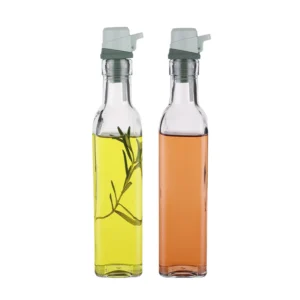
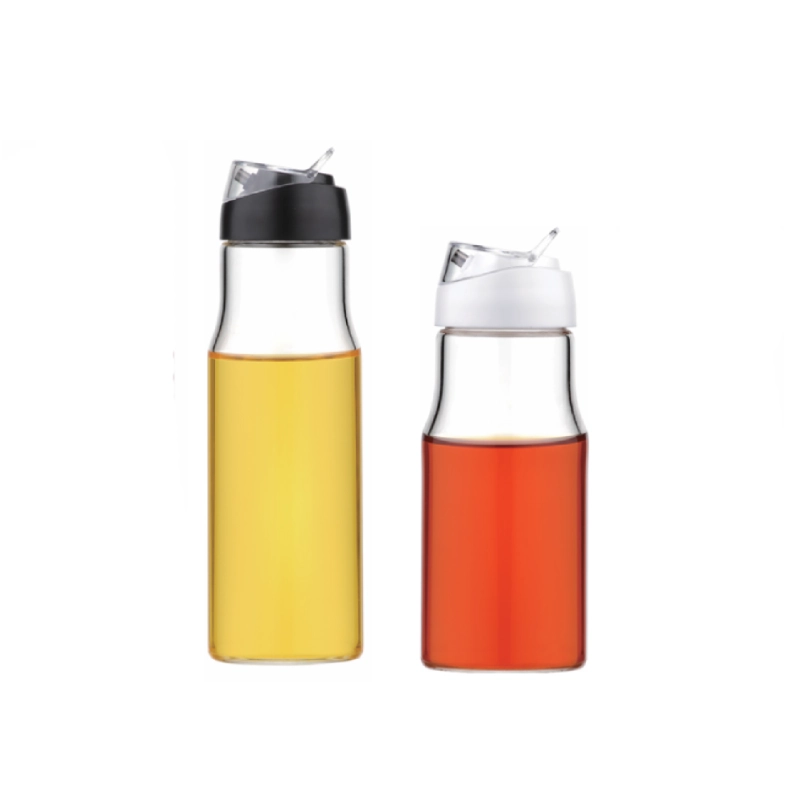
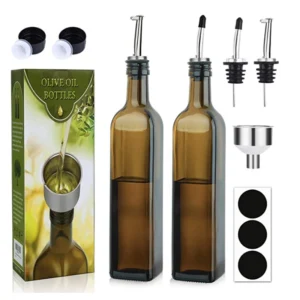
Grow up with EasyLife Housewares: Elevating Your Oil Packaging Standards
In a global market where quality is often compromised for speed, EasyLife Housewares stands as a beacon of precision and reliability. We don’t just manufacture oil containers; we engineer preservation systems that protect the soul of your product. As a premier partner for oil producers, wholesalers, and professional kitchens, we bridge the gap between scientific functionality and high-end aesthetic appeal.
We believe that we can enhance the aesthetics of the kitchen while taking into account the practicality and quality of our products, which is why we usually spend a lot of resources on product development.
Why Global Brands and Culinary Professionals Choose EasyLife Housewares
Our reputation is built on a commitment to “quality without compromise.” When you partner with EasyLife, you gain access to a manufacturing powerhouse dedicated to your brand’s success.
1. Bespoke Customization & Brand Identity
We understand that in a saturated retail environment, your oil container is your strongest marketing tool. EasyLife offers comprehensive OEM & ODM services. Whether you require a unique geometric bottle shape that fits a “modern minimalist” brand or a traditional ergonomic design, our engineering team can bring your vision to life.
2. Precision Branding Techniques
To help your brand stand out, we offer high-fidelity customization options. From custom-embossed logos on the glass surface to high-durability screen printing and bespoke labeling, we ensure your brand’s story is told with premium clarity. Our packaging is designed to command attention on international supermarket shelves.
3. Superior Material Science (Borosilicate Advantage)
Unlike standard soda-lime glass, EasyLife specializes in high-borosilicate glass. This material is prized for its superior thermal shock resistance and crystal-clear transparency. It is lighter yet more durable, ensuring that your oil is housed in the most sophisticated material available on the market today.
4. Innovative “Smart-Pour” Technology
We lead the industry in functional design. Our “modes” of dispensing—including auto-flip gravity lids, integrated silicone basting brushes, and non-drip precision spouts—are engineered to provide a seamless user experience. We solve the common problems of kitchen mess and oil oxidation through intelligent industrial design.
5. Unwavering Regulatory & Food Safety Compliance
For our B2B partners, peace of mind is paramount. Every EasyLife oil container is manufactured to meet or exceed FDA (USA), SGS, and EU food-grade standards. We ensure that our products are lead-free, non-toxic, and ready for immediate entry into the world’s most strictly regulated markets.
6. Scalable Solutions for Global Trade
Whether you are a boutique artisan producer or a large-scale international distributor, our production lines are built for scalability. We offer flexible MOQ (Minimum Order Quantity) options and retail-ready packaging solutions—including tamper-evident seals and reinforced shipping cartons—to ensure your product arrives in perfect condition, anywhere in the world.
Conclusion
The quest for the “best” oil container ends where science and design meet. While plastic offers convenience and metal offers durability, premium glass remains the only material that can truly preserve the nutritional and culinary integrity of high-quality oils.
By choosing EasyLife Housewares, you aren’t just buying an oil container; you are investing in a partnership that values health, flavor, and brand prestige. Protect your liquid gold with the excellence it deserves.