For over a decade, the “BPA-Free” label has served as the universal gold standard for safety in retail kitchenware. Consumers look for it, regulatory bodies require it, and commercial buyers use it as a basic filter when selecting products. However, as food safety science advances and Western markets implement stricter chemical regulations, a critical truth has emerged: “BPA-Free” is no longer enough to guarantee true chemical safety.
While many manufacturers replaced Bisphenol A (BPA) with alternative chemicals, studies revealed that substitutes like Bisphenol S (BPS), Bisphenol F (BPF), and hazardous plasticizers present similar endocrine-disrupting risks. In response, global retailers, European importers, and discerning brand owners are pivoting toward a safer, non-toxic alternative: premium silicone food containers and airtight silicone sealing systems.
This comprehensive guide explores the hidden chemical risks of traditional container lids, the material science that makes high-purity silicone superior, and how procurement managers can audit suppliers to ensure complete regulatory compliance.
The “BPA-Free” Trap: Hidden Chemical Hazards in Food Container Lids
When sourcing kitchen storage solutions—whether glass, stainless steel, or plastic—buyers often focus heavily on the container body while overlooking the lid. Yet, the lid and its sealing mechanism are frequently in direct contact with food, particularly during transportation, hot prep, and steam condensation.
The Rise of Bisphenol Substitutes (BPS and BPF)
When industrial regulations banned BPA in food contact materials, many plastic lid manufacturers shifted to alternative bisphenols. Recent toxicological research demonstrates that BPS and BPF leach into food at similar rates under heat, acidic environments, or mechanical wear, disrupting cellular function. Simply marketing a product as “BPA-Free” provides a false sense of security if the underlying polymer relies on alternative bisphenols.
Phthalates and Flexible PVC Gaskets
Rigid plastic lids often rely on flexible inner gaskets to form airtight seals. In lower-cost manufacturing, these gaskets are made from Polyvinyl Chloride (PVC) or low-grade Thermoplastic Elastomers (TPE) softened with phthalate plasticizers. When exposed to oily foods (like salad dressings or marinades) or hot steam, these plasticizers migrate out of the gasket and directly into the stored food.
The Threat of PFAS (“Forever Chemicals”)
Per- and polyfluoroalkyl substances (PFAS) have historically been used in food packaging coatings to repel grease and moisture. With the European Union expanding REACH restrictions and US states enacting bans on PFAS in food contact materials, sourcing products containing unknown chemical additives creates a massive recall risk for importers.
Material Science: Why Silicone Food Containers Outperform Plastics
To eliminate chemical migration completely, modern supply chains are turning to liquid silicone rubber (LSR) and platinum-cured solid silicone for both standalone silicone food containers and airtight lid seals.
| Chemical & Physical Metric | Standard Plastic Lids (PP / PET / PVC) | Low-Cost Filler Silicone | Platinum-Cured Food-Grade Silicone |
| Bisphenol & Phthalate Content | Risk of BPS/BPF/Phthalate leaching | May contain fillers & VOCs | 100% Free of Bisphenols & Phthalates |
| Thermal Stability Range | -20℃ to 100℃ (Warps under heat) | -40℃ to 200℃ | -40℃ to 230℃ (Freezer to Oven safe) |
| Chemical Inertness | Absorbs lipophilic oils & acids | Moderate odor retention | Superior Inertness (Zero stain/odor absorption) |
| Odor & Volatile Compounds | Emits chemical odor when heated | High Volatile Organic Compounds (VOCs) | Zero Odor / Low VOC (LFGB Compliant) |
| Elastic Memory & Seal Longevity | Degrades & hardens after dishwasher cycles | Loses elasticity over time | Infinite Elastic Memory (Maintains seal) |
Chemical Inertness of the Silicon-Oxygen Backbone
Unlike organic plastics built on a carbon-carbon backbone (C-C), silicone is a synthetic polymer with an inorganic silicon-oxygen backbone (Si-O-Si). This structure provides extraordinary chemical inertia:
- Non-Reactive: It does not react with acidic sauces, citrus juices, or alkaline cleaning agents.
- Zero Odor Migration: Highly purified silicone does not absorb volatile aromatic molecules from garlic, curry, or coffee, preserving the true flavor profile of stored ingredients.
- No Plasticizers Needed: Silicone is naturally flexible and elastic across extreme temperature ranges, eliminating the need for softening additives or phthalates.
Exceptional Thermal Stability
High-quality silicone food containers and seals maintain structural and chemical integrity from freezing temperatures (-40℃) up to high heat (230℃). This enables seamless transitions: retrieve prepped meals from the freezer, reheat directly in a microwave or oven, and wash in commercial high-temp dishwashers without warping, melting, or releasing harmful vapors.
Supply Chain Risk Management: FDA vs. LFGB Standards
Not all silicone is created equal. In global manufacturing, a major challenge for B2B buyers is distinguishing between 100% food-grade silicone and lower-cost silicone diluted with chemical fillers.
European LFGB (Lebensmittel- und Futtermittelgesetzbuch)
European food safety regulations—particularly Germany’s LFGB § 30 and 31—are vastly more stringent than basic FDA requirements. LFGB testing subjects silicone to rigorous overall migration, sensory (taste/smell transfer), and Volatile Organic Compound (VOC) testing. To pass LFGB, silicone must typically undergo a secondary curing process.
How Procurement Managers Can Test Silicone Quality
- The “Pinch Test”: Twist or pinch a flat section of the silicone product. If the pinched area turns white, it indicates the presence of hydrocarbon plastic fillers or chalky additives. 100% pure food-grade silicone maintains its uniform color regardless of stretching.
- The Odor Test: Low-cost silicone containing volatile curing agents releases an industrial petroleum scent upon opening or heating. High-grade food-grade silicone is entirely odorless.
- Audit Curing Methods: Request verification from your supplier regarding the curing method used. Platinum-cured silicone yields lower volatile residue, higher clarity, and superior tensile strength compared to peroxide-cured silicone.
Engineering Airtight Systems: The Role of Precision Silicone Gaskets
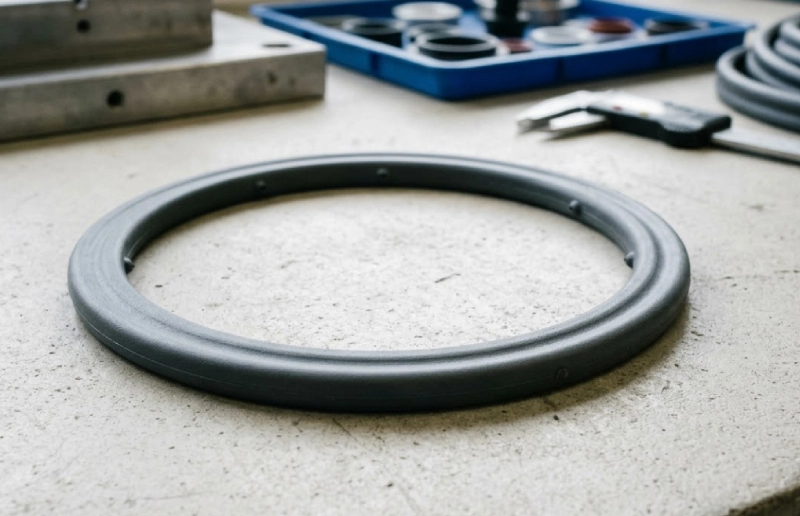
A food container is only as safe and effective as its seal. When designing high-performance glass and stainless steel storage systems, engineering the silicone gasket requires strict mechanical precision.
Shore Hardness Optimization
The flexibility of silicone is measured on the Shore A hardness scale. For container lid gaskets, the ideal range is 40A to 50A:
- Too Soft (<30A): The gasket deforms permanently under pressure, causing the airtight seal to degrade over time.
- Too Hard (>60A): The gasket lacks the pliability needed to conform to manufacturing tolerances in glass or metal container rims, resulting in air leakage.
Hygienic Removability and Mold Prevention
In traditional snap-lid containers, silicone gaskets are permanently glued into narrow lid channels. Over time, moisture gets trapped behind the gasket, creating an invisible breeding ground for mold and bacteria. Modern, hygienic container designs feature removable, precision-molded silicone rings that allow commercial kitchens and household users to remove, wash, and sanitize the seal thoroughly.
Elevating Product Line Value: Sustainable and Chemical-Free Solutions
Offering non-toxic, silicone food containers and premium glass systems with pure silicone seals allows retailers and brand owners to tap into growing consumer trends:
- The “Zero-Toxic” Household Movement: Conscious consumers actively seek out non-plastic, non-toxic kitchenware. Highlighting 100% food-grade silicone components attracts health-conscious demographics willing to pay a premium.
- Reduction of Food Waste: Hermetic silicone seals prevent moisture gain in dry ingredients and oxygen ingress in prepped meals, extending ingredient shelf life and cutting food waste.
- E-Commerce and Retail ROI: By eliminating warping, cracking, and chemical odor complaints, brands experience lower product return rates, stronger customer reviews, and higher brand loyalty.
Building Uncompromising Safety with EasyLife Housewares
Navigating global chemical safety regulations while maintaining cost efficiency requires a trusted, experienced manufacturing partner. At EasyLife Housewares, we specialize in manufacturing and exporting high-grade glass containers, stainless steel storage, and non-toxic silicone food containers engineered for global brands, importers, and wholesalers.
Our Chemical Safety and Manufacturing Commitments
- Verified Material Purity: We utilize 100% food-grade, platinum-cured silicone free from BPA, BPS, phthalates, and harmful fillers. All silicone components pass rigorous FDA 21 CFR 177.2600 and European LFGB certification tests.
- In-House R&D and Precision Engineering: Our technical team designs custom silicone gaskets with optimized Shore hardness and dual-lip geometry to deliver true hermetic seals without permanent deformation.
- Strict Quality Control and Post-Curing: We implement secondary post-baking curing processes for silicone components to eliminate volatile organic compounds (VOCs) and guarantee odor-free performance.
- Flexible OEM & ODM Services: From custom Pantone color matching for silicone containers and lids to laser-engraved branding and drop-test certified e-commerce packaging, we provide comprehensive end-to-end manufacturing solutions.
Conclusion: Moving Toward True Chemical Transparency
As scientific research and international regulations continue to expose the hidden risks of plasticizers, bisphenol substitutes, and volatile compounds in food contact materials, the demand for genuinely non-toxic kitchenware will only accelerate. Achieving true chemical safety is not about chasing the latest “free-from” marketing tag; it is about choosing materials like platinum-cured, food-grade silicone that are inherently inert, thermally stable, and free from harmful additives.
By prioritizing verified material purity, proper curing standards, and hygienic product design, brands and procurement teams can build lasting consumer trust while setting a higher standard for the kitchenware industry.