The “Clink-Pop” Nightmare. We’ve all been there. You spend Sunday afternoon meal prepping a delicious batch of organic chili or bone broth. You reach for your trusty glass jars—because, let’s be honest, nobody wants BPA-leaching plastic in their food—and tuck them neatly into the freezer.
The next morning, you’re greeted not by a ready-made meal, but by a glittering, frozen mess of broken shards and wasted food.
So, can you freeze glass containers? The answer is yes, but glass is a fickle beast. Unlike plastic, glass doesn’t “give.” To save your meal (and your freezer), you need to follow the laws of physics—and use the right equipment, like the professional-grade borosilicate glass from EasyLife Housewares.
Here are the 5 critical rules you must follow to freeze glass like a pro.
1. The 10% Expansion Rule
Science 101: Water is one of the few substances on Earth that expands when it freezes—by about 9% to be exact. If you fill a glass jar to the brim, that expanding ice acts like a slow-motion hydraulic press, shattering the glass from the inside out.
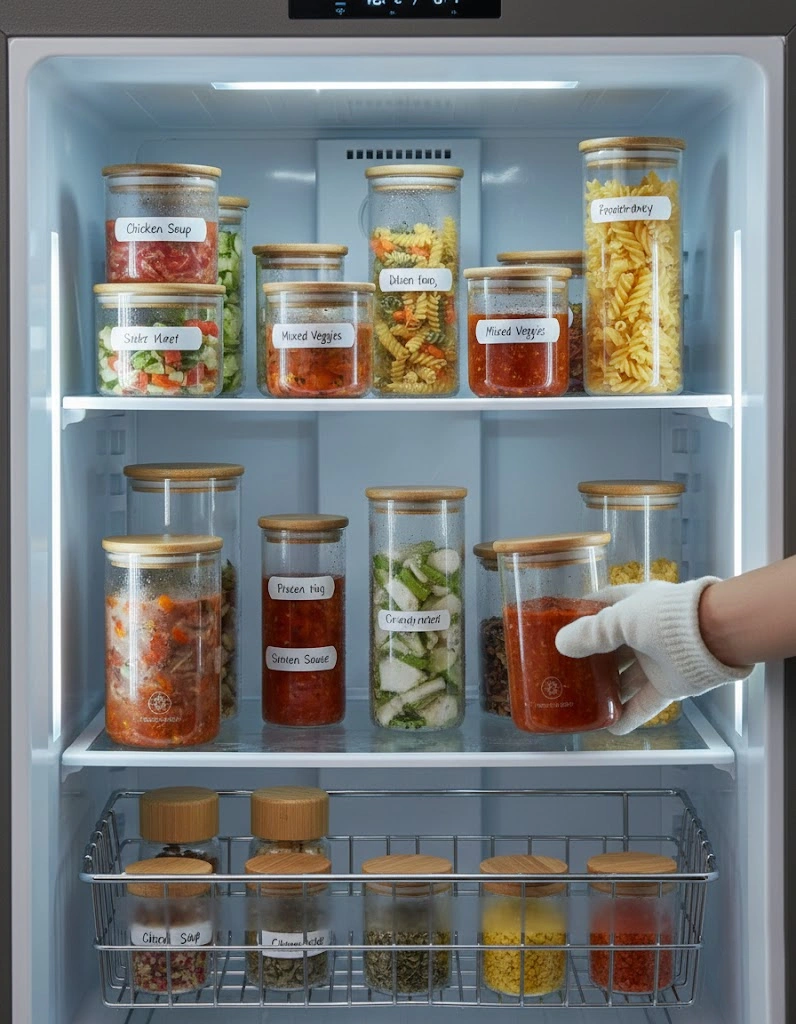
- The Fix: Always leave at least one to two inches (2.5–5 cm) of “headspace” at the top of the container. EasyLife Housewares designs its containers with high-capacity walls, making it easier to visualize the “freeze fill line” for safer storage.
- Pro Tip: Look for the “freeze fill line” often etched onto the side of modern Mason jars.
2. Beware the “Shoulder” Trap
Have you noticed how some jars curve inward at the top? Those are called “shoulders.” As your soup or sauce expands upward, it hits that curve and gets trapped. Instead of expanding safely toward the lid, the force is directed outward against the glass walls.
- The Best Glass for Freezing: Use wide-mouth, straight-sided jars. EasyLife specializes in ergonomic, straight-sided designs that allow frozen food to slide upward freely as it expands, neutralizing the risk of cracks.
Recommended products

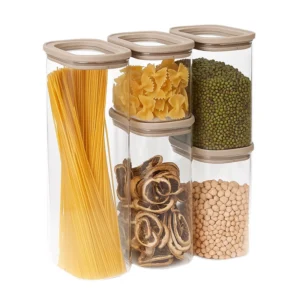
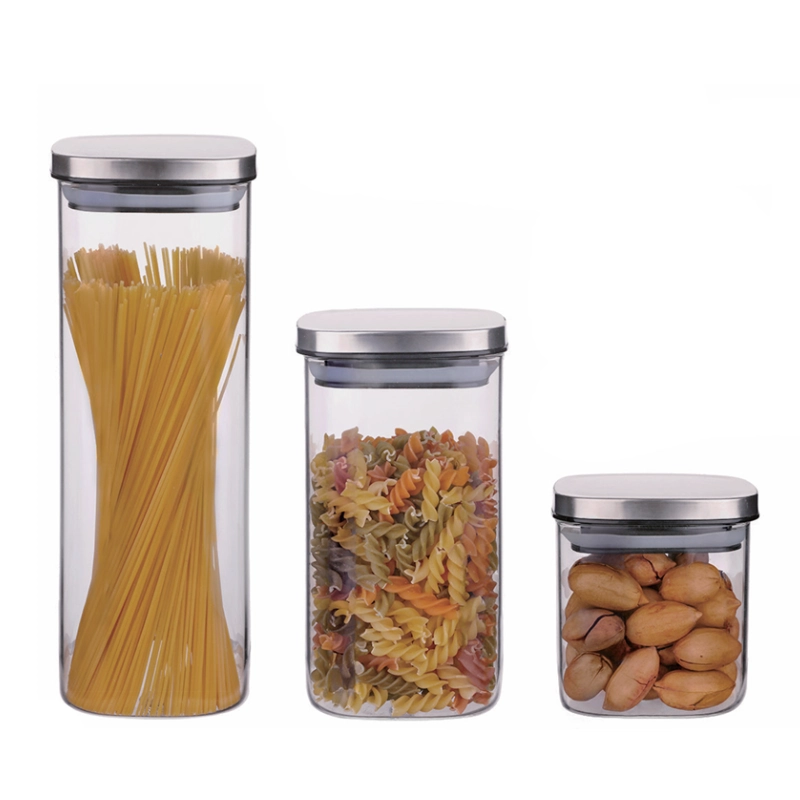

3. Avoid “Thermal Shock” at All Costs
Glass’s biggest enemy isn’t the cold; it’s the speed of the temperature change. Taking a container from a boiling stovetop or a hot dishwasher and putting it directly into a 0℃ 32℉ freezer causes “thermal shock,” leading to immediate stress fractures.
- The Cool-Down Routine: Let your food reach room temperature on the counter first. Then, chill it in the refrigerator for at least 4 hours before moving it to the freezer.
- Why EasyLife? As a leading B2B manufacturer, EasyLife Housewares uses premium borosilicate glass that is FDA and LFGB certified. Their glass is specifically tested for temperature resilience, ensuring your investment doesn’t crack under pressure.
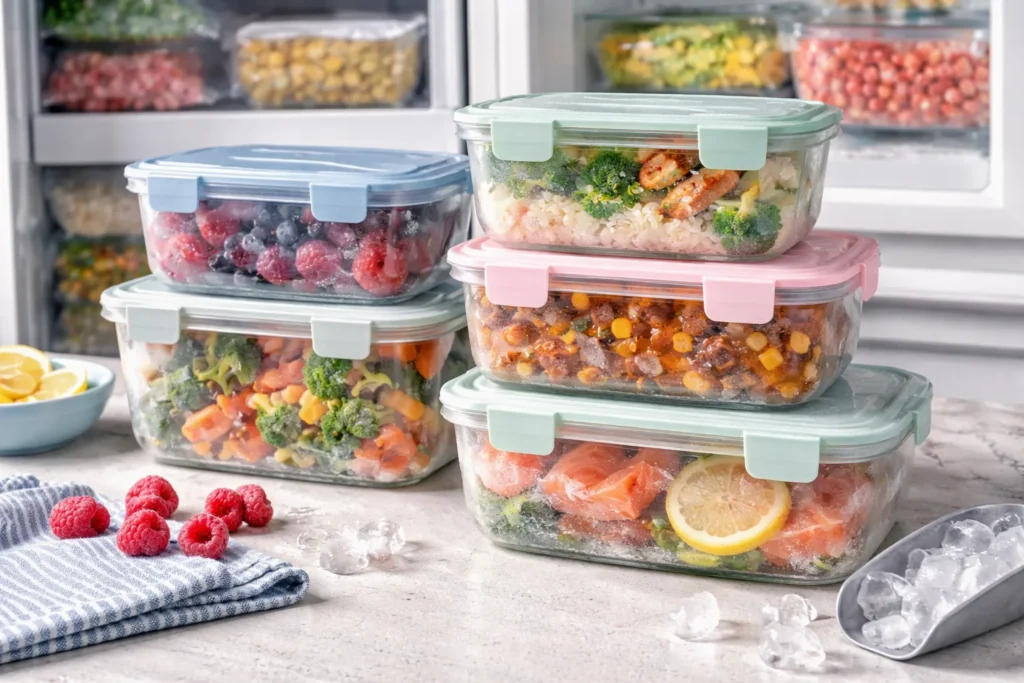
4. Choose Borosilicate or Tempered Glass
Not all glass is created equal. Standard “Soda-Lime” glass (like the kind used for jelly or pickle jars) is more brittle and prone to failure.
The Gold Standard: Look for Borosilicate glass (like EasyLife’s high borosilicate glass) or Tempered glass. These are engineered to withstand extreme temperature fluctuations and are far less likely to crack under pressure.
5. The “Loose Lid” Technique
Air pressure can be a silent killer. If you seal a lid airtight before the food is fully frozen, you trap air that can contribute to pressure build-up.
The Pro Move: Place your containers in the freezer with the lids resting loosely on top. Once the contents are frozen solid (usually the next morning), go back and tighten the lids for long-term storage.
How to Safely Thaw Your Glass
The danger doesn’t end once the food is frozen! To avoid shattering your glass during the defrosting process:
- Never put a frozen glass jar into a bowl of hot water.
- Never put a frozen glass container directly into a preheated oven or microwave.
- The Gold Standard: Move the container to the refrigerator 24 hours before you need it. Slow and steady wins the race.
Why Quality Matters: The EasyLife Housewares Standard
If you are looking for glass that can truly handle the freezer, not all brands are created equal. We recommend looking for manufacturers like EasyLife Housewares, who specialize in high-borosilicate glass designed specifically for durability and safety.
Custom B2B Packaging
For business owners and wholesalers, EasyLife doesn’t just ship glass; they provide customized packaging solutions. Whether you need color boxes for retail or reinforced display boxes to ensure zero breakage during transit, their B2B services are designed to protect the product from the factory to the freezer.
FDA & LFGB Certified
Safety is non-negotiable when it comes to food storage. EasyLife products are fully FDA and LFGB certified. This means they meet the most stringent international food safety standards, ensuring that no harmful chemicals will ever leach into your leftovers.
100% BPA-Free
While the containers are made of premium glass, EasyLife also ensures their lids and silicone seals are 100% BPA-free. You get the airtight, leak-proof seal you need for the freezer without the hidden toxins found in cheaper plastic alternatives.
The B2B Advantage
As a professional manufacturer with over a decade of experience, EasyLife Housewares supports OEM/ODM collaborations. For brands looking to launch their own line of freezer-safe glass, they offer scalable production, customized logo etching, and a reliable global supply chain.
FAQ about Freezing Glass Containers
How to know if a glass container is freezer safe?
To determine if a glass container is freezer-safe, the most reliable method is to check the bottom for a “Freezer Safe” snowflake icon or a specific “Borosilicate” or “Tempered” stamp. If no markings are visible, look for thick, straight-sided walls and a wide mouth; avoid any glass with “shoulders” or thin, decorative walls that mimic fragile wine glasses. Generally, high-quality borosilicate glass is engineered to withstand the thermal expansion and contraction that causes standard soda-lime glass to shatter, making it the industry standard for safe, long-term freezer storage.
How long can I store food in glass containers in the freezer?
Glass is non-porous, meaning it provides a superior barrier against “freezer burn” compared to plastic. If sealed correctly with a BPA-free airtight lid, most cooked foods will stay fresh and frost-free for 3 to 6 months.
Do I need special lids for freezing glass?
While standard metal lids work, they can sometimes rust due to condensation. For long-term freezing, it is better to use BPA-free plastic lids or silicone-sealed lids, like those provided by EasyLife Housewares, which remain flexible and airtight even in sub-zero temperatures.
Is it safe to stack glass containers in the freezer?
Yes, but only once they are completely frozen. Stacking room-temperature jars can prevent cold air from circulating evenly, leading to uneven freezing and potential stress fractures.
Can I freeze glass containers with bamboo lids?
While the glass is freezer-safe, bamboo lids require extra care. Sustained moisture in the freezer can cause natural wood to warp or develop mold over time. For long-term freezing, it is better to use EasyLife’s BPA-free plastic or silicone-sealed lids, which are designed to withstand sub-zero humidity without degrading.
What do I do if I find a small crack in my frozen jar?
If you see even a hairline fracture, discard the food. Glass shards can be microscopic and nearly invisible once mixed with frozen liquids or sauces. It’s never worth the risk—this is why using high-durability borosilicate glass is the best insurance policy for your meals.
Does the “Freeze Fill Line” actually work?
Many high-quality jars have a line etched near the top that says “Fill to Here for Freezing.” This is a helpful guide, but remember it’s usually calculated for water. If you are freezing something particularly thick or starchy (like beans in liquid), it may expand even more. When in doubt, leave an extra half-inch of space.
Conclusion: Sustainable Freezing is Possible
Freezing in glass is the ultimate “win-win”: it’s better for the environment, better for your health, and keeps your food tasting fresher. While it requires a bit more patience than tossing a plastic bag into the freezer, the lack of microplastics in your dinner is well worth the effort.
By choosing EasyLife’s straight-sided borosilicate glass, leaving plenty of headspace, and avoiding thermal shock, you can prep your meals with total confidence.