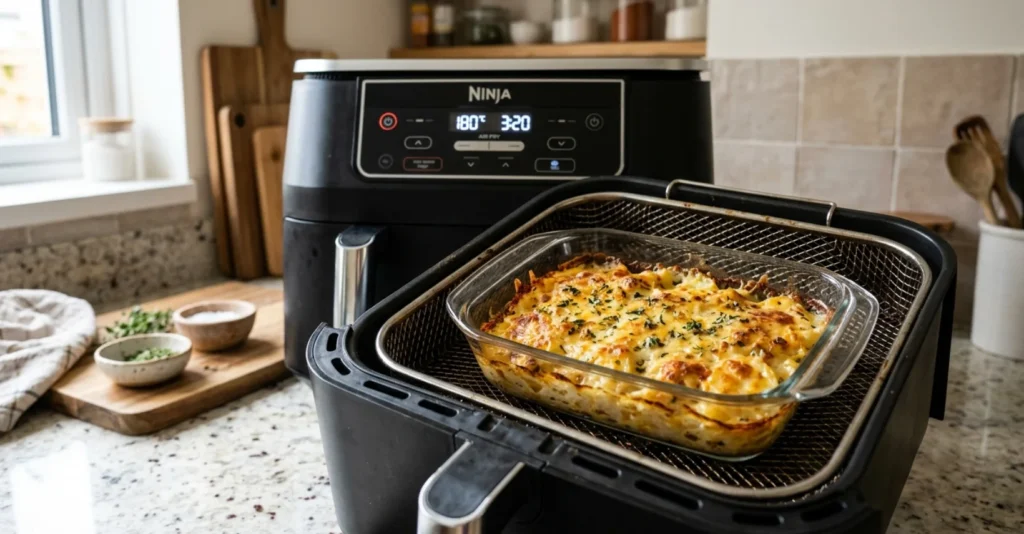
If you’ve ever asked yourself “can you put glassware in an air fryer?” you’re not alone. It’s one of the most common kitchen dilemmas I hear from home cooks who want to reheat leftovers, bake a small casserole, or just avoid transferring food to another dish.
The short, honest answer is yes—but only if you choose the right glass and follow a few non-negotiable rules. I’ve spent years testing kitchen gadgets and glassware, and I’ve seen both the beauty of perfectly baked mac-and-cheese and the horror of a shattered dish mid-cycle. Let’s break it down so you never have to sweep up shards.
What Types of Glass Are Safe in an Air Fryer?
Not every piece of glass in your cupboard can handle the intense, swirling heat of an air fryer. Here’s the real scoop on what to look for:
Borosilicate Glass – The Undisputed Champion
Borosilicate glass is the gold standard for high-heat cooking. It’s engineered with silica and boron trioxide, giving it an incredibly low coefficient of thermal expansion. In plain English? It can survive sudden temperature changes that would shatter ordinary glass. Most borosilicate dishes are rated for up to 300°C (572°F) and can handle a thermal shock of about 220°C. This is the material used in lab beakers and vintage Pyrex—and it’s exactly what you want for your air fryer.
Tempered Glass – The Everyday Workhorse
Tempered glass is heat-treated to be four to five times stronger than standard glass. Most modern Pyrex and Anchor Hocking products are made from tempered soda-lime glass, which is perfectly safe up to about 425°F (218°C). Since most air fryer recipes max out at 400°F, tempered glass is a reliable choice—just avoid drastic temperature swings.
Oven-Safe Labelled Glass – The Simplest Rule
If a glass dish is stamped with the word “oven-safe” on its base, you can generally use it in your air fryer. Why? Because an air fryer is essentially a compact, high-velocity convection oven. Oven-safe glassware is tested to withstand temperatures up to 480°F, well beyond what you’ll need for crispy chicken wings or roasted vegetables.
The EasyLife Housewares Advantage – Glass You Can Truly Trust
Now, if you want glassware that goes beyond “safe” and actually excels across every appliance in your kitchen, let me introduce you to EasyLife Housewares. Their premium borosilicate glass containers are specifically designed to handle the extremes—from freezer to microwave to oven to air fryer without a hint of stress. I’ve used their products personally, and the thermal shock resistance is genuinely impressive. You can pull a container straight from the fridge, pop it into a preheated air fryer, and never worry about cracking.
But what really sets EasyLife apart is its customization. Whether you’re a home cook who loves a coordinated kitchen aesthetic or a business owner looking to launch your own branded glassware line, they offer fully customizable lid colors, logo printing, and tailored packaging options. OEM and ODM services mean you can turn your design ideas into reality. Their glass is BPA-free, non-porous, and resists odors and stains—perfect for meal prep, serving, and storing. If you’re serious about quality glassware that answers “can you put glassware in an air fryer?” with a confident “yes,” EasyLife Housewares is worth exploring. Reach out to them for bulk orders and custom solutions.
What Glass Should NEVER Go in Your Air Fryer?
Let’s get the hard no’s out of the way:
- Soda-lime glass (non-tempered) – This is the cheap stuff used for drinking glasses, jars, and decorative vases. It can’t handle high heat. If the rim of your glass has a bluish-green tint, it’s likely soda-lime—keep it out of the air fryer.
- Thin or delicate glassware – If it feels flimsy or light, don’t risk it. Air fryers have powerful fans and rapid temperature changes that can crack fragile glass.
- Glass with chips, scratches, or cracks – Even a tiny imperfection becomes a weak point under thermal stress. Inspect your dish before every use.
- Cold glass straight from the fridge or freezer – This is the number one cause of shattered dishes. Never take a glass container from 4°C and toss it into a 200°C preheated air fryer. The rapid expansion will almost certainly cause it to break.
- Glass with metallic paint, decals, or plastic components – These can release toxic fumes or melt. Stick to plain, clear glass.
Why Does Glass Break in an Air Fryer? (The Science of Thermal Shock)
You might wonder—if glass is oven-safe, why does it sometimes shatter in an air fryer? The culprit is thermal shock, and it happens when different parts of the glass expand or contract at different rates.
In an air fryer, the heating element is often at the top, and the fan circulates super-heated air at high speed. This means the top of your glass dish can heat up much faster than the bottom, especially if the bottom is touching a cold metal basket or a frozen piece of food. When the top expands and the bottom doesn’t, stress builds up—and bang, you’ve got a broken dish.
That’s why borosilicate glass is so valuable: its low expansion rate minimises this stress. Tempered glass can also handle it, but only if you avoid extreme temperature differences. So the next time you ask yourself “can you put glassware in an air fryer safely?”, remember that the answer depends as much on your preheating habits as on the glass itself.
10 Essential Safety Tips for Air Frying with Glass
Follow these rules every single time, and you’ll never have a glass-related kitchen disaster:
1. Always Read the Label
Flip your dish over and look for “oven-safe,” “heat-resistant,” or “tempered.” If you don’t see any of those, don’t use it.
2. Perform a Visual Inspection
Hold the glass up to a light. Look for hairline cracks, chips on the rim, or deep scratches. When in doubt, throw it out (or repurpose it as a storage container).
3. Preheat the Air Fryer Empty
Never preheat with the glass inside. Always let the basket reach temperature first, then place your glass dish in gently.
4. Bring Cold Glass to Room Temperature
Take your dish out of the fridge while the air fryer preheats—about 10 to 15 minutes is enough. This small step reduces the temperature gap dramatically.
5. Avoid Direct Contact with the Heating Element
Your glass dish should sit comfortably in the basket, at least one inch away from the top heating coil. If it’s too tall, find a shallower dish.
6. Leave Space for Airflow
Don’t fill the basket more than halfway with a glass dish. The air fryer needs room for hot air to circulate; otherwise, your food will cook unevenly and the glass may overheat in certain spots.
7. Add Liquid if Needed
For dishes like casseroles or reheated leftovers, a little broth or water helps distribute heat more evenly and prevents the glass from overheating in dry spots.
8. Don’t Use Glass Under the Broiler Setting
Some air fryers have a broil or grill function that uses intense top-down heat. This is too aggressive for glass—stick to standard bake or air-fry modes.
9. Let It Cool Naturally
After cooking, place the glass dish on a wooden board or wire rack and let it cool to room temperature. Never run cold water over it or place it on a cold, wet surface.
10. Adjust Cooking Times Slightly
Glass takes longer to heat up than metal, so you may need to add 2–5 minutes to your recipe. Keep an eye on your food and use a thermometer if needed.
Why Would You Even Want to Use Glass in an Air Fryer?
Good question. Glass isn’t just a convenience—it offers real advantages that metal baskets or foil can’t match:
- Mess control – Saucy dishes, cheesy casseroles, and batters stay contained. No more scrubbing baked-on gunk from the basket.
- One-dish cooking and storing – Cook in the same glass dish, then pop a lid on and refrigerate. Less washing, more time enjoying your meal.
- Even heat distribution – Glass heats uniformly, reducing hot spots and giving you more consistent results.
- Non-toxic and flavour-neutral – Glass is BPA-free and doesn’t leach chemicals or absorb odours. That leftover curry won’t taint your next batch of cookies.
- Oven-to-table presentation – Glass dishes look great on the dinner table, so you can serve directly from the air fryer to the table.
- Great for small batches – If you’re cooking for one or two, a small glass ramekin or loaf pan is the perfect size for an air fryer basket.
Frequently Asked Questions About Glass and Air Fryers
Can you put Pyrex in an air fryer?
Yes—but check that it’s tempered or labelled oven-safe. Avoid using vintage Pyrex (which may be borosilicate and actually even better) but be careful with any chips.
Can you put a glass bowl in an air fryer?
Only if it’s heat-resistant and fits with room for airflow. Drinking glasses and decorative bowls are a firm no.
What temperature is safe for glass in an air fryer?
Most oven-safe glass is rated for 425°F (218°C) or higher. Since air fryers rarely exceed 400°F, you’re generally within the safe range.
Can you put frozen glass in an air fryer?
Never. Always thaw or let it come to room temperature first. The thermal shock will almost certainly crack it.
Does glass affect cooking time in an air fryer?
Yes—glass takes longer to heat than metal, so add a few extra minutes and check your food’s internal temperature.
The Final Verdict – So, Can You Put Glassware in an Air Fryer?
Absolutely—if you choose oven-safe, tempered, or borosilicate glass and respect the thermal shock rules.
Skip the cheap soda-lime glass, the chipped dishes, and anything that’s been living in your freezer. Check your labels, inspect for damage, and always give cold glass a few minutes to warm up before it meets that preheated basket.
I’ve used glassware in my air fryer for years—from breakfast frittatas to leftover pasta to mini apple crisps—and it works beautifully when you treat it right. And if you’re looking for glassware that takes the guesswork out of the equation, EasyLife Housewares’ borosilicate range is a standout choice that handles everything from freezer to air fryer without breaking a sweat.
So go ahead, grab that oven-safe dish, and start air frying with confidence. Just remember: safety first, crispy edges second, and never underestimate the power of a gentle temperature transition. Happy cooking!