“Can you produce our custom glass bottle with a logo and special color if we only order 200 pieces?”
For brands launching a new product, this is a reasonable question. A low minimum order quantity (MOQ) can help reduce initial investment, limit inventory risk, and test market demand before committing to a larger order.
However, a low MOQ for custom glassware does not always mean a lower overall cost. The price of a finished glass jar or bottle is only part of the equation. Mold development, production setup, logo printing, color decoration, quality inspection, and customized packaging can all affect the final cost. When these expenses are spread across a small number of units, the cost per piece can increase significantly.
This is why many manufacturers establish minimum order requirements for customized glass products. The appropriate MOQ depends on the product design, manufacturing process, customization level, and production requirements.
In this guide, we explain what influences custom glassware MOQ, why low-volume orders can be more expensive, and how B2B buyers can choose a sourcing strategy that balances upfront investment, product differentiation, and long-term profitability.
What Is Custom Glassware MOQ?
Custom glassware MOQ refers to the minimum quantity a manufacturer requires for an order involving customized glass products. MOQ stands for Minimum Order Quantity, and it helps determine whether a production project is commercially practical.
There is no universal MOQ for all glassware. The required quantity can vary considerably depending on whether you are ordering an existing product, customizing a standard design, or developing a completely new glass shape.
For example, a standard glass storage jar that is already part of a manufacturer’s product range may be easier to order than a uniquely shaped bottle requiring a new mold. Adding a logo or customized packaging may also introduce separate minimum quantities, even when the glass product itself uses an existing design.
For B2B buyers, it is helpful to distinguish between three common sourcing options:
- Standard glassware: Existing products with established specifications and production processes.
- Customized existing glassware: Standard jars, bottles, or containers enhanced with features such as logo printing, selected decorative finishes, or custom packaging.
- Newly developed glassware: Products requiring a new shape, size, structure, or dedicated mold.
The more extensive the customization, the more important it becomes to evaluate development costs, production requirements, and expected order volume before confirming the MOQ.
Why Does Custom Glassware Have MOQ Requirements?
MOQ is not simply an arbitrary restriction. It reflects the practical requirements of manufacturing a product at a commercially workable cost.
1. Production Setup Creates Fixed Costs
Glass manufacturing requires specialized equipment, controlled production conditions, and preparation before an order can be produced consistently.
Depending on the product and process, preparation may involve installing or adjusting molds, organizing materials, setting production parameters, and preparing downstream processes such as printing or packaging.
These activities take time and resources. Their costs do not necessarily decrease in proportion to the number of pieces ordered.
For example, a factory may need to complete much of the same setup work for a small order as for a larger one. When those costs are spread across fewer units, the setup cost per piece becomes higher.
A suitable MOQ helps the manufacturer balance production preparation, operating efficiency, and unit cost. However, the exact relationship depends on the product and manufacturing process.
2. New Glass Molds Require Upfront Investment
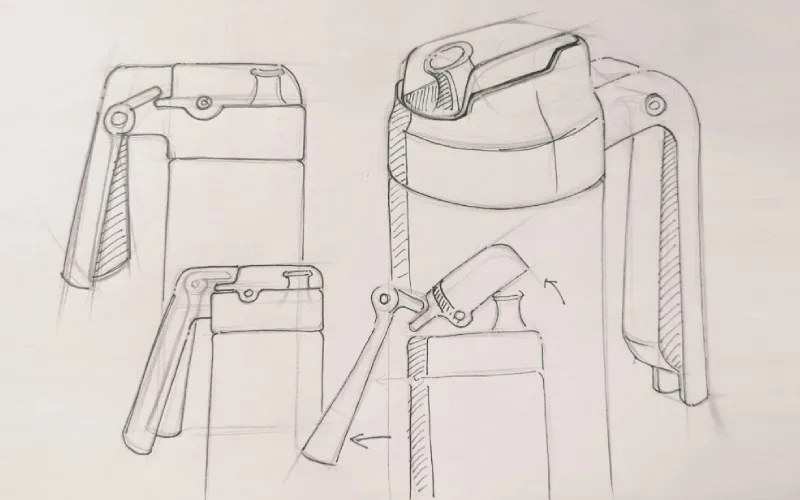
For brands seeking a distinctive product shape, mold development can be an important part of the project budget.
A new glass jar or bottle may require design confirmation, engineering drawings, mold manufacturing, trial production, sample evaluation, and adjustments before the final design is approved.
The mold may be a one-time development investment, but it does not mean every project will automatically become economical at a particular quantity. Buyers should evaluate the mold cost, production cost, expected sales volume, and potential future orders together.
If the design is not essential to the brand’s differentiation, an existing glassware model may be a more practical starting point. If a unique shape is central to the product strategy, investing in a new mold may be worthwhile when supported by a realistic sales forecast.
Before committing, ask the manufacturer to clarify whether mold costs are charged separately, what the development process includes, and how the mold will be managed under the project agreement.
3. Decoration and Color Can Affect Minimum Quantities
Customization does not always require a new glass mold. However, decoration can introduce its own production requirements.
Logo printing, screen printing, decals, color spraying, and other decorative methods may involve different setup procedures, equipment, materials, or processing steps. Certain finishes may also require additional inspection or handling.
For example, a buyer using an existing clear glass bottle may be able to avoid new mold development but still need to meet a minimum quantity for a particular printing or decoration process.
The same applies to custom colors. Feasibility and MOQ depend on the type of color treatment, the glass product, the production method, and the supplier’s available process.
For this reason, it is helpful to request a quotation that separates the main cost elements where possible: the glass product itself, decoration, packaging, and any one-time development charges.
4. Packaging and Product Sets Affect Order Planning
Packaging is another factor buyers sometimes overlook when calculating MOQ.
A standard carton may be available for an existing product, while a custom retail box may require its own artwork preparation, printing setup, or minimum purchase quantity. Inserts, labels, and special protective packaging can add further requirements.
Product sets also need careful planning. A set containing several sizes or styles may require coordination between different components and packaging dimensions. The order quantity for each individual model may affect how efficiently the complete set can be assembled.
Discussing packaging early helps buyers avoid a situation in which the glassware order is feasible but the selected retail packaging introduces unexpected costs or delays.
How to Choose the Right MOQ for Your Custom Glassware Project
For a new product launch, the goal is not always to secure the lowest possible MOQ. It is to find a balance between initial investment, product differentiation, unit economics, and the ability to test market demand.
Option 1: Start with an Existing Glassware Design
For buyers who want to control development costs, choosing an existing product is often a sensible first step.
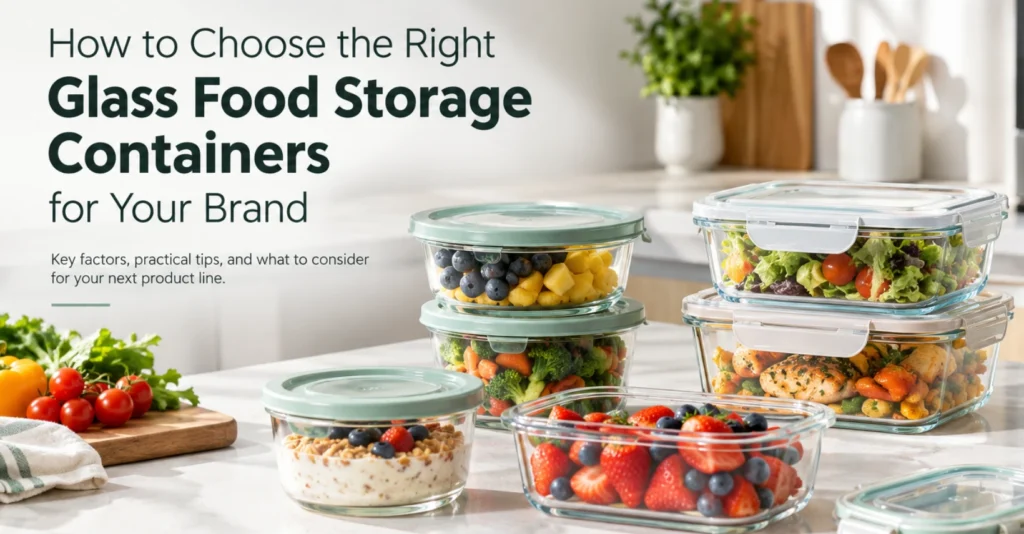
A standard glass jar, bottle, or food storage container may already have an established shape and production process. Depending on the product, buyers can explore customization through logo printing, labels, packaging, or selected decorative features.
This approach can reduce the need for new mold development and simplify the initial project. It may also make it easier to evaluate customer response before investing in a completely new design.
However, an existing product does not guarantee that every customization can be completed in a small quantity. Printing, colors, accessories, and packaging may have separate MOQ requirements, so the full specification should be confirmed with the supplier.
Option 2: Customize Gradually
Not every product needs to be fully customized from the beginning.
A brand might first select an existing glass container, apply its logo, and develop coordinated packaging. If the product performs well, the brand can later consider additional sizes, new colors, or a more distinctive structure.
This staged approach can help separate the initial market test from more substantial product development investment.
It also gives buyers an opportunity to learn which product features customers value before expanding the range. The right sequence depends on the brand’s market position, sales channel, and competitive strategy.
Option 3: Invest in a New Mold When Differentiation Matters
A custom mold may be appropriate when an existing product cannot meet important requirements or when the shape itself is a key part of the brand’s identity.
Before proceeding, estimate the full project cost rather than looking only at the mold fee or unit price. Consider expected order quantities, possible repeat orders, testing requirements, packaging, and the time needed to bring the product to market.
A simple break-even calculation can help clarify the decision:
Estimated cost per unit = (one-time development costs + total production and other applicable costs) ÷ total sellable units
This is a planning estimate rather than a complete quotation. Shipping, duties, inspection, wastage, and other expenses may also need to be included in the landed cost.
The purpose is to compare realistic options. A custom mold may have a higher initial cost but make sense over several production runs, while an existing model may be more economical for a product with uncertain demand.
How to Reduce the Risk of Your First Custom Glassware Order
A smaller first order can be useful, but buyers should make sure the product and purchasing plan are aligned before production begins.
First, request samples and confirm the details that matter most, including dimensions, weight, glass appearance, finish, logo placement, and packaging. For products with specific functional requirements, clarify how those requirements will be evaluated and what supporting test information is available.
Second, ask the supplier to explain the MOQ for each part of the project. The minimum for the glass body may differ from the minimum for decoration, accessories, or custom packaging. Understanding these separate requirements makes it easier to identify which elements are driving the total order quantity.
Third, compare quotations on an equivalent basis. A lower unit price may not include mold development, decoration, packaging, or shipping. A clear quotation should help you understand what is included and which costs may be charged separately.
Finally, plan for the possibility of repeat orders. If you expect to reorder the same product, discuss whether the approved specifications can be retained as a reference and how future production will be managed. Consistency across orders is important for brands building a long-term product range.
A useful set of questions to ask your supplier includes:
- Is the product an existing model or does it require a new mold?
- What is the MOQ for the glassware itself?
- Do logo printing, custom colors, or packaging have separate minimum quantities?
- Are mold fees, samples, and testing included in the quotation?
- What are the expected sample and production lead times?
- Which specifications and quality requirements will be confirmed before mass production?
These questions help turn MOQ from a single number into a clearer understanding of the complete sourcing project.
FAQ About Glassware MOQ
What is the typical MOQ for custom glassware?
There is no universal MOQ for custom glassware. Standard products, products with simple decoration, and products requiring new molds may have very different minimum quantities. The most accurate MOQ can be confirmed once the product design, customization requirements, and packaging have been defined.
Can I customize glassware without creating a new mold?
Yes. Depending on the product, buyers may be able to use an existing glass jar, bottle, or container and customize the logo, decoration, labels, or packaging. The available options and minimum quantities should be confirmed with the manufacturer.
Does a higher MOQ always mean better quality?
No. MOQ is primarily a production and commercial consideration; it does not by itself prove product quality. Quality depends on factors such as materials, manufacturing controls, inspection procedures, product specifications, and how consistently the supplier follows the agreed requirements.
How much does a custom glass mold cost?
The cost depends on the product’s dimensions, shape complexity, mold design, manufacturing process, and project requirements. Rather than relying on a general estimate, request a project-specific quotation and clarify what the mold fee covers, whether revisions are included, and how the mold will be managed.
How long does custom glassware production take?
The timeline depends on whether the project uses an existing product or requires new mold development. Sample preparation, customer approvals, decoration, testing, packaging, production scheduling, and shipping can all affect the total lead time. Ask for a schedule covering both development and production rather than considering manufacturing time alone.
Final Thoughts: Find the Right MOQ for Your Custom Glassware
Custom glassware MOQ is more than a minimum quantity printed on a quotation. It reflects the relationship between product design, manufacturing preparation, customization requirements, and overall project costs.
For some brands, an existing glass jar or bottle with customized printing and packaging offers a practical way to enter the market. For others, a new mold may be worthwhile when a distinctive design supports a longer-term product strategy.
The key is to evaluate the full cost of the project, confirm the MOQ for each customization, and choose an order quantity that aligns with your business goals.
At EasyLife Housewares, we work with B2B buyers to explore glassware options, discuss customization requirements, and evaluate practical approaches to sampling and production. Whether you are sourcing existing glass jars, customizing food storage containers, or exploring a new glassware concept, our team can discuss your requirements and help you consider the available options.
Contact EasyLife Housewares to discuss your custom glassware project, request sample information, and explore an MOQ solution that fits your brand’s needs.