When retail, e-commerce, and corporate buyers search for divided meal-prep containers, the core challenge is rarely finding a supplier—it is avoiding the costly post-launch returns that plague poorly engineered bento boxes. Across supermarkets and online marketplaces, customer complaints consistently cluster around three failures: sauces leaking between compartments, locking clips snapping after a few months of dishwasher cycles, and lids warping or suction-locking during microwave reheating.
Built around the real questions wholesale buyers ask before placing an order, this guide breaks down what defines modern divided lunch boxes, why specific structural details prevent leaks and breakage, and how to build a profitable, channel-ready assortment.
What Are the Main Compartment Configurations on the Market?
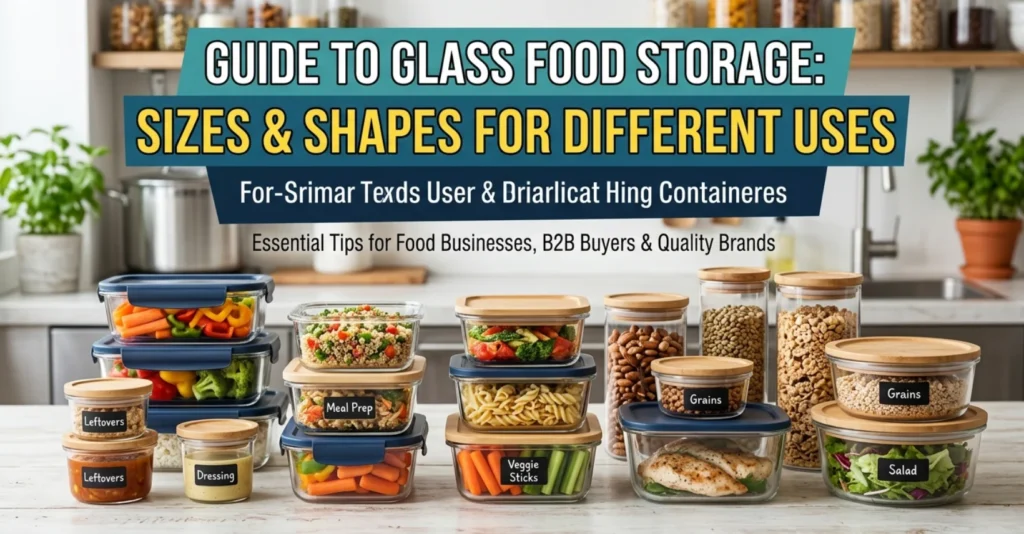
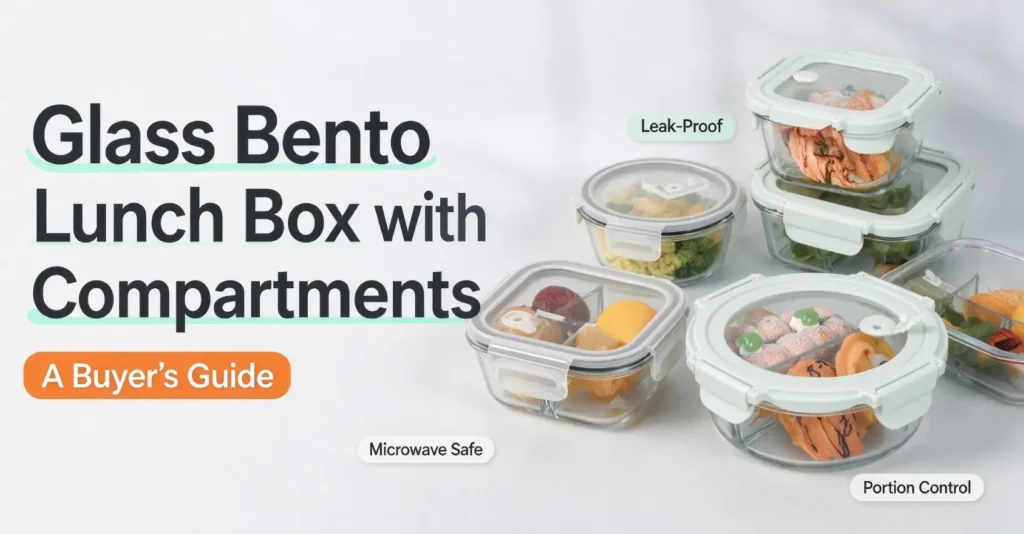
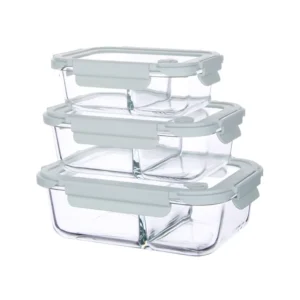
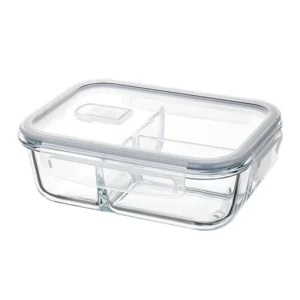
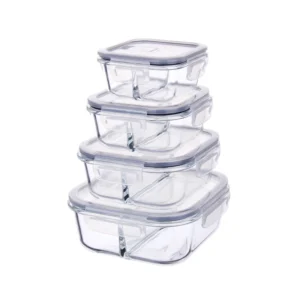
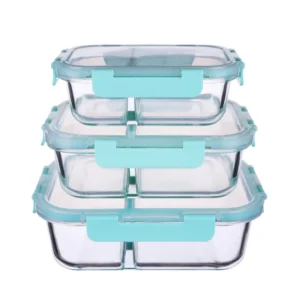
Divided glass lunch boxes generally fall into three structural formats, each serving a distinct portioning habit:
2-Compartment Containers (The Retail Volume Driver): Divided into one larger main section and one side section, two-compartment glass boxes are the most versatile everyday sellers. They handle standard “main + side” meals (such as pasta and salad or sandwich and fruit) without restricting portion sizes.
3-Compartment Containers (The Meal-Prep & Portion-Control Staple): Built for structured nutrition, fitness meal prepping, and traditional multi-dish lunches, three-compartment layouts keep proteins, grains, and vegetables or dressings completely separate.
Removable Divider Trays (2-in-1 Modular Flexibility): Featuring a lift-out inner divider tray nested inside an open glass base, these designs let consumers switch between a divided bento box for workdays and a full-capacity open food storage container for batch leftovers—giving retailers a strong multi-use value proposition.
Recommended products
What Materials Lead Modern Bento Lines?
High Borosilicate Glass vs. Microwave-Safe Stainless Steel
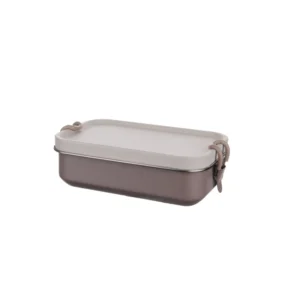
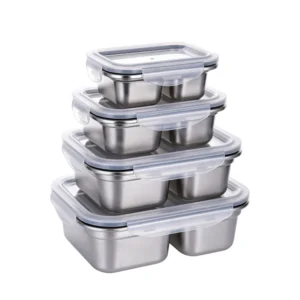
While high borosilicate glass remains the flagship material for divided lunch boxes due to its thermal shock resistance and crystal-clear shelf appeal, many retail and corporate buyers also add 304 stainless steel divided containers as a lightweight, shatterproof companion line for kids’ lunches, commuting, and outdoor use.
Buyer Note on Microwaveable Stainless Steel: One of the most common questions from both buyers and shoppers is whether stainless steel lunch boxes can go in the microwave. While specially engineered 304 stainless steel bento boxes (featuring smooth rolled rims and heat-resistant outer shells) are microwave-safe, they require strict usage guidelines—such as removing lids, avoiding contact with microwave walls, and limiting heating duration.
Why Do Most Divided Lunch Boxes Still Leak Between Sections?
A common misconception is that any container with a silicone rim gasket is leakproof. In reality, standard divided glass containers use half-height dividers—glass ridges that stop midway up the wall. Half-height dividers work well for dry foods like crackers, sliced fruit, or sandwiches, but the moment a container tilts in a backpack, soup, curry, or salad dressing spills right over the ridge into adjacent sections.
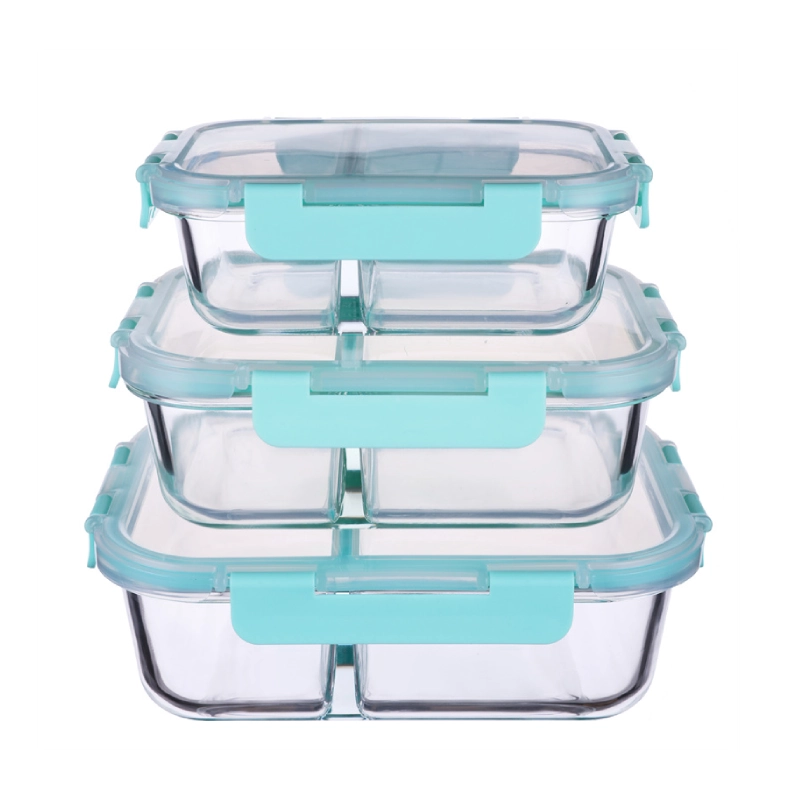
To achieve true compartment-to-compartment watertight sealing, buyers should look for full-height internal glass dividers that press directly into custom multi-channel silicone gaskets molded inside the lid. When locked down, each compartment forms its own independent seal—preventing both liquid cross-contamination and odor transfer between dishes.
Why Do Four-Side Locking Latches Snap Over Time?
Traditional snap-lock lids rely on thin, one-piece plastic living hinges that bend back and forth every time the box opens. After repeated exposure to freezer temperatures and hot dishwasher cycles, these plastic hinges fatigue, turn white, and snap off—rendering the entire glass base unusable.
Upgraded commercial-grade lids replace fixed bend-hinges with independent spin-axis locking wings (hinged pivot latches). By rotating on a dedicated pin axis rather than flexing raw plastic, spin-axis latches dramatically extend cycle life and reduce warranty claims.
Why Do Buyers Prioritize High Borosilicate Over Regular Tempered Glass?
Compared with standard soda-lime or tempered glass, high borosilicate glass offers clear commercial advantages:
- Extreme Thermal Shock Resistance: Moves safely from freezer storage (
-20°C) directly into a microwave or oven (without the lid) without cracking. - Lighter Carry Weight: Achieves high structural durability with lighter wall thickness, making 800ml–1,500ml lunch boxes far more comfortable for daily commuters to carry.
- Zero Staining or Odor Retention: Non-porous borosilicate glass resists turmeric, tomato sauce, and coffee stains, maintaining a like-new appearance over years of use.
How to Match Lid Styles and Steam Vents to Your Shoppers
The lid defines both the aesthetic positioning and daily convenience of a glass bento box:
| Lid / Closure Feature | Functional Advantage | Best Target Buyer & Price Tier |
|---|---|---|
| Tempered Glass Viewing Lids | High-end, transparent top lets shoppers see contents immediately in refrigerators or on retail shelves; elevates perceived value. | Mid-to-premium supermarkets, homeware boutiques, gift sets. |
| Clear or Frosted PP Lids | Lightweight, impact-resistant, cost-effective, and easy to color-match across seasonal lines. | Mass retail, family meal-prep lines, high-volume promotional programs. |
| Bamboo & All-Silicone Lids | Eco-conscious, plastic-reduced appeal with soft-touch finishes and warm natural aesthetics. | Specialty lifestyle stores, eco-friendly DTC brands, corporate gifting. |
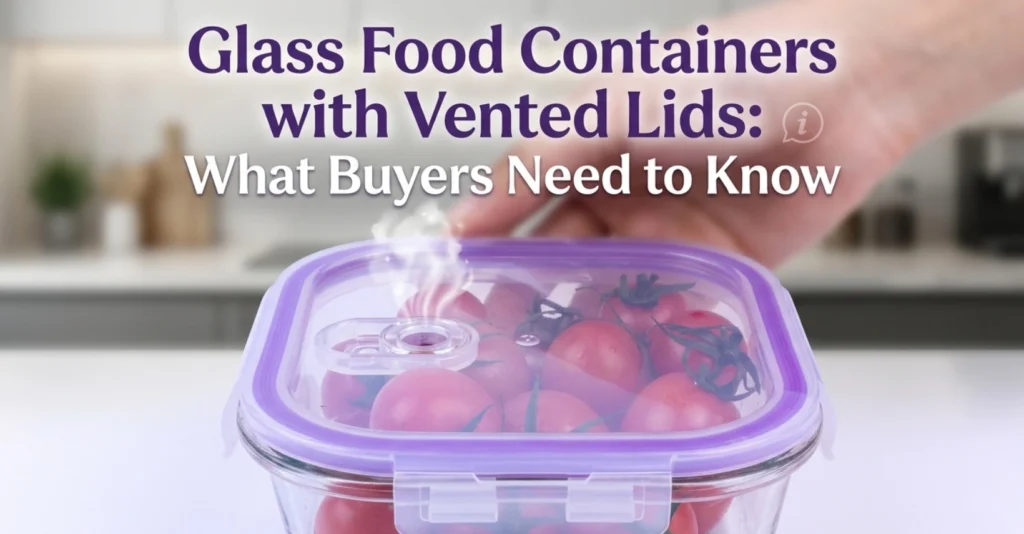
| Integrated Steam Vent Valves | Silicone pull-plugs, push-buttons, or sliding air vents release steam during microwave heating without removing the lid—preventing splatters and vacuum-sealed lids. | Essential across all commuter, office, and family meal-prep SKUs. |
How to Build an Assortment by Sales Channel
Offline Supermarkets & Homeware Chains: Shelf efficiency and instant visual communication drive sell-through. Prioritize stackable and nestable silhouettes that maximize shelf facing and warehouse density. Pair high-clarity glass bases with trending muted silicone gasket colors (sage green, slate blue, warm gray) and use bold packaging callouts (No-Mixing Watertight Seal, Oven & Microwave Safe, Spin-Axis Hinges) so shoppers grasp the upgrade within three seconds.
E-Commerce & DTC Brands: Online buyers read reviews closely for leakage and breakage. Lead with full-height watertight 2- and 3-compartment models, offer bundled multi-size sets (such as 640ml + 950ml + 1,500ml or pairings with insulated lunch bags and cutlery), and invest in drop-tested mail-order cartons to protect glass corners during last-mile parcel delivery.
Corporate Gifting & Institutional Meal Programs: Focus on durable 2- or 3-compartment borosilicate boxes or heat-insulated outer-shell stainless steel models that deliver daily brand visibility in office breakrooms.
How to Execute Wholesale Orders & Custom Branding Smoothly
When moving from product selection to production, working directly with an experienced manufacturer streamlines both MOQ risk and private-label differentiation:
Accessible Starting MOQs: At EasyLife Housewares, standard wholesale orders across core divided glass lunch box models start at an approachable 1,000 pcs, allowing buyers to test regional demand without overextending inventory—while custom OEM/ODM projects are evaluated flexibly based on tooling and specification scope.
Tailored OEM/ODM & Packaging Execution: Supported by an in-house R&D design team and dedicated packaging specialists, EasyLife customizes products around your exact retail brief—including custom Pantone silicone gaskets and locking clips, laser-engraved or decal-printed logos, structural divider adjustments, and custom retail color boxes, belly bands, or drop-tested e-commerce mailers.
Verified Food-Contact Compliance: All materials are produced to meet strict FDA, LFGB, and BPA-free food-contact standards, backed by pre-shipment watertight seal inspections and transit drop testing.
Conclusion
The best-performing divided glass lunch boxes succeed because they solve small daily frustrations—keeping soup out of rice, opening effortlessly after reheating, and surviving thousands of wash cycles without a broken clip. When buyers evaluate compartment divider height, hinge mechanics, lid ventilation, and channel-specific packaging up front, they build a core kitchenware program that earns lasting customer trust and steady reorders.
Ready to spec your next divided lunch box collection or test watertight samples for your market? Connect with the EasyLife Housewares team to request our latest food storage container catalog, custom packaging options, and wholesale pricing.