Choosing the right glass food storage containers is not simply about selecting an attractive product. For kitchenware brands, retailers, and food storage suppliers, factors such as material, capacity, lid design, usability, packaging, and customization can all affect product positioning and customer experience.
Whether you are developing a new kitchenware collection or sourcing products for a private label brand, understanding these factors can help you select products that fit your target market and business requirements.
In this guide, we will look at the key considerations when choosing glass food storage containers for your brand.
What Makes Glass Food Storage Containers a Good Choice for Brands?
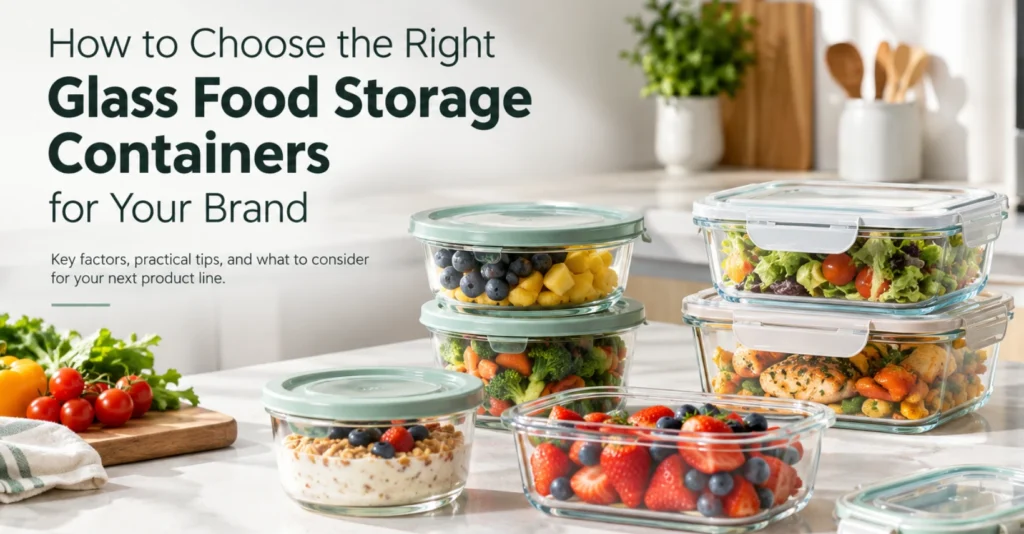
Glass food storage containers have become a popular option for modern kitchen storage because they combine functionality with a clean and versatile appearance.
The transparent body allows users to see the stored food easily, making glass containers suitable for refrigerators, meal preparation, pantry organization, and everyday food storage. Compared with some other materials, glass is also less likely to retain food odors or colors when properly cleaned.
For brands, another advantage is the flexibility of glass container designs. Different capacities, shapes, lids, and surface treatments can be combined to create product collections for different market segments.
However, choosing the right product requires more than simply choosing a glass container. The complete product design should be considered, including the glass material, lid construction, sealing performance, packaging, and customization options.
6 Factors to Consider When Choosing Glass Food Storage Containers
1. Glass Material and Quality
The type and quality of glass should be one of the first considerations when developing a food storage product.
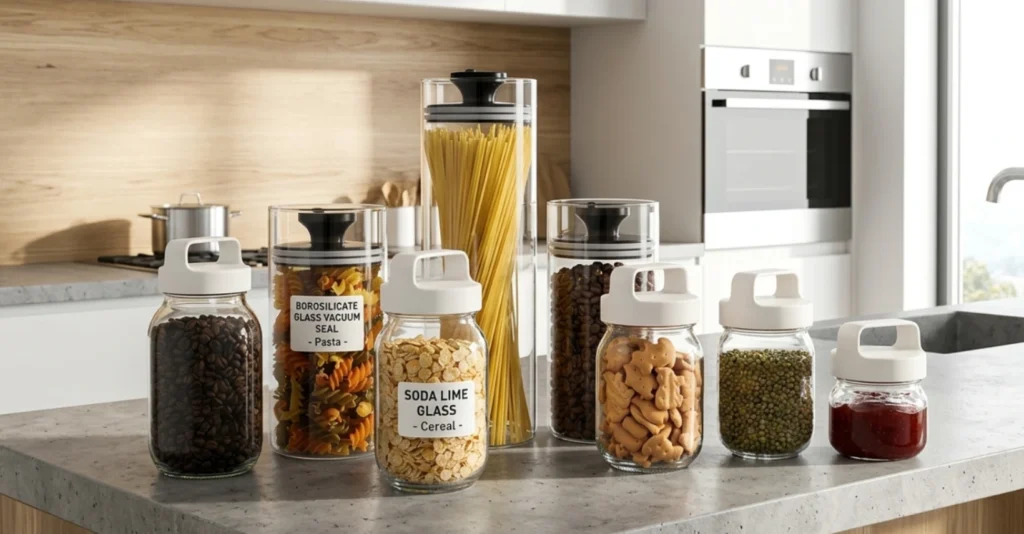
Depending on the intended application, brands may consider materials such as borosilicate glass or soda-lime glass. Important factors can include temperature requirements, product design, thickness, transparency, durability, and overall product positioning.
The right choice depends on how the container is expected to be used and the requirements of the target market. Rather than selecting a material based only on its name, brands should evaluate the complete product specification and intended application.
2. Size, Capacity, and Shape
Capacity and shape directly affect how consumers use and store food containers.
A product range may include smaller containers for snacks or individual portions, medium sizes for leftovers and meal preparation, and larger containers for family-sized food storage.
Shape is also important. Round, square, and rectangular containers offer different advantages in terms of storage efficiency, stacking, and refrigerator organization.
For brands, it can be more effective to develop a coordinated range of useful sizes rather than simply offering as many variations as possible. A well-planned product range can make inventory management and product presentation more consistent.
3. Lid Design and Sealing Performance
The lid is an important part of the overall user experience. A well-designed glass container can still be inconvenient if the lid is difficult to open, clean, or seal.
Depending on the product concept, brands can consider features such as silicone gaskets, locking tabs, vented lids, and leak-resistant structures.
For products intended for storing liquids or foods with sauces, sealing performance becomes particularly important. For microwave-use products, a vented lid or adjustable steam-release design may also improve usability.
The container and lid should therefore be evaluated as one complete system rather than as separate components.
4. Temperature and Everyday Use
Another important consideration is how the complete product is expected to be used.
Depending on the design and specifications, glass food storage containers may be developed for applications such as:
- Refrigerator storage
- Freezer storage
- Microwave heating
- Oven use
- Dishwasher cleaning
However, the suitability of a product for these applications should always be evaluated according to the specific glass, lid, sealing components, and overall construction.
For brands, clearly defining the intended use of each product can help determine the appropriate materials and design before production.
5. Packaging and Retail Presentation
Packaging is another factor that should be considered early in the product development process.
For retail and private label brands, packaging needs to protect the product during transportation while also presenting the product clearly to customers. Depending on the sales channel, options may include color boxes, bulk packaging, or customized retail packaging.
Packaging can also communicate important product information, such as capacity, usage instructions, key features, and care recommendations.
For brands developing a complete product collection, keeping the packaging design consistent across different container sizes can also help create a stronger visual identity.
6. Customization and Supplier Capability
For private label and B2B projects, product customization can be just as important as the standard product specifications.
Depending on the supplier’s capabilities, customization may include:
- Custom logo
- Custom lid color
- Custom product color or finish
- Custom packaging
- Product structure or design development
- OEM and ODM services
Brands should also consider whether a supplier can provide samples, product testing, and technical support during development.
A supplier with both manufacturing and product development capabilities can make it easier to move from an initial concept to a finished product.
How to Match Glass Food Storage Containers With Your Brand
The right glass food storage container should fit the positioning of your product line.
For example, a premium kitchenware brand may focus on refined product design, high-quality materials, and coordinated packaging. A meal-preparation brand may place greater emphasis on practical capacities, stackability, and convenient lids.
| Brand Focus | Product Considerations |
|---|---|
| Premium kitchenware | Refined design and high-quality materials |
| Meal preparation | Practical capacities and stackable designs |
| Everyday kitchen storage | Versatile sizes and easy cleaning |
| Pantry organization | Coordinated shapes and larger capacities |
| Private label products | Custom logo, color, and packaging |
Thinking about the product from the perspective of the target customer can help brands avoid selecting products based only on appearance or price.
What Should Brands Ask a Glass Food Container Supplier?
Before placing an order, brands should understand both the product specifications and the supplier’s development capabilities.
Some useful questions include:
- What glass materials and specifications are available?
- What sizes and shapes can you provide?
- What lid designs are available?
- Can the logo or lid color be customized?
- Do you support OEM and ODM projects?
- Can you provide product samples?
- What is the MOQ?
- Can you provide customized retail packaging?
- How are products tested before mass production?
- What is the expected production lead time?
These questions can help brands compare suppliers based on more than product price alone.
Why Work With an Experienced Glass Food Container Manufacturer?
For brands developing glass food storage products, working with an experienced manufacturer can simplify the process from product selection to mass production.
A capable supplier can support different stages of the project, including product selection, sample development, customization, testing, packaging, and production.
EasyLife Housewares has been developing and supplying kitchen storage and houseware products since 2014, with a focus on B2B customers and product development. The company supports OEM and ODM projects and offers options for customized logos, colors, packaging, and product development.
For brands looking for glass food storage containers for wholesale, private label, OEM, or ODM projects, supplier capabilities should be evaluated alongside product design and specifications.
FAQ
What should I look for when choosing glass food storage containers?
Consider the glass material, capacity, shape, lid design, sealing performance, intended temperature range, packaging, and customization options. For B2B projects, supplier capabilities and MOQ are also important.
Is borosilicate glass better for food storage?
Borosilicate glass can be suitable for applications requiring greater temperature resistance, but the best material depends on the intended use, product design, and target market.
Can glass food storage containers be customized for private label brands?
Yes. Depending on the supplier, customization may include logos, colors, lids, packaging, and product design. OEM and ODM services may also be available.
Can glass food containers be used in the freezer and microwave?
Some products are designed for freezer or microwave use, but suitability depends on the complete product construction. Brands should confirm the specifications with the manufacturer before making product claims.
What should I ask a glass food container supplier before ordering?
Ask about material, dimensions, capacity, lid design, customization, MOQ, samples, packaging, testing, and production lead time. This can help ensure the product meets your commercial and technical requirements.
Conclusion
Choosing the right glass food storage container depends on more than the glass itself. Size, shape, lid design, sealing performance, packaging, and the way the product will be used all need to work together.
If you already have a product idea, a reference sample, or simply a few requirements in mind, talk to the EasyLife Housewares team. We can help you find a suitable glass container and discuss options for custom logos, colors, packaging, OEM, and ODM.
Let’s talk about your project and see what we can make work.