We’ve all been there: you buy a $6 carton of organic strawberries on Sunday, and by Tuesday, they’ve turned into a fuzzy, moldy mess. It’s frustrating for your taste buds and painful for your wallet.
The secret to stopping the cycle of soggy produce isn’t a high-tech fridge—it’s the humble glass jar. Storing fruit in mason jars is a professional-grade hack that extends the life of your produce from days to weeks. As a mason jar wholesaler, we’ve seen firsthand how switching from plastic to high-quality glass transforms kitchen efficiency and reduces waste.
Why Glass is Superior to Plastic
Unlike the flimsy, ventilated plastic clamshells from the grocery store, glass Mason jars provide a near-airtight seal. This controlled environment maintains the ideal humidity level and protects your fruit from ethylene gas (the ripening hormone) emitted by other items in your fridge. Plus, glass is non-porous, meaning it won’t leach chemicals or absorb odors, keeping your fruit tasting exactly like fruit.
The Wholesale Advantage: Our jars are crafted from thick, durable glass designed to withstand repeated sterilization and cooling cycles. They are non-porous, meaning they won’t leach chemicals or absorb odors, keeping your fruit tasting exactly like fruit.
The Step-by-Step “Freshness” Method
The secret to longevity is preparation. While it may seem like an extra step, this method is what separates a berry that lasts three days from one that lasts three weeks.
1. The Science of the Vinegar Bath
Microscopic mold spores live on the surface of all fresh fruit. A vinegar bath is the ultimate “reset button.”
- The Ratio: Use a mixture of 3 parts cold water to 1 part white distilled vinegar.
- The Soak: Submerge your fruit for 5 to 10 minutes. The acetic acid in the vinegar creates a pH environment that kills mold spores without “cooking” the fruit.
- The Rinse: Rinse thoroughly under cold water to ensure no vinegar scent remains.
Why Vinegar Works
- pH Alteration: White vinegar is acetic acid. By bathing your fruit in a diluted vinegar solution, you create a pH environment that is too acidic for mold spores to survive or replicate.
- Removing “Biofilm”: The bath helps strip away residues, dirt, and even some waxes that trap bacteria against the fruit’s skin.
- Gentle Sanitization: Unlike harsh chemical washes, vinegar is food-safe and effectively “sterilizes” the exterior of the fruit without damaging the delicate flesh.
2. The “Bone Dry” Rule
This is the most critical part for storing fruit in mason jars. Never put wet fruit in a jar. Spread your fruit in a single layer on a clean towel and let it air dry for 1–2 hours. If moisture is trapped in an airtight jar, it creates a “greenhouse” for rot. At the same time, you need to ensure that the jar is absolutely clean and know how to sterilize the mason jar.
3. The Jar Selection
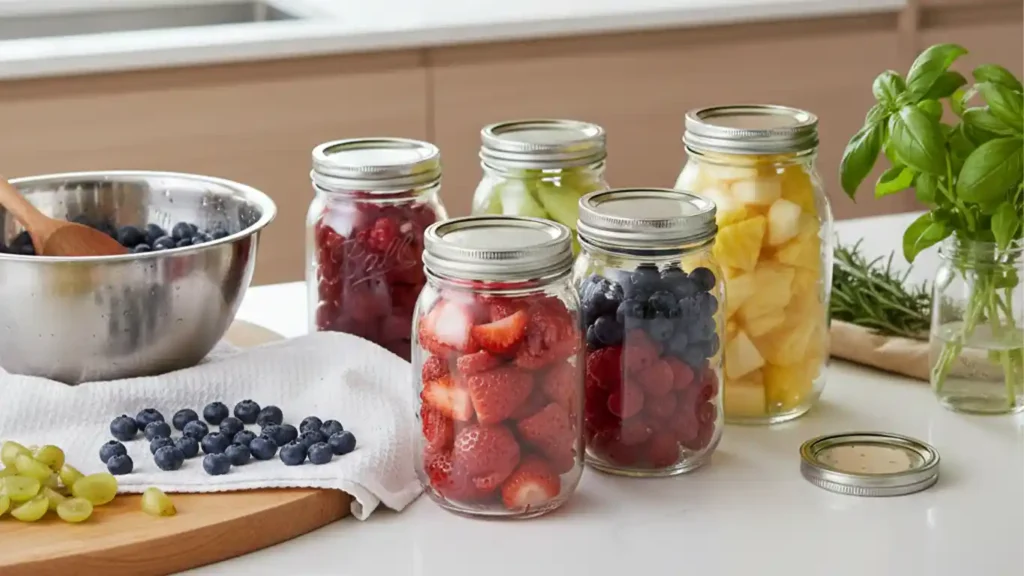
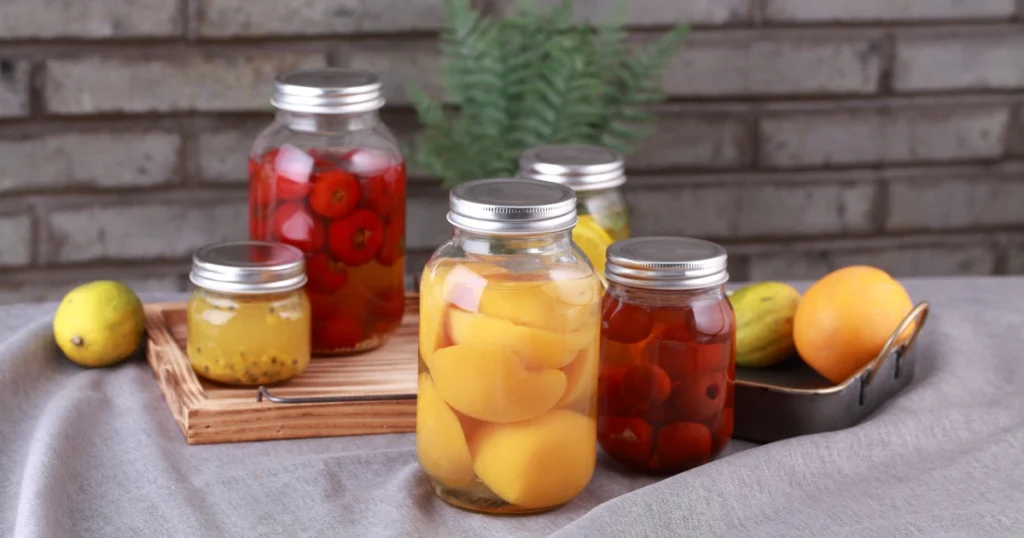
Place your dry fruit into a clean Mason jar. Don’t pack them too tightly! They need a little breathing room. For bulk shoppers, using our Wide Mouth Jars or different mason jar sizes for your fruit makes it easy to reach in without crushing delicate berries.
Reduce Your Food Waste
Every year, tons of perfectly good produce end up in landfills because of improper storage. When we toss a moldy carton of berries, we aren’t just losing money, we’re wasting the water and energy it took to grow them. By storing fruit in mason jars, you are taking a simple, sustainable stand against food waste.
The “Hydroponic” Hack for Herbs
While most fruits thrive in a dry, airtight jar, your fresh herbs need a different approach to stay out of the landfill. Herbs generally fall into two categories: soft or hard.
- Soft Herbs (Basil, Parsley, Coriander, Mint): These have tender green leaves and stems. If left in plastic packaging, they turn into “green slime” in days. Instead, treat them like flowers: place them in a small glass jar with water filled a third of the way up. This keeps the leaves dry while the stems drink up moisture.
- Hard Herbs (Rosemary, Thyme, Sage): These have woody stems and prefer a different kind of hydration. Wrap them in a cold, damp paper towel before placing them in a jar; this keeps them from drying out without drowning them.
Expected Shelf Life Comparison
| Fruit/Herb Type | Plastic Packaging | Mason Jar Method |
| Strawberries | 3–5 Days | 2+ Weeks |
| Blueberries | 5–7 Days | 3+ Weeks |
| Raspberries | 2–3 Days | 7–10 Days |
| Soft Herbs | 2–4 Days | 1–2 Weeks |
Beyond Storage: Custom Wholesale Solutions
Whether you are a meal-prepper looking to save money or a retailer looking to supply your customers with the best storage solutions, quality matters. Our bulk mason jars are designed for clarity, durability, and a perfect seal every time.
As a leading mason jar wholesaler, we do more than just provide standard containers. We offer full-scale customization for brands and retailers looking to elevate their product presentation:
- Custom Bottles & Lids: We can customize the bottle shape, size, and lid color/material to match your brand identity.
- Bespoke Packaging: We offer tailored packaging solutions designed for retail-ready displays or secure shipping.
- Branding: From logo etching to custom printing, we help your business stand out with high-quality, personalized glassware.
Recommended products

FAQ about Storing fruit in Mason Jars
What fruits are best stored in mason jars?
Storing fruit in mason jars is particularly effective for berries like strawberries, blueberries, and raspberries, which can see their shelf life extended from just a few days to over two weeks. This method also works well for sliced melons, keeping them fresh for up to five days compared to the standard two days in plastic. Additionally, soft herbs like basil, parsley, coriander, and mint thrive when placed upright in jars with a small amount of water, while woody herbs like rosemary and thyme stay crisp when stored in jars wrapped in damp paper towels.
What two fruits should not be stored together?
In terms of maximizing shelf life, you should avoid storing apples and berries together in the same airtight container. Apples are high producers of ethylene gas, a natural ripening hormone that can cause sensitive fruits like strawberries or raspberries to spoil prematurely. Even when using the mason jar method, keeping these two fruits separated is essential to prevent the “one bad apple” effect from ruining your entire batch of fresh produce.
Does putting fruit in a glass jar make it last longer?
Yes, storing fruit in glass Mason jars significantly extends freshness because the airtight seal maintains ideal humidity levels while protecting the produce from ethylene gas emitted by other items in the fridge. By using the “Wash-Dry-Jar” method—specifically the vinegar bath to kill mold spores and ensuring the fruit is bone-dry before sealing—you can extend the shelf life of berries from just a few days to over two weeks. This method is particularly effective for high-moisture fruits like strawberries and blueberries, as the non-porous glass prevents the absorption of odors and keeps the fruit crisp far longer than standard plastic packaging.
What container keeps fruit fresh longer?
Glass Mason jars are the superior choice for keeping fruit fresh longer because their airtight seals and non-porous surface create a more stable environment than standard plastic packaging. Unlike flimsy, ventilated plastic containers that allow moisture to escape and contaminants to enter, glass jars maintain ideal humidity levels and shield produce from ethylene gas emitted by other items in the fridge. When combined with the “Wash-Dry-Jar” method, these containers can extend the shelf life of sensitive fruits like strawberries and blueberries from just a few days to over two weeks.
Conclusion: A Greener, Fresher Kitchen
Storing fruit in mason jars by adopting the Mason jar method is about more than just aesthetics, it is a commitment to reducing food waste. By extending the life of your produce through airtight seals and hydroponic herb care, you respect both your ingredients and your wallet. Whether you are an individual meal-prepper or a business looking for a reliable wholesale partner, the right glass jar is the first step toward a more sustainable, fresh-focused kitchen.
Ready to upgrade your storage or explore custom branding? Contact us today for a quote on customized bottles and packaging!