In the high-intensity environment of modern commercial food service—spanning hotel food & beverage operations, multi-unit chain restaurants, commercial bakeries, and institutional catering—operational efficiency and strict food safety form the foundation of long-term profitability. While culinary directors and procurement managers dedicate substantial resources to optimizing high-value assets like rational combi-ovens, walk-in refrigeration units, and inventory ERP software, one foundational area often remains overlooked: ingredient and prep storage systems.
Walk into a typical back-of-house operation, and you will frequently observe a chaotic, fragmented array of containers: discolored polycarbonate tubs, cracked acrylic jars, mismatched polyethylene containers, and dented metal tins. While acquiring storage containers on an ad-hoc basis may seem cost-effective in the short term, this piecemeal strategy introduces severe operational bottlenecks, elevated food safety risks, micro-contamination hazards, and compounding replacement expenses.
To eliminate these vulnerabilities, forward-thinking hospitality executives and supply chain directors are implementing a transformative operational strategy: standardizing commercial kitchen storage around high-borosilicate glass systems. This comprehensive guide explores why transitioning to a standardized glass storage infrastructure represents one of the highest-ROI, risk-mitigating investments a commercial food service business can execute.
1. Food Safety, Hygiene, and Regulatory Risk Mitigation
Food safety failures and failed health inspections carry devastating commercial consequences, ranging from immediate operational shutdowns to irreparable brand damage. Storage containers represent a primary vector for cross-contamination and regulatory non-compliance.
Chemical Inertness and Odor Migration Prevention
Unlike synthetic polymers, high-borosilicate glass is a completely non-porous and chemically inert material. Commercial prep kitchens frequently store high-acid ingredients (such as tomato passata, citrus reductions, or vinegars), oil-rich emulsions, and pungent aromatic spices (such as garlic, turmeric, or curry pastes). Plastic polymers continuously interact with these substances, absorbing lipophilic flavor compounds and acidic pigments. Over time, these trapped compounds leach back into newly stored, delicate ingredients, causing subtle profile degradation and unwanted flavor cross-contamination. High-borosilicate glass maintains an absolute chemical barrier, ensuring that pristine ingredients taste exactly as intended.
Eliminating the Micro-Cavity Hazard
Under the stress of daily commercial use—including aggressive scraping with metal spoons, harsh scrubbers, and rapid temperature shifts—plastic containers develop microscopic surface scratches and hairline fissures. These micro-cavities create protected sanctuaries for bacterial biofilms (Salmonella, Listeria, and E. coli) that resist standard chemical sanitization and commercial high-temp dishwasher cycles. High-borosilicate glass features a smooth, vitreous surface with high Mohs surface hardness, resisting scratch formation and ensuring 100% surface contact for chemical sanitizers during washing.
| Safety & Performance Metric | Commercial Plastics (PP / PC / PET) | Low-Grade Soda-Lime Glass | High-Borosilicate Glass (3.3 COE) |
| Chemical Inertness | Low (Absorbs oils, acids, & odors) | Moderate (Slight leaching under high acid) | High (100% Chemically Inert) |
| Scratch & Biofilm Resistance | Poor (Scratches easily under metal tools) | Moderate | Superior (High surface hardness) |
| Thermal Shock Tolerance | Low (Warps under commercial dishwasher) | ≈40-50℃(Prone to cracking) | ≥120-150℃(Oven/Freezer safe) |
| PFAS & Microplastic Risk | High (Leaches micro-particles over time) | Zero Risk | Zero Risk (100% Non-toxic) |
| Regulatory Compliance | Subject to evolving BPA/BPS/PFAS restrictions | FDA / LFGB Compliant | Exceeds Global FDA / LFGB Standards |
2. Visual Management and Back-of-House Workflow Optimization
In high-volume commercial kitchens during peak service hours, every second saved during food preparation directly impacts table turnover rates, labor costs, and order accuracy. Standardized glass storage leverages the principles of “Visual Management” (5S Methodology) to streamline kitchen workflows.
Eliminating Prep Bottlenecks via 360-Degree Visibility
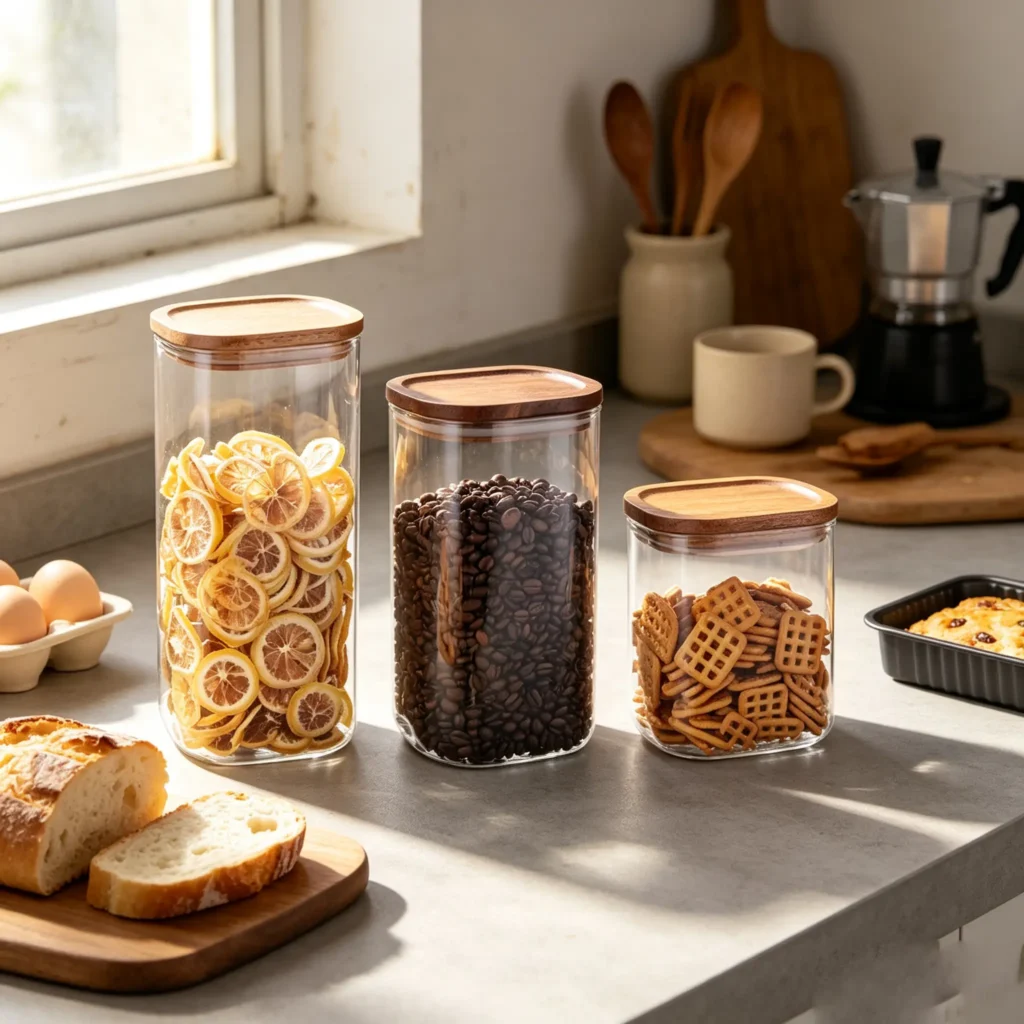
In a traditional storage setup utilizing opaque or translucent plastic containers, line cooks and inventory controllers must repeatedly unseal lids, inspect contents, or pull containers off high shelves to identify ingredients. This extra step consumes valuable seconds, exposes stored goods to ambient humidity and air, and increases the likelihood of prep errors. Crystal-clear borosilicate glass offers complete visual clarity from any angle. Kitchen staff can immediately identify ingredient levels, freshness, and specific prep items from across the room, accelerating line restocking and reducing open-container exposure times.
Modular Geometry and Space Efficiency
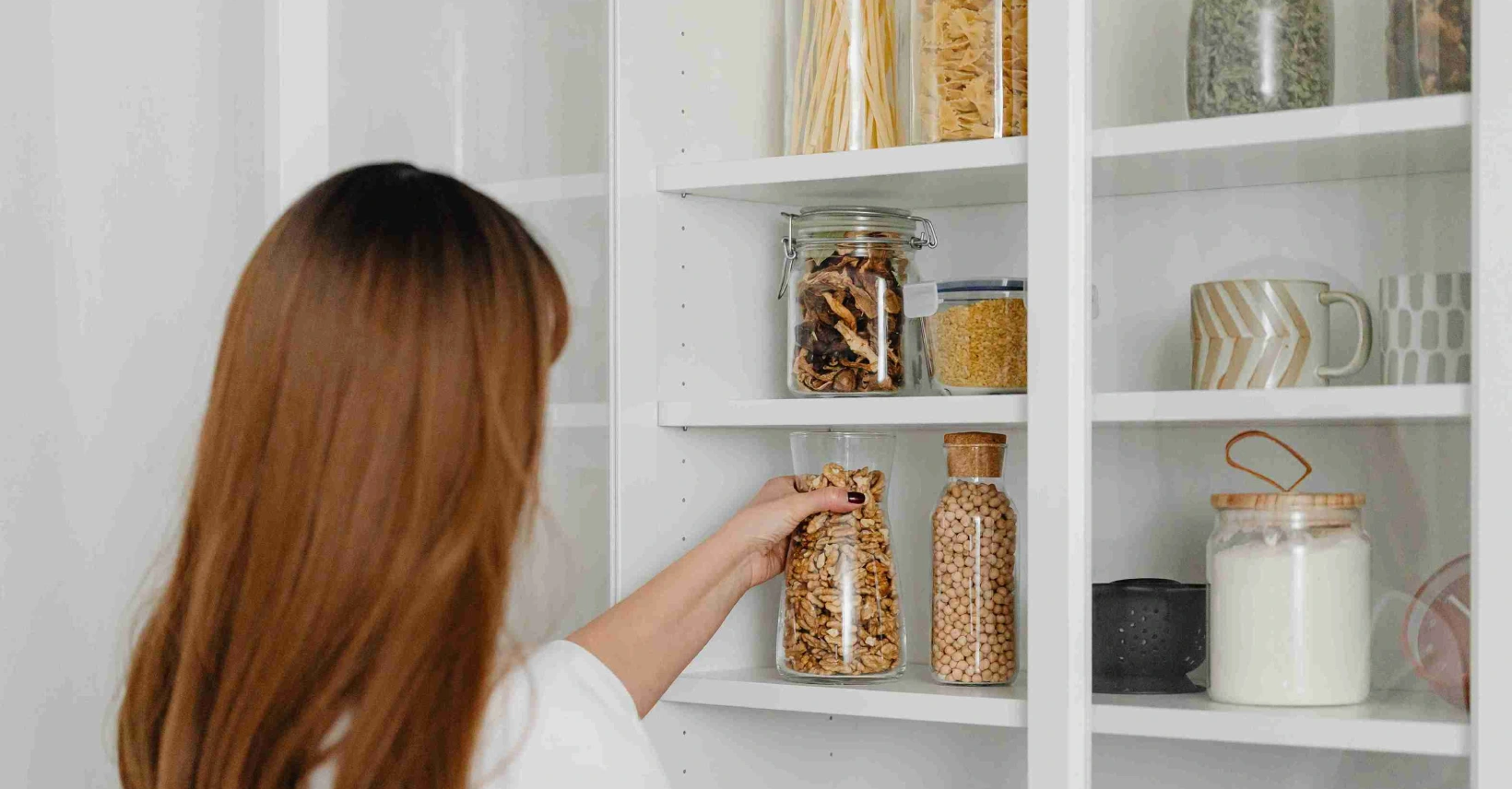
Mismatched containers from various suppliers waste vast amounts of vertical and horizontal shelf space in walk-in coolers and dry storage pantries. Standardized glass container systems are engineered with modular stacking dimensions—where height, width, and lid profiles are mathematically proportional. This geometric harmony eliminates “dead air space” on commercial wire shelving, allowing kitchens to increase overall storage capacity by up to 25% without expanding their physical footprint.
Thermal Shock Resistance and Multi-Stage Workflows
High-borosilicate glass (specifically COE 3.3 formulation) exhibits an exceptionally low coefficient of thermal expansion. This engineering enables the glass to withstand sudden temperature differentials exceeding 120℃ to 150℃. In practice, prep cooks can retrieve pre-portioned bases directly from cold storage (or commercial freezers), place them directly into microwave or convection heating apparatuses, serve or prep from the same vessel, and route the empty container straight into an 85℃ commercial conveyor dishwasher. This seamless transition drastically cuts down on intermediate dishware, minimizing labor hours spent on manual pot-washing.
3. Financial Analysis: Total Cost of Ownership (TCO) vs. Initial Unit Cost
Procurement teams frequently fall into the trap of evaluating storage containers solely on initial unit purchase price. While commercial plastic tubs feature a lower initial capital outlay, a rigorous Total Cost of Ownership (TCO) evaluation reveals that standardized glass storage provides significantly superior long-term financial returns.
The Replacement Rate Calculation
Commercial plastic containers used in heavy-duty food service environments suffer from rapid physical degradation. High-temperature washing cycles cause warping, lid seal failures, and clouding; metal utensils create deep scratches; and acidic foods cause permanent staining. Consequently, commercial operations experience an annual plastic container replacement rate of 60% to 100%.
In contrast, high-borosilicate glass containers—when manufactured with optimized wall thickness and thermal annealing—exhibit incredible mechanical strength. Under standard professional handling, glass storage units routinely achieve an operational lifespan of 36 to 60+ months.
When modeled across a 3-year commercial operating cycle for a medium-sized facility utilizing 500 storage units, the financial breakdown favors glass decisively:
- Commercial Plastic Strategy: High annual repurchasing expenses, continuous labor spent re-sorting mismatched lids, higher food spoilage rates due to compromised seals, and accumulated landfill waste.
- Standardized Glass Strategy: A higher initial capital investment amortized over 36+ months, resulting in a 40% lower overall cost-per-use, near-zero annual repurchase administration, and enhanced food preservation.
Reducing Food Spoilage and Shrinkage
Food waste represents one of the largest controllable expenses in food service operations. High-quality glass storage containers paired with precision-engineered food-grade silicone gaskets create near-perfect airtight seals. By maintaining a stable internal micro-environment, these containers protect delicate dry ingredients (whole-bean coffee, spices, flours, freeze-dried goods) from ambient humidity and pest infestation, extending ingredient shelf-life and directly reducing inventory shrinkage.
4. Elevating Open-Kitchen Aesthetics and Supporting ESG Mandates
Beyond internal logistics and financial metrics, standardized storage systems exert a powerful external influence on brand perception and corporate responsibility.
The Open-Kitchen Trend and Visual Perfection
Modern restaurant architecture increasingly features open-concept kitchens, chef’s tables, and visible prep pantries. Diners no longer judge a venue solely on the finished plate; they judge the hygiene, organization, and craft of the culinary crew in real-time. An array of stained, warping plastic containers visible to guests undermines an otherwise premium dining narrative. Conversely, a clean grid of uniform glass containers topped with polished stainless steel or natural wooden lids conveys uncompromising hygiene, precision, and culinary artistry.
Fulfilling Sustainability and Corporate Social Responsibility (CSR)
Global consumers and corporate stakeholders actively reward businesses that demonstrate authentic environmental stewardship. Glass is a 100% natural, infinitely recyclable material that does not degrade in quality over multiple recycling cycles. By completely eliminating single-use and short-lifespan plastic prep containers from their supply chains, hospitality groups can substantiate their sustainability commitments, lower their environmental footprint, and fulfill stringent ESG (Environmental, Social, and Governance) targets.
Partner with EasyLife Housewares for Standardized Success
Standardizing your commercial kitchen storage infrastructure requires a manufacturing partner with deep material expertise, rigorous quality control, and reliable global shipping capabilities. EasyLife Housewares is a premier manufacturer and exporter specializing in high-grade glass and stainless steel kitchen storage systems engineered specifically for commercial distributors, B2B importers, and global brand owners.
Why Leading Global Brands Choose EasyLife Housewares
- Owned Manufacturing Excellence: Operating our own state-of-the-art production facilities, we maintain total control over every step of the manufacturing process—from raw material selection and high-precision glass annealing to automated dimension checking and final packaging. This direct oversight guarantees unmatched product batch uniformity and competitive factory-direct pricing.
- Uncompromised Quality & Global Compliance: Our products undergo rigorous lab testing, including ASTM C149 thermal shock testing, FDA CPG 7117.06 compliance, EU 1935/2004 food contact safety verification, and LFGB certification. We guarantee lead-free, cadmium-free, and 100% food-safe products.
- Dedicated In-House R&D Team: Our experienced design and engineering teams continuously push storage innovation forward. We specialize in precision-fitted airtight seals, stackable anti-slip base geometries, custom volume graduation markings, and specialized lid mechanisms optimized for high-intensity commercial environments.
- Comprehensive OEM & ODM Capabilities: We provide tailored manufacturing solutions to meet your brand’s exact market demands. From custom logo laser engraving and customized color powder coatings to drop-test certified (ISTA 3A / SIOC) mail-order packaging for e-commerce and retail supply chains, we turn your product vision into commercial reality.
- Reliable Supply Chain & Guaranteed Delivery: We understand that supply chain delays cost you money. Our streamlined logistics operations, robust raw material reserves, and scalable production capacity ensure guaranteed lead times and dependable delivery schedules for large-volume orders worldwide.
Building a Standardized Future: A Strategic Outlook for Kitchen Operations
Transitioning a commercial kitchen from a piecemeal, mixed-container environment to a standardized glass storage system is far more than a simple equipment upgrade. It represents a fundamental shift in operational philosophy—one that prioritizes uncompromising food safety, precise visual management, and long-term financial sustainability over short-term convenience.
As the global food service industry faces tightening regulations on plastics, rising food ingredient costs, and increasingly visible prep environments, storage standardization offers a clear, high-return pathway forward. By establishing uniform volumetric standards, prioritizing high-borosilicate glass for its chemical purity and thermal resilience, and embedding clean handling protocols, kitchen operators can insulate their businesses against cross-contamination risks while building a measurably faster, more efficient back-of-house workflow.
Executing a successful standardization strategy requires seamless collaboration across every link of the supply chain. At EasyLife Housewares, our role is simple: to support food service operators, brand owners, and B2B distributors with reliable, engineering-grade storage solutions.
By combining dedicated in-house R&D, certified high-borosilicate glass manufacturing, and flexible OEM/ODM capabilities, we aim to ensure that every container delivered meets the strict consistency, safety, and durability standards your commercial kitchen demands.