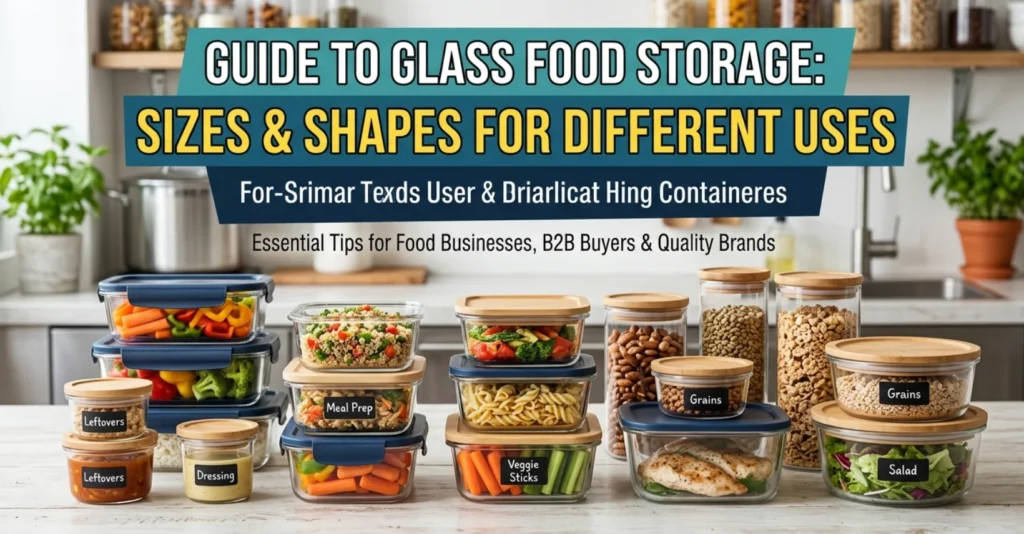
Spice shakers may look like simple kitchen accessories, but their design has a direct impact on how easily consumers season their food. A shaker that releases too much powder, clogs during use, or fails to close properly can quickly become frustrating. For brands and retailers, these details also influence product quality, customer satisfaction, and repeat purchases.
When sourcing spice shakers, buyers need to look beyond appearance. The jar material, dispensing holes, lid structure, refill opening, and overall ease of use should work together to create a practical product.
In this guide, we explain the key features of well-designed spice shakers, how different dispensing designs suit different seasonings, and what B2B buyers should consider when selecting products for their market.
What Are Spice Shakers?
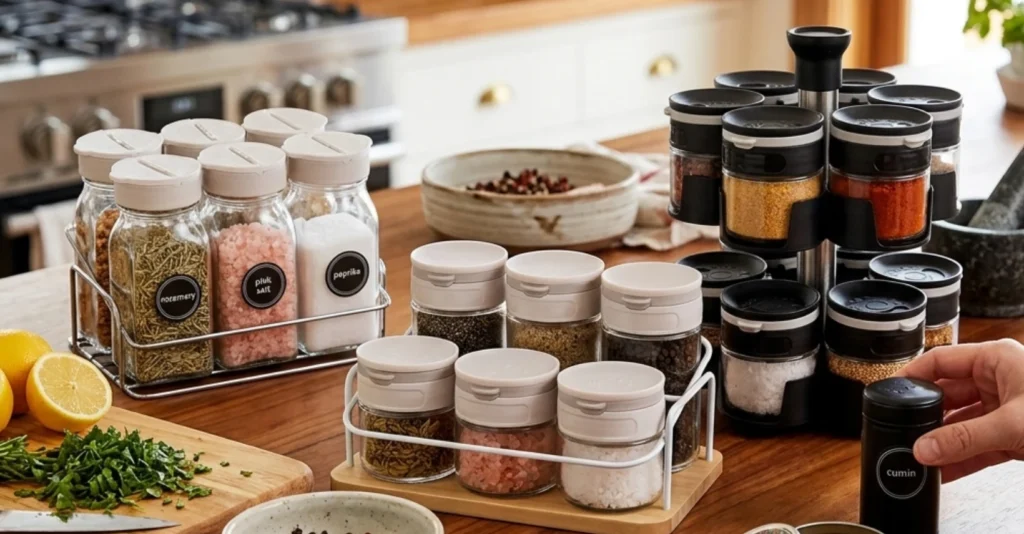
Spice shakers are containers designed to dispense seasonings through openings in a lid, cap, or insert. They are commonly used for salt, pepper, paprika, garlic powder, chili powder, dried herbs, and other powdered or granulated ingredients.
Some spice shakers have a simple perforated lid, while others use removable shaker inserts, adjustable openings, or multi-function lids. The right design depends on the seasoning’s particle size, how much control users need, and how the product will be stored between uses.
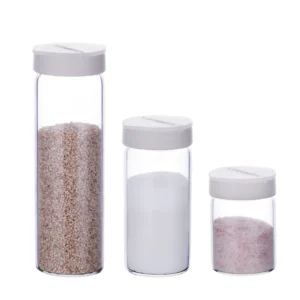
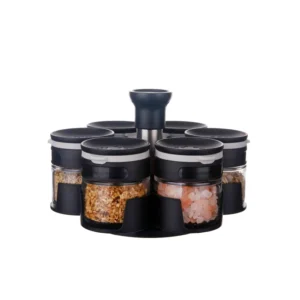
For product brands, spice shakers can also be part of a coordinated spice storage collection. Matching jars in different sizes, consistent lid designs, and clear product labeling can help create a more organized and appealing kitchen storage range.
5 Features That Make Good Spice Shakers
1. The Right Dispensing Hole Size
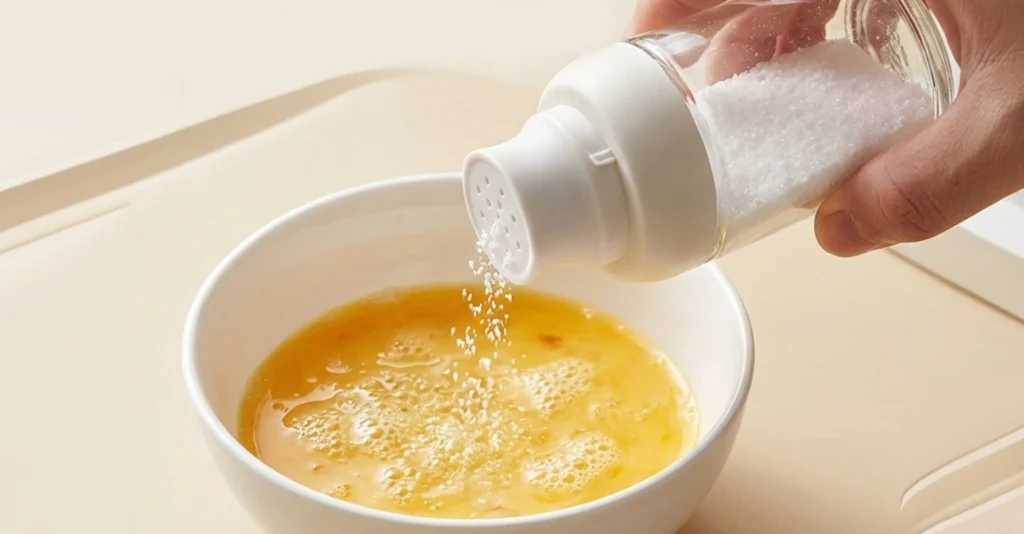
The size of the dispensing holes is one of the most important factors in spice shaker performance. Holes that are too small may become blocked by fine powders or clumped seasonings. Holes that are too large can release too much seasoning at once, making it difficult for users to control the amount.
Different ingredients require different dispensing designs. Fine salt and powdered spices generally need smaller openings, while coarse salt crystals or larger seasoning particles may require wider holes.
For manufacturers and buyers, the best approach is to test the actual seasoning rather than relying on appearance alone. Particle size, moisture content, and the tendency to clump can all affect dispensing performance.
2. A Suitable Number and Arrangement of Holes
Hole size is only part of the equation. The number, spacing, and arrangement of holes also influence how evenly a seasoning is distributed.
A lid with several small holes may work well for controlled seasoning across a wide surface, while a design with fewer or larger openings may be better for coarser ingredients. Some products use different dispensing sections to accommodate more than one type of seasoning.
The goal is to provide a consistent flow without requiring excessive shaking. During product development, buyers should evaluate how the shaker performs when tilted, shaken lightly, and used repeatedly. A practical design should feel predictable to consumers rather than requiring them to learn a complicated technique.
3. A Lid That Is Easy to Open and Close
A good spice shaker lid should be convenient during cooking and secure enough to protect the contents between uses.
Depending on the product, the lid may feature a flip-top cover, a screw-on cap, a removable shaker insert, or multiple dispensing sections. Each option offers a different balance of convenience, cleaning, and closure performance.
Flip-top lids can make seasoning quick and accessible. Screw-on lids may provide a more secure connection between the lid and jar. Removable inserts can simplify refilling or cleaning, provided they fit securely and are easy to reinstall.
Buyers should also consider whether the lid can be operated comfortably with one hand and whether it stays securely attached during normal use. A design that looks attractive but is awkward to open may be less suitable for everyday cooking.

4. Protection Against Moisture and Spills
Seasonings can lose quality when exposed to moisture, air, or contamination. Fine powders may clump, while dried herbs can lose their aroma over time. The lid and container opening therefore play an important role in protecting the contents.
However, a shaker lid is not automatically airtight simply because it has a cover. The dispensing openings, lid-to-jar connection, and any additional sealing components all affect how well the product closes.
If a product is intended for seasonings that are sensitive to humidity, buyers should assess its closure design and verify performance through appropriate testing. A covered shaker insert may offer convenient access, while a separate storage closure may be more suitable when stronger protection is required.
For brands developing a new spice shaker range, it is important to define the intended use clearly. A product designed for frequent tabletop seasoning may prioritize quick access, while one intended for longer-term storage may need a different closure arrangement.
5. Easy Refilling and Cleaning
A well-designed spice shaker should be convenient not only during use but also when it needs to be refilled or cleaned.
A narrow opening can make refilling messy, especially when the seasoning is transferred from a bulk package. A removable shaker insert or a sufficiently wide jar opening can make the process easier. Users should also be able to remove residue without damaging the lid or leaving seasoning trapped in hard-to-reach areas.
For reusable spice shakers, buyers should confirm whether the jar and lid can be separated easily and whether the materials are suitable for the intended cleaning method. Dishwasher compatibility should only be stated when supported by the product’s material specifications and testing.

Which Spice Shaker Design Is Best for Different Seasonings?
Not every seasoning behaves in the same way. Selecting the right dispensing design starts with understanding the ingredients the product is expected to hold.
| Seasoning type | Recommended dispensing considerations |
|---|---|
| Fine salt and powdered spices | Smaller holes and controlled flow to reduce over-dispensing |
| Ground black pepper and paprika | Hole size suited to particle size, with attention to clogging |
| Coarse salt and granulated seasonings | Wider openings that allow larger particles to pass through |
| Dried herbs and seasoning flakes | Openings that accommodate irregular pieces without frequent blockage |
| Mixed seasoning blends | Testing with the actual blend to check consistency and separation |
| Moisture-sensitive powders | Suitable closure protection and evaluation of clumping risk |
These are starting points rather than universal specifications. For example, two paprika products may have different particle sizes, and a seasoning blend may contain both fine powder and larger flakes. Testing with the intended ingredients is the most reliable way to confirm whether a dispensing design works.
Choosing the Right Jar Material and Shape
Although the lid receives much of the attention, the jar itself also affects the user experience.
Glass Spice Shakers
Glass is a popular option for spice shakers because it allows users to see the contents without opening the container. This can make it easier to identify seasonings, monitor remaining quantities, and maintain a coordinated kitchen display.
Glass also has a clean appearance and is generally resistant to retaining food odors and colors when properly cleaned. For brands targeting consumers who value reusable, visually organized kitchen products, glass spice shakers can be an attractive option.
When selecting glass jars, buyers should evaluate capacity, wall thickness, opening dimensions, and compatibility with the chosen lid. The lid and jar should be developed and tested as a complete system rather than treated as unrelated components.
Round or Square Spice Shakers?
Round jars offer a familiar shape that is comfortable to hold and easy to rotate during use. Square jars can make efficient use of shelf space and create a uniform appearance when arranged in rows.
The right choice depends on the intended market, storage environment, and product positioning. A compact set designed for a small kitchen may benefit from space-efficient shapes, while a premium countertop collection may prioritize appearance and consistency.
For retailers, offering a coordinated range of sizes or shapes can create opportunities to sell individual jars, multi-piece sets, or complementary storage products.
Recommended products
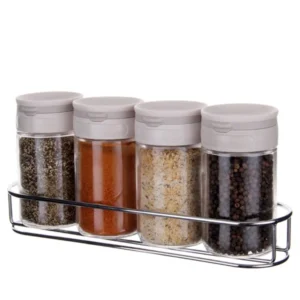
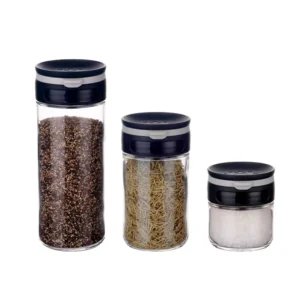
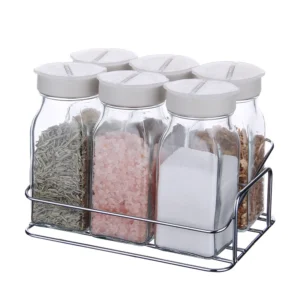
What Should B2B Buyers Consider When Sourcing Spice Shakers?
For importers, wholesalers, retailers, and private-label brands, choosing spice shakers involves more than selecting a jar and lid that look good together. The product needs to perform consistently, suit the target customer, and fit the brand’s commercial requirements.
Start with the intended application. Define which seasonings the product will hold, how consumers will dispense them, and whether the product is designed primarily for cooking, dining tables, or long-term storage. These decisions help determine the appropriate jar capacity, opening size, lid style, and sealing requirements.
Test the complete product. Samples should be evaluated with the actual seasonings whenever possible. Check whether the contents flow smoothly, whether the holes clog, how easily the lid opens and closes, and whether the jar is comfortable to refill. Repeated-use testing can also help identify loose components or other practical issues.
Review materials and product specifications. Confirm the materials used for the jar, lid, and any inserts or seals. Check the applicable food-contact requirements for the destination market and request supporting documentation where needed. Avoid assuming that every component is suitable for every food-contact or cleaning application.
Consider the complete product range. A brand may need several capacities, different lid colors, coordinated labels, or matching storage jars. Planning these options together can create a more consistent product line and help buyers decide whether to offer single items or sets.
Discuss customization early. Depending on the product and manufacturing capabilities, customization may include logo application, color selection, packaging, capacity, or lid configuration. Buyers should confirm the available options, minimum order quantity, development timeline, and testing requirements with the supplier before finalizing the project.
Developing Custom Spice Shakers with EasyLife Housewares
For brands building or expanding a kitchen storage collection, spice shakers offer opportunities to combine everyday functionality with a consistent product appearance. The right design can help distinguish a product range through its jar shape, dispensing structure, lid color, and retail packaging.
At EasyLife Housewares, we work with B2B buyers on kitchen storage products and OEM/ODM projects. Depending on the product and project requirements, buyers can discuss existing designs, logo customization, color options, and packaging solutions.
If you are developing a new spice shaker collection, it helps to prepare a few details before requesting a quotation: the type of seasoning, preferred jar capacity, dispensing requirements, target market, and any customization needs. These details make it easier to evaluate suitable options and identify what needs to be tested.
Have a spice shaker project in mind? Tell us about your preferred design and requirements, and let’s discuss the options for your market.
FAQ
What makes a good spice shaker?
A good spice shaker dispenses seasoning consistently, has a lid that is easy to operate, protects the contents appropriately between uses, and is convenient to refill and clean. The best design depends on the type of seasoning and how the product will be used.
How many holes should a spice shaker have?
There is no single ideal number. The hole size, arrangement, and total open area should match the seasoning’s particle size and the desired dispensing rate. Testing with the actual contents is more reliable than choosing a hole pattern based on appearance alone.
Are spice shakers airtight?
Not necessarily. A shaker lid with dispensing holes may provide convenient access without creating an airtight seal. If stronger protection against air or moisture is required, buyers should evaluate the closure system and verify its performance rather than assuming that a covered lid is airtight.
Can one spice shaker work for every seasoning?
One design may accommodate several similar seasonings, but no single dispensing configuration is ideal for every ingredient. Fine powders, coarse crystals, dried herbs, and mixed blends behave differently. Testing the intended range of seasonings helps determine whether one design is sufficient or multiple lid options are needed.
Can spice shakers be customized for private-label brands?
Customization options depend on the supplier and product design. Possible areas to discuss include jar capacity and shape, lid color, logo application, and packaging. Buyers should confirm minimum order quantities, available materials, sample availability, and development requirements before placing an order.
Conclusion
Good spice shakers combine the right dispensing performance with convenient lids, suitable materials, and practical storage features. Hole size and arrangement determine how seasonings flow, while closure design, refill access, and cleaning requirements influence the overall user experience.
For B2B buyers, the most effective approach is to start with the intended seasoning and target market, then test the complete jar-and-lid combination before confirming specifications. This helps brands develop products that are functional, consistent, and suitable for their customers.
EasyLife Housewares works with brands and buyers on kitchen storage products and customized OEM/ODM projects. Whether you are sourcing an existing spice shaker or exploring options for a new product range, share your requirements with our team and let’s discuss what could work for your market.