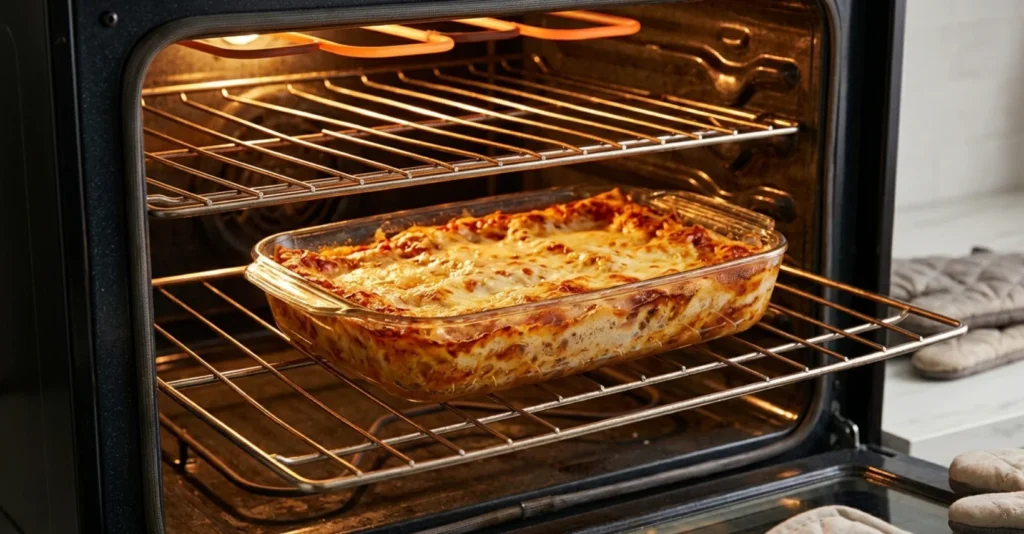
We’ve all experienced that moment of kitchen panic. You pull a glass baking dish out of a hot oven, look around for a place to set it down, and wonder: If I put this on that damp countertop, is it going to explode? If your dish is made of standard glass, that fear is entirely justified. But if it’s crafted from high borosilicate glass, you can breathe a sigh of relief.
To understand why this remarkable material can handle the heat, we have to look at the physics of thermal shock and the clever chemistry that prevents it.
What is Thermal Shock? (The Science of Shattering)
To understand why borosilicate glass doesn’t break, we first need to look at why regular glass does.
Virtually all materials expand when they get hot and contract when they cool down. When you subject a glass dish to a rapid change in temperature—like pouring ice water into a warm glass or placing a hot dish on a cold surface—different parts of the glass change size at different rates.
Imagine the cross-section of a glass pan:
- The bottom of the pan touches a cold countertop and rapidly shrinks.
- The rest of the pan remains hot and expanded.
This sudden tug-of-war creates massive internal stress. Because standard glass is rigid and brittle, it cannot bend or stretch to accommodate this sudden tug-of-war. When the stress exceeds the material’s mechanical strength… CRACK. That is thermal shock.
Enter Borosilicate: The Secret Ingredient
Standard everyday glass (like your windows or cheap drinking glasses) is soda-lime glass. It’s made primarily of silica, soda, and lime. It’s cheap to produce and great for everyday use, but it has a high Coefficient of Thermal Expansion (CTE). This means it expands and contracts significantly with temperature changes.
High borosilicate glass is a different breed. Inventors substituted boron trioxide for the soda and lime in the glass recipe.
By weaving boron into the silicate molecular matrix, scientists created a material with a remarkably low CTE.
The Contrast: High borosilicate glass expands less than one-third as much as standard soda-lime glass when heated.
Because it barely changes size when exposed to extreme temperature swings, the internal stress never builds up. No stress means no shattering.
The Ultimate Kitchen Companion: From Freezer to Oven
Because of this unique molecular structure, high borosilicate glass boasts a thermal shock resistance of up to 170°C (about 340°F).
This gives it superpowers in the kitchen:
Extreme Temperature Swings: You can safely take a high borosilicate dish out of a freezer sitting at -20°C (-4°F) and place it directly into a preheated oven at 150°C (300°F).
Chemical Purity: Borosilicate glass is highly resistant to chemical corrosion. Unlike plastics or certain metals, it won’t leach chemicals, stains, or odors into your lasagna, no matter how acidic the tomato sauce is.
Durability: It is far tougher and harder than traditional glass, making it highly scratch-resistant and dishwasher-safe.
Borosilicate Glass vs. Tempered Glass
You might be thinking, “What about my trusty Pyrex dishes?” This is where kitchen history gets interesting. Originally, Pyrex bakeware was made of borosilicate glass. However, decades ago, many manufacturing companies shifted American kitchen bakeware to tempered soda-lime glass.
While tempered glass is structurally stronger against being dropped (mechanical impact), it has inferior thermal shock resistance compared to borosilicate. If you heat tempered glass too quickly or unevenly, it can shatter violently into tiny shards. High borosilicate glass remains the gold standard for pure, worry-free thermal endurance.
Can Borosilicate Handle Sustained Oven Heat?
The short answer is yes, absolutely. High borosilicate glass is not just capable of withstanding the heat of a domestic oven; it is practically over-engineered for it.
To understand why, we look at its strain point and softening point:
- Oven Temperatures: Most domestic baking happens between 150℃~230℃ (300℉~450℉).
- Borosilicate’s Limit: High borosilicate glass doesn’t even begin to structurally soften until it reaches roughly 820℃(1500℉).
Because an oven’s peak temperature is hundreds of degrees below the glass’s softening threshold, the length of time you leave it in the oven doesn’t matter. Whether you bake a cake for 20 minutes or slow-roast a brisket for 6 hours, the molecular structure of the borosilicate remains completely rigid, stable, and unfazed.
The Hidden Danger: The “Invisible” Weakness
If borosilicate is so tough, why do we still hear horror stories of glass exploding in ovens?
While borosilicate glass has an incredibly low Coefficient of Thermal Expansion, it is not completely invincible. The real danger isn’t the temperature of the oven itself—it’s micro-fissures combined with localized thermal shock.
Over years of use, a glass dish might accumulate microscopic, invisible scratches from metal spatulas, abrasive scouring pads, or being stacked in the cupboard.
When a dish with these micro-scratches is placed in a hot oven, the heat creates slight, normal expansion. Under normal circumstances, the glass handles this easily. But if a cold substance (like a splash of water or a cold piece of meat) touches a scratched area, that localized spot instantly shrinks. The micro-scratch acts as a stress concentrator, causing the tiny crack to instantly fail and tear across the entire dish.
Therefore, please replace your high borosilicate glass products in a timely manner and choose high-quality products such as EasyLife Housewares. As a supplier with over a decade of experience, we promise to use only high-quality raw materials and technology.
5 Essential Precautions for Using Borosilicate in Ovens
To guarantee your safety and ensure your bakeware lasts a lifetime, follow these strict kitchen rules:
1. Avoid the Broiler (Direct Flame/Infrared)
Never use borosilicate glass under an oven broiler (grill) or on a stovetop. Broilers use intense, direct, radiant heat that can create massive temperature differentials between the top edge of the dish and the bottom, exceeding the glass’s 170℃ thermal shock rating.
2. Say No to Metal and Abrasives
Never use metal knives, forks, or steel wool on your glass bakeware. Micro-scratches are the leading cause of “spontaneous” glass shattering later on. Stick to nylon, silicone, or wooden utensils, and clean with soft sponges.
3. Add Liquid Before Heating
If your recipe requires adding liquid to the dish (like adding broth to a roast), add it before the dish goes into the oven. Pouring a cold liquid into a hot glass dish mid-bake is a textbook recipe for localized thermal shock.
4. Ditch the Damp Towel
When you pull the dish out of the oven, never set it down on a wet countertop, a damp towel, or a cold metal stove burner. Instead, place it on a dry wooden cutting board, a silicone trivet, or a thick, dry potholder.
5. Inspect Before You Cook
Periodically hold your bakeware up to the light. If you see deep scratches, chips, or small cracks, retire the dish from oven use. It can still be used for cold food storage, but it should no longer be trusted under thermal stress.
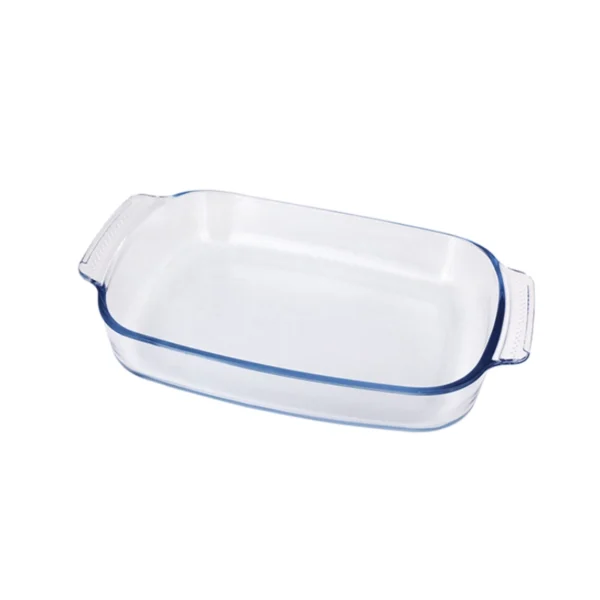
Conclusion: The Ultimate Oven-Safe Verdict
At the end of the day, baking should be about the joy of cooking, not the anxiety of a kitchen cleanup. While standard glass struggles under the intense, prolonged heat of a modern oven, high borosilicate glass rises to the challenge. Thanks to the addition of boron, it possesses a unique molecular shield that easily withstands hours of sustained roasting and baking.
However, even the toughest materials require respect. By protecting your bakeware from harsh metal scratches, avoiding direct broilers, and keeping hot glass away from cold, wet surfaces, you can ensure your dishes remain completely safe.
High borosilicate glass is proof that when smart chemistry meets culinary design, we get cookware that doesn’t just survive the heat—it masters it. So, go ahead and preheat that oven with confidence. Your bakeware has got this covered.