Meal preparation has become an important part of modern life. From preparing weekday lunches and organizing family meals to portioning ingredients in advance, consumers increasingly rely on meal prep containers to keep food organized and make daily routines more convenient. For houseware brands, retailers, and importers, this creates opportunities to develop products that combine durability, practical design, and long-term usability.
However, not all meal prep containers are designed to withstand repeated use. Material quality, lid construction, sealing performance, temperature compatibility, and ease of cleaning all influence how well a container performs over time. A product that looks attractive on the shelf may not meet customers’ expectations if its lid becomes loose, its surface retains food odors, or its components deteriorate after repeated washing.
So, what makes durable meal prep containers suitable for long-term use? This guide explores the materials, design features, and quality considerations that buyers should evaluate when selecting products for everyday meal preparation and commercial sourcing.
What Makes a Meal Prep Container Durable?
A durable meal prep container should maintain its intended function through repeated preparation, storage, transportation, and cleaning. For consumers, this means having a reliable container for everyday meals. For retailers and private-label brands, it means offering products that meet customer expectations and perform consistently under their intended conditions of use.
Meal prep containers face several practical challenges. They may be opened and closed multiple times a day, carried in lunch bags, stacked in refrigerators, or washed after every meal. Containers used for sauces, soups, or other liquids also require appropriate sealing performance to help prevent spills during transportation.
Several factors determine whether a product is suitable for repeated use.
First, the container body should be made from a material appropriate for its intended application. Second, the lid and closure system should maintain a reliable fit during normal use. Third, the design should support convenient cleaning, including access to corners and removable components where applicable. Finally, the container should tolerate the storage and temperature conditions specified by the manufacturer.
Durability also depends on how the product is used and maintained. Even a well-designed container can be damaged by improper heating, unsuitable cleaning methods, or sudden temperature changes.
For buyers, the goal is therefore not simply to find the strongest material. It is to select a complete product that balances durability, convenience, safety, and the needs of its target market.
Choosing the Right Material for Durable Meal Prep Containers
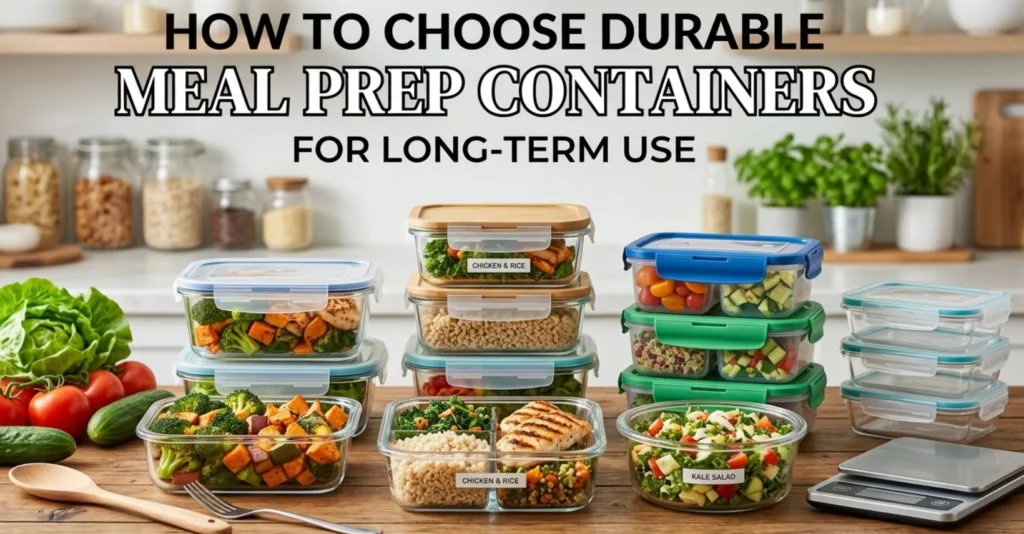
Material selection is one of the most important decisions when developing or sourcing meal prep containers. Glass, stainless steel, plastic, and silicone each offer different advantages. Understanding these differences helps buyers select products that suit their customers’ meal preparation habits, price expectations, and storage requirements.
Glass Meal Prep Containers
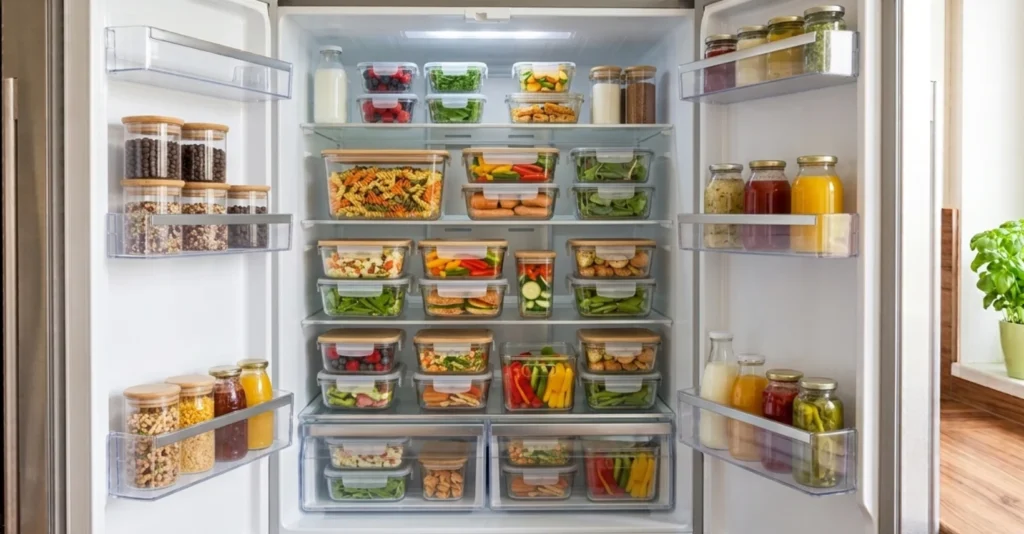
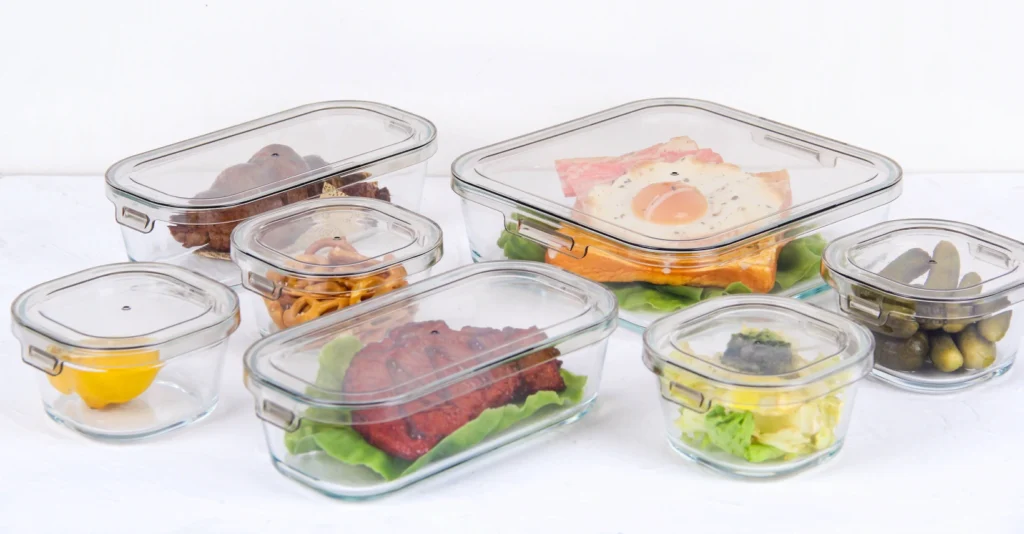
Glass meal prep containers are popular among consumers who value food visibility, a clean appearance, and convenient food storage. Their transparent bodies make it easy to identify prepared meals, monitor portion sizes, and organize different ingredients in a refrigerator.
Glass also resists retaining many food odors and colors, making it suitable for repeated storage of a variety of meals. For consumers who prepare several meals in advance, this can be particularly useful when storing foods with strong flavors or vibrant colors.
Another advantage is that certain glass containers can be used for both food storage and reheating. When a product is specifically designed for microwave use, consumers may be able to transfer it from refrigerator storage to the microwave without moving the food into another dish. This can simplify meal preparation and reduce the number of containers needed.
Nevertheless, glass can break if dropped or subjected to unsuitable thermal shock. Its temperature resistance also depends on the glass type and product construction. Buyers should confirm whether the container is designed for refrigerator, freezer, microwave, or oven use rather than assuming that all glass products support the same applications.
For B2B buyers, important considerations include glass quality, container dimensions, wall construction, lid compatibility, protective packaging, and the product’s specified temperature limits.
Stainless Steel Meal Prep Containers
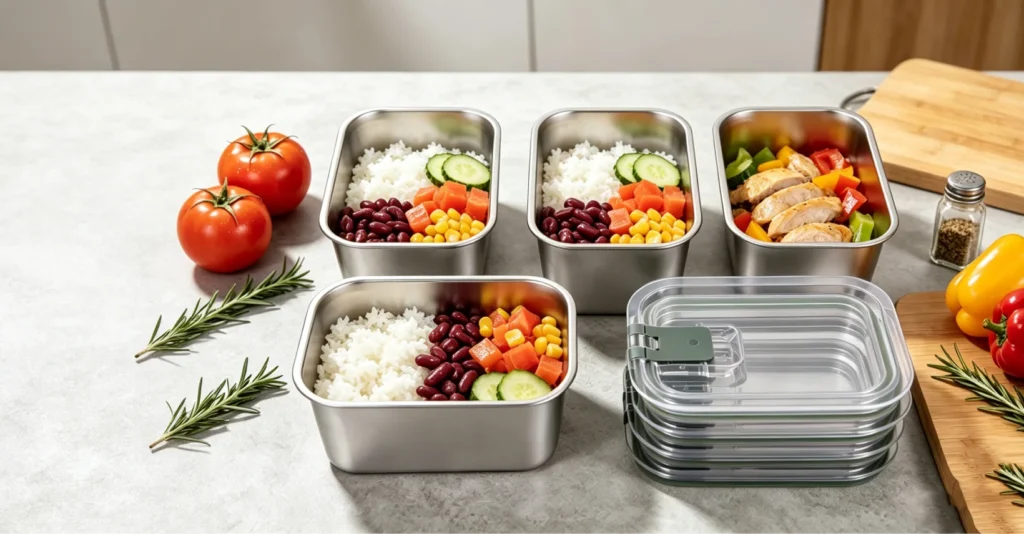
Stainless steel meal prep containers offer a robust alternative for consumers who prioritize durability and resistance to breakage. They can be suitable for packed lunches, meal preparation, and food storage applications where a sturdy, reusable container is preferred.
Compared with glass, stainless steel is less vulnerable to shattering during ordinary handling. Its lightweight construction in some designs can also make it convenient for carrying prepared meals, although the overall weight depends on the steel thickness, size, and lid components.
Stainless steel containers are opaque, so users cannot see their contents without opening them. This may be less convenient for refrigerator organization, particularly when several prepared meals look similar. Some buyers may also prefer transparent lids or other identification features.
Material grade and construction quality matter. Buyers should confirm the steel specifications, surface finish, and suitability for the intended food-contact application. Lid performance should be evaluated separately, particularly for containers used to transport prepared meals or liquid-based foods.
It is also important to remember that conventional stainless steel containers should not be placed in a microwave. Their intended use and care instructions should be clearly communicated to customers.
For brands targeting customers who want sturdy, reusable meal prep solutions, stainless steel can be a useful option when its characteristics align with the intended application.
Plastic Meal Prep Containers
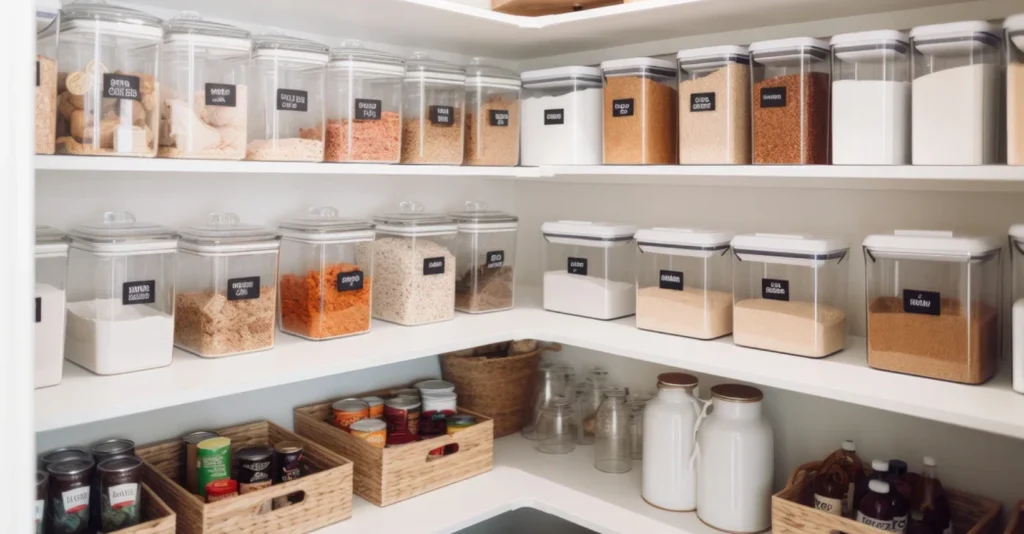
Plastic meal prep containers are widely used because they are lightweight, convenient, and available in numerous shapes, capacities, and colors. These characteristics make them suitable for lunch preparation, portion control, food organization, and everyday household use.
Plastic also offers considerable design flexibility. Manufacturers can develop stackable containers, transparent bodies, colored lids, and compartmentalized designs for customers who prefer to keep different foods separate. For retailers, these options can support product ranges across different price points and usage scenarios.
However, plastic encompasses many different materials, and their performance varies. Some products may be more resistant to staining, odors, or repeated washing than others. Suitability for microwave heating, freezing, and dishwasher cleaning also depends on the specific plastic, construction, and individual components.
When evaluating plastic meal prep containers, buyers should confirm food-contact suitability, temperature limitations, and the expected performance of both the container body and its lid. They should also consider how the product will be used: a container for dry snacks may have different requirements from one intended for oily sauces or daily microwave reheating.
For B2B buyers, plastic can be an attractive choice when lightweight construction, design flexibility, and cost positioning are important, provided that the selected product meets the intended performance requirements.
Silicone Meal Prep Containers
Silicone meal prep containers are valued for their flexibility, lightweight construction, and resistance to breakage during ordinary handling. Some designs can be collapsed when empty, helping users save space in kitchen cabinets, office bags, or travel luggage.
These features make silicone particularly interesting for consumers who prepare meals in advance but have limited storage space. Collapsible designs can also appeal to people who need portable food storage for commuting, travel, or outdoor activities.
For repeated use, the quality of the silicone material and the overall construction are important. Buyers should confirm that the material is suitable for its intended food-contact application and check the specified temperature limits, cleaning requirements, and resistance to deformation during normal use.
The lid and closure system also deserves attention. Some silicone containers use separate rigid lids or sealing components made from other materials. These components may have different temperature limits and cleaning requirements, so the complete product should be evaluated rather than considering the silicone body alone.
Silicone is not necessarily the best choice for every meal preparation scenario. Its flexible structure may provide less rigid support than glass or stainless steel, and some designs offer less visibility than transparent containers. However, when flexibility, portability, and space-saving storage are priorities, silicone can provide a useful alternative.
The key takeaway: Glass offers visibility and resistance to retaining many food odors and colors, stainless steel provides a sturdy structure, plastic supports lightweight and versatile designs, and silicone adds flexibility and space-saving convenience. The best material depends on how customers prepare, store, transport, and reheat their meals.
Why Lids and Sealing Systems Matter for Meal Prep
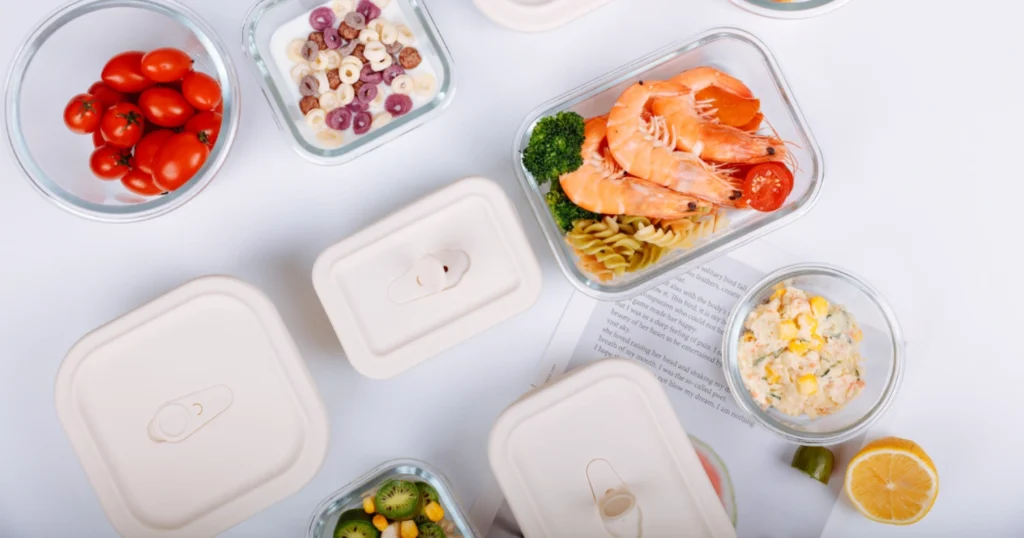
A durable container body is only one part of a reliable meal prep product. The lid and sealing system are equally important, particularly when consumers prepare several meals in advance or carry lunch to work, school, or other destinations.
A poorly fitting lid can make a container inconvenient to use, while a damaged gasket or worn locking mechanism can compromise its intended sealing performance. For products designed to carry liquids, inadequate sealing can also result in spills inside a lunch bag.
When evaluating meal prep containers, buyers should consider how easily the lid opens and closes, whether it fits consistently, and whether its components can withstand normal repeated handling. Containers with locking clips should be assessed for the strength and function of those clips. Products with silicone gaskets should also be checked for appropriate fit and ease of cleaning.
The distinction between airtight and leak-resistant performance is important. An airtight design is intended to limit air exchange, while a leak-resistant or leakproof design concerns liquid containment under specified conditions. Neither performance claim should be assumed without suitable product design and testing.
For meal prep applications, compartmentalized containers introduce another consideration. Dividers can help keep ingredients separate, but they do not automatically create independently sealed compartments. Buyers should verify whether the product is designed to prevent liquids from moving between sections.
For B2B buyers, testing the complete container-and-lid system under realistic conditions is more meaningful than evaluating the body material alone.
Resistance to Odors, Stains, and Everyday Wear
Meal preparation often involves storing different foods in the same container over time. Tomato-based sauces, curries, dressings, coffee, and strongly seasoned meals can leave stains or odors in some materials, especially when food remains inside for extended periods.
Glass is generally resistant to retaining food odors and colors, making it a practical choice for people who prepare a variety of meals throughout the week. Stainless steel also offers advantages in many storage applications, although the material grade and surface finish matter. Plastic and silicone vary in their resistance to staining and odor retention depending on their formulation and construction.
Cleaning is another major factor in long-term usability. Containers with smooth interior surfaces and accessible corners are generally easier to maintain. Lids, gaskets, and locking components should also be considered because food residue can accumulate around seals and in areas that are difficult to reach.
For products used every day, the cleaning process should be straightforward enough to fit naturally into the user’s routine. Removable seals can help when they are designed for easy removal and correct reassembly. Dishwasher compatibility, however, should be confirmed for the specific product and its individual components.
Users can help extend the useful life of meal prep containers by cleaning them promptly, following the manufacturer’s care instructions, and inspecting lids and seals for signs of wear. Containers that are cracked, warped, or no longer functioning as intended should be assessed for replacement.
For houseware brands, easy-to-clean design and clear maintenance guidance can improve customer satisfaction and support the continued use of reusable products.
Temperature Resistance: Refrigerator, Freezer, and Microwave Use
Meal prep containers often need to support more than one stage of food preparation. Consumers may prepare meals in advance, refrigerate or freeze individual portions, and reheat them later. However, each stage introduces different material and design requirements.
Refrigerator storage is common across most meal prep categories, but freezer use requires products designed to tolerate low temperatures without unacceptable cracking, deformation, or closure problems. Microwave reheating requires suitable materials and appropriate instructions for the container and lid. Oven use involves different thermal demands and must be explicitly supported by the product specifications.
Glass containers may be suitable for storage and reheating when specifically designed for those applications. Stainless steel containers are generally not suitable for conventional microwave use. Plastic and silicone containers must be assessed according to their particular material formulations, construction, and stated temperature limits.
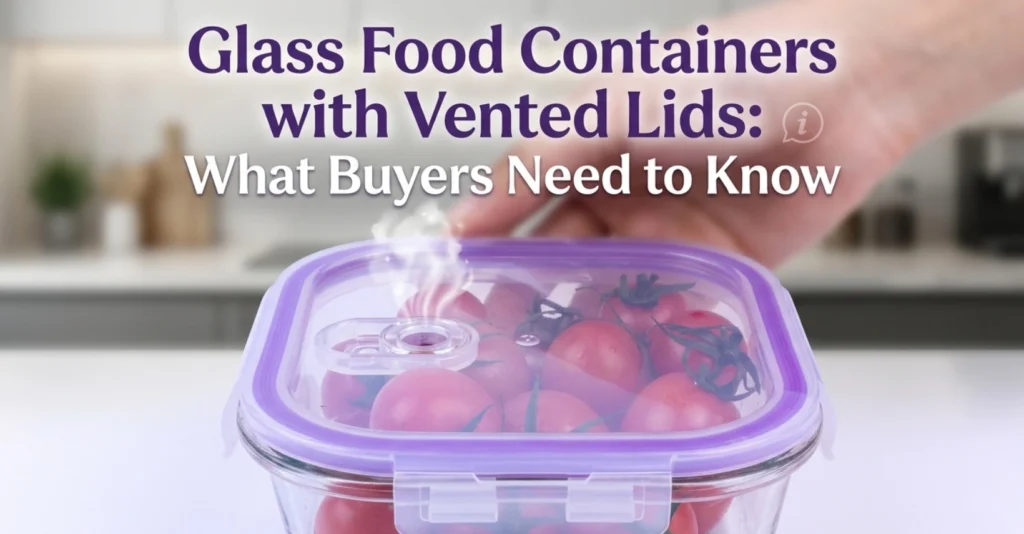
The lid deserves special attention. A container body may tolerate a particular temperature while its lid, gasket, or locking clips do not. Some products require the lid to be removed before heating, while others feature a vent designed for microwave use.
Sudden temperature changes can also damage products that are not designed to withstand them. Buyers should not assume that a freezer-safe container can move directly into a hot oven or that a dishwasher-safe lid is automatically microwave-safe.
For B2B buyers, clearly defined temperature specifications are essential when selecting meal prep containers. Accurate instructions help customers use products as intended and reduce the risk of misuse and avoidable complaints.
How Product Design and Manufacturing Quality Influence Durability
Material selection establishes the foundation for a durable meal prep container, but product design and manufacturing quality determine how well it performs in everyday use.
Consistent dimensions help lids fit properly and allow containers to stack neatly in refrigerators or cabinets. Well-designed interior corners can make cleaning easier, while appropriate gasket placement supports the intended sealing function. For products with locking clips or hinges, the design should accommodate normal repeated operation.
Manufacturing consistency is equally important. Variations in material thickness, component dimensions, surface finish, or assembly can affect the finished product. A sample that performs well does not automatically guarantee that every unit in a bulk order will meet the same requirements.
For this reason, buyers should discuss quality-control procedures with their suppliers and agree on the specifications that matter most. Depending on the product, evaluation may include repeated opening and closing, cleaning cycles, closure performance, temperature compatibility, and checks for visible damage or deformation.
Performance testing should match the product’s intended use and the claims made in its marketing. For example, a product promoted for leakproof transportation should be evaluated using an appropriate leakage test, while a container marketed for microwave use should be verified for that specific application.
For houseware brands, thoughtful design and consistent manufacturing help reduce quality risks and create products that better meet customers’ long-term expectations.
What B2B Buyers Should Check Before Sourcing Meal Prep Containers
For importers, distributors, retailers, and private-label brands, selecting durable meal prep containers involves more than comparing unit prices. Buyers must consider product performance, compliance documentation, packaging, and supplier capabilities before committing to a bulk order.
Material specifications and food-contact suitability. Confirm the materials used in the container body, lid, gasket, and other components. Request relevant food-contact documentation for the intended product and target market.
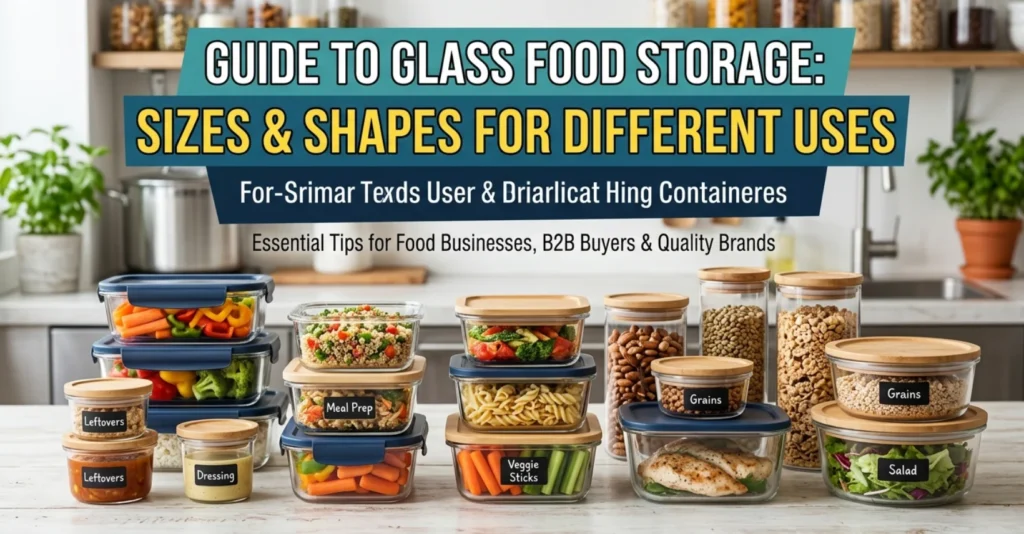
Product functionality. Assess capacity, portion sizes, stackability, closure performance, and ease of cleaning. If the product includes compartments, confirm whether the design meets the intended food-separation requirements.
Sample evaluation. Test representative samples under realistic conditions before approving production. If the product range includes different sizes, lid designs, or materials, evaluate the relevant configurations rather than relying on a single sample.
Temperature and care requirements. Confirm which components are suitable for refrigerator, freezer, microwave, dishwasher, or oven use. Ensure that the final product information communicates these limitations clearly.
Quality control and consistency. Discuss material specifications, inspection procedures, acceptance criteria, and how product quality is monitored during manufacturing.
Packaging and transportation. Consider how products will be packed, stored, and shipped. Glass containers may require additional protective packaging, while retail-ready packaging may be important for brands selling through physical stores or online channels.
Customization and product development. For private-label projects, discuss available options such as custom logos, colors, packaging, and OEM/ODM development. Confirm the minimum order quantity, production lead time, sample arrangements, and applicable customization requirements with the supplier.
By evaluating these factors together, buyers can select products that meet their customers’ needs while managing product quality and sourcing risks.
How EasyLife Housewares Supports Meal Prep Container Product Development
For houseware brands developing a meal preparation range, choosing the right products is an important step toward building a competitive assortment. Material selection, practical functionality, quality requirements, and customization should all align with the needs of the intended market.
Established in 2014 in Qingdao, China, EasyLife Housewares is a B2B manufacturer and supplier focused on food storage solutions and related housewares. Its product range includes glass storage jars, glass food containers, and stainless steel storage products for different household applications.
For importers, distributors, and private-label brands, product development may involve selecting an existing design or discussing customized requirements. Depending on the product, options may include logo application, color customization, packaging design, and OEM/ODM services.
When evaluating a new meal prep product, buyers should communicate their intended use, target market, expected performance, and packaging requirements at an early stage. This helps establish which specifications need to be confirmed and which samples or tests are appropriate before bulk production.
If you are developing a meal prep container range for your brand, EasyLife Housewares can help you explore suitable food storage solutions and discuss product customization requirements.
Contact EasyLife Housewares today to discuss product options, sample availability, wholesale pricing, and OEM/ODM opportunities for your next food storage project.
FAQs About Durable Meal Prep Containers
1. What are the most durable meal prep containers?
The most suitable option depends on how the container will be used. Glass can offer good resistance to staining and odor retention, stainless steel provides a sturdy structure, plastic offers lightweight versatility, and silicone provides flexibility. Material quality, lid construction, maintenance, and intended use all influence long-term performance.
2. Are glass meal prep containers more durable than plastic ones?
Neither material is universally more durable. Glass generally resists retaining food odors and colors but can break if dropped. Plastic is lighter and less likely to shatter, although resistance to staining, odors, and repeated cleaning varies by material. Buyers should compare the products’ intended applications and performance specifications.
3. Are silicone meal prep containers suitable for long-term reuse?
Yes, silicone containers can be suitable for repeated use when the material is appropriate for food contact and the product is used according to the manufacturer’s instructions. Buyers should evaluate temperature limits, cleaning requirements, resistance to deformation, and the durability of the lid and sealing components.
4. What should I look for when buying durable meal prep containers?
Consider the container material, lid fit, sealing performance, ease of cleaning, temperature compatibility, and overall construction. For commercial sourcing, request samples, review relevant documentation, and evaluate performance under realistic conditions before placing a bulk order.
5. Can durable meal prep containers go in the microwave and freezer?
Some can, but compatibility depends on the specific material, construction, and components. A container body may have different limitations from its lid or gasket. Always follow the manufacturer’s instructions and confirm suitability for each intended application.
6. What should wholesale buyers consider when sourcing meal prep containers?
Wholesale buyers should evaluate material specifications, food-contact documentation, product performance, sample availability, quality control, packaging, minimum order quantities, and production lead times. Private-label buyers should also confirm available customization options, including logos, colors, packaging, and OEM/ODM development.
Conclusion: Choose Meal Prep Containers Designed for Repeated Use
Durable meal prep containers combine suitable materials, reliable closures, practical designs, and consistent manufacturing quality. Glass, stainless steel, plastic, and silicone each serve different needs, so the right choice depends on how customers prepare, store, transport, and reheat their meals.
For consumers, these factors influence everyday convenience and long-term usability. For B2B buyers, they also affect product positioning, customer satisfaction, and the reliability of a houseware product range.
By looking beyond appearance and initial price, buyers can make better-informed sourcing decisions and select containers suited to repeated use.
Looking for meal prep and food storage solutions for your brand or retail business? Contact EasyLife Housewares to explore our product range and discuss wholesale pricing, custom logos, packaging, and OEM/ODM opportunities.